The Barbershop Sessions 2012: Gospel

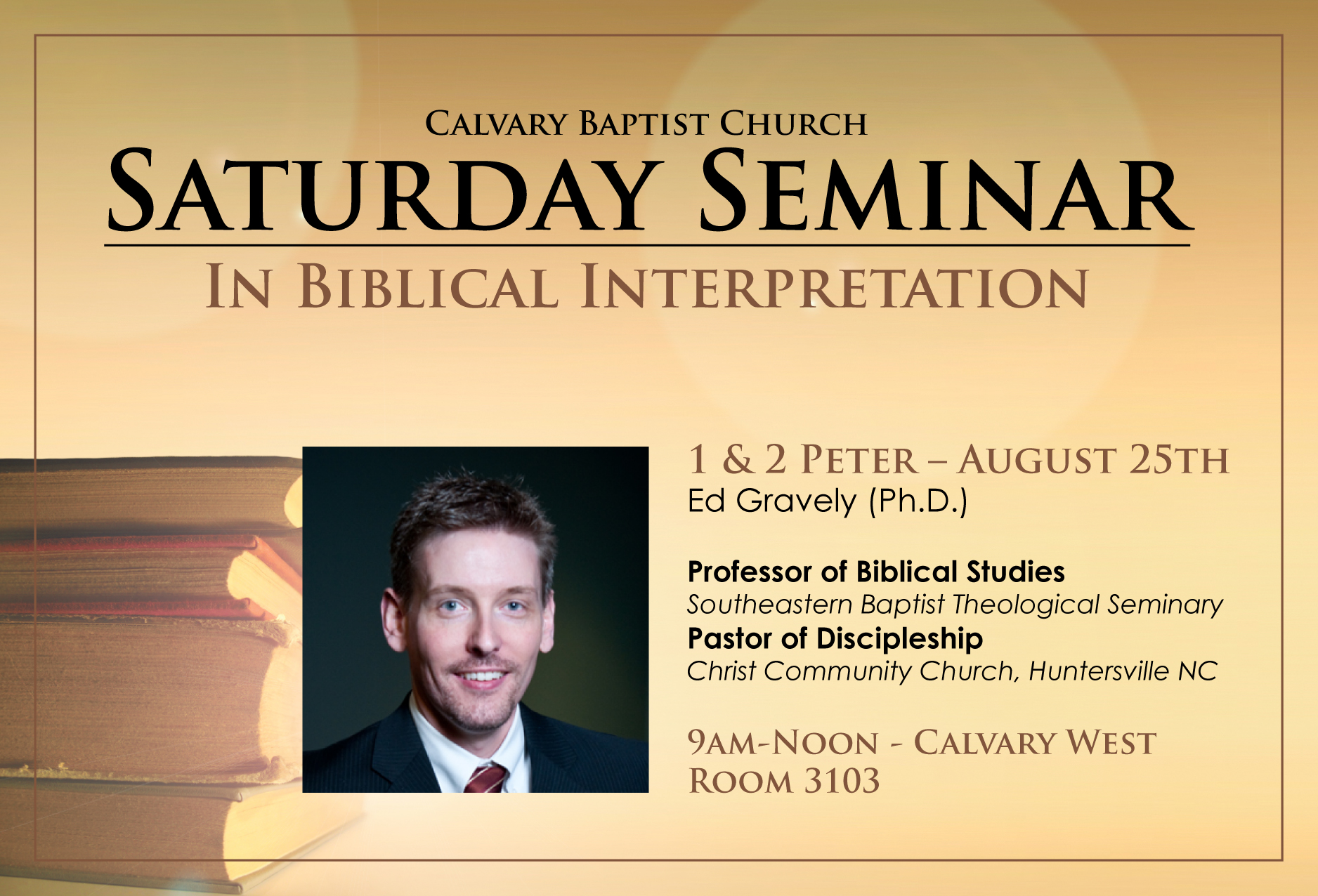
Saturday Seminar on 1 & 2 Peter with Dr. Ed Gravely

To sign up for the seminar click here

It’s time for another Saturday Seminar at Calvary! If you are a Bible Fellowship teacher, part of a Bible Fellowship teaching team, or just love to study the bible, you will not want to miss this training opportunity to learn from one of our Southeastern Baptist Theological  Seminary professors! Dr. Ed Gravely will be at Calvary on Saturday, August 25th from 9am-12noon. Dr. Gravely will be walking us through 1 & 2 Peter.

Dr. Ed Gravely is professor for Biblical Studies, History of Ideas, and is the Coordinator for the Charlotte Extension Center of Southeastern Baptist Theological Seminary in Wake Forest, NC. Gravely earned a Ph.D. from SEBTS with a focus on textual criticism. Dr. Gravely also serves as pastor for Discipleship at Christ Community Church in Huntersville NC.

To sign up for the seminar click here

John Piper and Tim Keller Discuss Sanctification

Recently Desiring God posted a few videos of John Piper and Tim Keller discussing the biblical vision of sanctification. In these videos Keller and Piper wrestle with how justification and sanctification relate, the psychological dynamics of faith, and some practical guidance for in-the-moment motivations for holiness. This discussion is well worth your time and thought.


An Introduction to The Book of Judges

Introduction

While the book of Joshua highlights the possession of the Promised Land, the book of Judges illuminates the stains on this accomplishment. Judges contains the history of Israel during the transition from centralized leadership in the desert under Moses and Joshua to the centralization of leadership in Jerusalem under David and Solomon.[1] The statement that “there was no king in Israel in those days; each man did what was right in his own eyes” summarizes this period of time.[2] So, “although the Israelites dwell physically in the Promised Land their disobedience prevents their enjoyment of the promised blessings.”[3]

The Structure and Cycle in Judges

The book of Judges has a structure that breaks quite nicely into three parts[4]:

  1. An overview story of the failure to complete the conquest (1:1-2:5)
  2. The stories of judges, which collectively portray a downward spiral of repeated cycles of sin, judgment, distress, and deliverance (2:6-16)
  3. Two final stories of religious and moral depravity (17-21)

There is also a ‘cycle’ that flows through the narrative of Judges. The ‘cycle’ is introduced in 2:11-19 and repeated in 3:7, 12; 4:1; 6:1; 10:6; 13:1. Heath Thomas describes the cycle as follows:

  1. Israelites rebel against God
  2. God raises up an oppressor
  3. The Israelites cry out to God
  4. God raises up a deliverer (Judge)

Thomas argues that this cycle teaches us the propensity for Israel (and us) to sin, the power of prayers and confession, and the mercy of God, both for Israel (and for sinners today).

Theology of Judges

Drawing from the theology learned in Deuteronomy, Israel’s leaders were to be constantly reminding Israel of God’s covenant faithfulness to them using past events as well as point to His ongoing and continued faithfulness. Israel was to fear the Lord and keep the covenant.[5] In the threat of apostasy and opposition from foreign nations God raises up judges to lead the people in battle and renewal. The judges are mostly “fighters and adventurers”[6] who play a role in discerning and deciding in a lawless time. Goldsworthy notes that the “…giving of the Spirit to the judges indicates that what the Israelites could not do for themselves, God does for them through a chosen, Spirit-powered  human being.”[7] But the judges were temporary means of grace to the people.

Alec Motyer notes that the judges ultimately failed because “they came, they delivered, they went, they achieved no permanent blessing or security, and they interrupted but did not change the deadly sequence of apostasy and captivity.”[8] So while the judges’ help achieved limited relief, they failed to bring a permanent solution. Therefore, one of the purposes of the book is to address the difficulty that Israel’s leadership faced in leading the people of God to fear the Lord and keep covenant. Judges demonstrates the failure of Israel’s leadership to pass on the knowledge of God to the next generation or to lead them in covenant keeping.

Daniel Block writes that “…the book of Judges is not so much a written memorial to Israel’s heroes in the Early Iron Age as a witness to Yahweh’s gracious determination to preserve his people by answering their pleas and providing deliverance.”[9] If not for God’s mercy and grace, Israel would go the way of death. But, Judges testifies to the grace of God. As sinful as Israel is, God’s grace still abounds.[10] It is important to note that ultimately the hero in the book was never one of the judges. As already stated, the judges failed and the people long for a greater judge. Therefore, the hero of Judges is God. The temporary role of a judge pointed people towards an ideal covenant keeping leader. “For the writer, the right kind of leader – exemplified by King David – was essential for transforming the people of God.”[11] This type of leader came into fruition with Jesus Christ. To outline a theology of Judges simply:

  1. Judges reveals God’s plan, purpose, and character: His faithfulness to his covenant. His patience and compassion in delaying judgment upon his people.
  2. Judges reveals the human heart: Our inability to serve God faithfully and our need to be reminded of God’s covenant faithfulness.
  3. Judges also points to Christ, the perfect leader who alone can truly redeem, change hearts, and reveal God.

The Judges and Jesus Christ[12]

Point by point the book of Judges traces the religious, political, moral, and social collapse of Israel. “The book of Judges called its original audience to follow a leader who would lead them in knowing and fearing the Lord. In its place in the Christian cannon, it issues the same call, except that the king is Jesus.”[13] The following points are taken from J. Alan Groves:

  1. The unfaithfulness of the judges and kings ultimately cost Israel the Promised Land. Jesus’ perfect faithfulness secures heaven itself for his people.
  2. The judges were unable to bring about permanent peace. Jesus, from the line of David (Tribe of Judah), brought about an enduring kingdom and eternal peace.
  3. Judges urged the need for a king, from Judah, who would fear God, live in covenant faithfulness, and lead the people in doing the same. Jesus, who was from the tribe of Judah, feared God and lived in perfect obedience to the Father, giving his people a perfect example. Yet, even more so, Jesus sends His Spirit and do what the judges and kings could not accomplish, break the cycle of sin and deliver the people of God by changing their hearts and empowering them to be faithful to God.

A Theology of Work

“The doctrine of vocation amounts to a comprehensive doctrine of the Christian life, having to do with faith and sanctification, grace and good works. It is a key to Christian ethics. It shows how Christians can influence culture. It transfigures ordinary, everyday life with the presence of God…The priesthood of all believers did not make everyone into church workers; rather it turner every kind of work into a sacred calling.”[1]

Introduction

For most people work is a major part of their existence. More often than not, the second question one will receive after exchanging names in initial conversation is “so, what do you do?” In ancient societies one would derive their primary meaning in life from family, namely in fulfilling a subscribed social role as father, mother, brother, etc. Work was only a means to provide life’s necessities. But in our culture we define ourselves by what we do, where we work, and where we are on the corporate ladder. Because of this there is more psychological and emotional pressure tied to our work than ever before. In a society where productivity and utilitarian values reign, work is seen as one of the most important functions of our lives. Christians are no exception. With the increase of connectivity to work through mobile devices “…vocations occupy a great deal of most Christians’ lives and tends to define their existence in ways that transcend the workplace.”[2] Unlike the agricultural economies of the past, where work ceased when the sun went down, work in modern society continues day and night. Even in our leisurely hobbies many of us are drawn to activities that involve some kind of work.  It seems that having a biblical foundation to understand the role and purpose of work is of increasing importance. Yet John Hammett observes:

“…churches rarely give their members teaching on how to integrate their vocational life as part of their Christian life. As a result, most Christians think about their work as a separate compartment, something outside of their Christian life. But since we are called to be full time Christians, then our work must be part of our service to God.”[3]

Fortunately the bible is not silent about work and vocation. The biblical narrative overflows with work. From the opening lines of Genesis to the last word in Revelation work and vocation are a fixture in creation order. While work should not be the meaning of one’s life, there is a sense in which one cannot have a meaningful life without some form of productive work. So, what is the proper place of work?

Developing a Theology of Work

Human beings were created and placed in paradise and given work to do. We read in Genesis 2:15 that “The LORD God took the man and put him in the Garden of Eden to work it and keep it.” Notice that the call to work occurs before the fall of man and is included within the description that all God had made was “very good”. Hammett rightly describes work not as a necessary evil but, as God intended, part of our created nature and good.[4] In other words, work is not a curse; it is something we were designed to do. There are several theological implications that flow from the doctrine of creation that impact our work and vocation. As a foundational point, “productive work is ordained by God and inherently dignified”.[5]

  1. Work reflects the image of God in us: From creation to new creation God works. We see God’s work not only in creation but also in sustaining and providentially governing all of creation order.[6] Moreover, we look ahead to God’s recreation of the entire cosmos.[7] Therefore, in a certain sense, man reflects God in his creativity, energy, and authority in exercising dominion over and cultivating the earth.[8] Probably every one of us has tasted at some time a deep satisfaction of a job well done. In those times we can look at the work of our hands and proclaim that ‘it is good’.
  2. Work is tied to our calling in creation: Beyond the initial call to work and keep the garden, Adam and Eve were told to be fruitful and multiply.[9] The vocation of parenthood is added on to the care of creation[10] as work given to humanity. All of these activities could be categorized under the calling of humans to propagate life and develop culture. Furthermore, we are to exercise great care over what we have been given.

Again, it is important to note that work is part of God’s good will for humanity.[11] This is why Paul writes in Colossians “whatever you do, work heartily, as for the Lord”[12]. Obviously, one must take into account the fall of humanity when discussing any particular aspect of humanity from a theological perspective. In Genesis 3:17-19 we find that immediately after the fall a curse is laid upon humanity which affects work.[13] As Richard Phillips notes, “the introduction of sin into the garden changed the nature of work.”[14] Several observations can be made on this point.[15]

  1. We encounter resistance, rather than cooperation, in our work: There is an objective change in our bodies and in physical creation as a result of human sin, therefore all work, though rewarding, is also mixed with frustration, difficulty, monotony, and sometimes requires enduring pain.[16] Underlying much of this difficulty is a deep sense in each of us that work is supposed to be meaningful and enjoyable. But, Meredith Kline notes that even with the “…curse of man it is presupposed that man’s dominion over the earth would be continued and that here too divine blessing would be granted on man’s labor to such a degree that human life would be sustained and cultural satisfactions realized.”[17]
  2. While work was created to be a blessing, post fall it becomes an occasion of temptation: Consider humanities capacity towards injustice and oppression.[18] We have all seen or experienced someone using their work for worldly glory or self-power. Furthermore, there is also the temptation of laziness in our work.[19] The Apostle Paul addresses this in 2 Thessalonians 3:10 when he writes, “…If anyone is not willing to work, let him not eat”.
  3. We naturally tend to make work an idol: Work often provides us with a sense of worth and self-esteem and thus temporarily satisfies needs within our own soul.[20] “Because God is good and has chosen to be glorified through our labor, we are able to enjoy work and find a significant part of our identity in it.”[21] But work becomes an idol when one is devoted to it in an unhealthy way, not allowing any rest (Sabbath) in the quest for satisfaction or making a name for oneself. Work always fails to satisfy completely.[22] It needs to be established that our work is not salvific, nor is it the most important aspect of our lives.

Though the fall has affected our work in a significant way, the presence of sin does not change our calling to be workers. Therefore, we need some sort of salvation for our work, to put it another way, our work needs to be transformed by the gospel.

  1. We work as a means to honor Christ: Any job that is undertaken should be aimed at blessing others and glorifying God.[23] Since work is an inherent part of our human nature as created in God’s image, we should work as to glorify God.
  2. We work as a testimony to others: The reality of God’s dominion over us, and Christ’s love in us should be on display in the quality of our work. If the goal of our work is to glorify God then we are enabled to value all honorable types of work, regardless of their monetary value and cultural utilitarian purposes.
  3. We work to provide for our own needs as well as the needs of others: We are not only called to provide for our families (thus our own needs)[24] but also to be generous in sharing with others and providing for those in genuine need.[25] Our work should benefit others to the glory of God. God does not need our work, but man does. Gene Edward Veith Jr. notes that “when God blesses us, He almost always does it through other people”[26].

In all of these things, we as Christians keep in mind that we await the new heavens and new earth where there will be rest from work in this fallen world[27], and work will be as it was before the fall.[28] In other words, heaven will not be an eternal vacation, but all good aspects of human culture will be continued in a pure state. It seems that Scripture teaches us that part of our reward for faithfulness in this life is a capacity for increased work alongside of Jesus in the new heavens and new earth.[29] Though for now, as we wait for that day, let us work hard to the glory of God.

Principles for Working to the Glory of God

While the New Testament provides general characteristics regarding the conduct of Christians in the world, we also find general admonitions to heed in the work environment.

  1. Christians should work hard and not be idle.[30]
  2. Christians should work hard and mind their own business.[31]
  3. Christians should respect authority structures in the workplace.[32]

In essence, the Christians work should reflect their faith in Christ and be dedicated to his glory. This dedication helps us avoid idleness, meddling in issues that are not ours, and upholding the common grace structures that God has provided in this fallen world. “In a world where sin pervades the workplace, basic things like maintaining ones integrity, using sound speech, and not stealing provide testimony to the reality of God’s grace and power of the gospel.”[33] As Tim Keller has written, “…the Bible tells us that Jesus has to be the Lord of every area of life…The gospel shapes and affects the motives, manner, and methods with which we carry out every task in life, including our vocation.”[34] Richard Phillips provides 6 questions that are helpful in sifting through our own philosophy of work and personal vocation.[35]

  1. Does my work glorify God?
  2. Does my work benefit man?
  3. Do I consider myself “right’ for this job, or can I at least do it well and find enjoyment in that?
  4. Does my work provide for material needs?
  5. Does my work permit me to lead a godly and balanced life?

Finally Ben Witherington suggests, “…we are all called to be workers and that is an essential part of our purpose and mission on earth, all the more so since we now have God’s salvation in Christ to proclaim to the world. We all have limited time on earth, whether short or long, and we all have a God-given purpose on earth, regardless of whether we realize it.”[36]

Final Theological Considerations

In Christian theology work is implicitly tied to Sabbath rest. Sabbath is patterned after God resting on the seventh day of creation.[37] It’s not that God was tired, but that God was finished. When God is finished with each work of creation he proclaims that ‘it is good.’ In essence God was declaring that he was utterly satisfied with what had been done. Sabbath means to cease from, and to enjoy the results of, your work. I believe this principle can be applied to our own work in a certain sense. To rest means that we are satisfied with what’s been done. Is this not the only way we can walk away for our work? Two implications of Sabbath rest are tied to this principle.[38]

  1. Rest from work is an act of liberation[39]: Sabbath was designed to show you that there is more to you than your work. If you cannot rest from work you are a slave to your work. Many of us are over committed and are always busy. Rest enables us to remind ourselves that our work does not define who we are.
  2. Rest from work is an act of trust: You will not take time off unless you truly believe that you are not God. Things will not fall apart if we take a time to rest. In his sovereignty God providentially holds all things together. “Are not two sparrows sold for a penny? And not one of them will fall to the ground apart from your Father. But even the hairs of your head are all numbered. Fear not, therefore; you are of more value than many sparrows.”[40]

Ultimately Sabbath rest is found in Christ and in Christ alone. The deeper work of the soul is satisfied in Christ’s call from the cross that “it is finished”[41]. Through Jesus and only Jesus can you get the deep rest of the soul that enables vocational rest. Remember his words, “come to me all who are heavy laden, and I will give you rest…take my yoke…you will find rest for your souls.”[42] When you are in Christ God looks at you and says, ‘it is good’. The only set of eyes in the world that you have to prove yourself to has already declared, because of your union with Christ, “…you are my beloved Child in whom I am well pleased”[43]. As Tim Keller has said, “…external rest of the body, however, is impossible without inner rest from anxiety and strain. It takes the deep rest in Christ’s finished work for your salvation[44] to avoid over-work. Only then will you be able to regularly walk away and rest from your vocational work.”[45]

Continue reading “A Theology of Work”

The Gospel Project: The Story of Redemption

This is a video produced by Lifeway for The Gospel Project.

The History of Adoption and Orphan Care in the Southern Baptist Convention

I recently had the privilege of writing a blog post for Together for Adoption on “Adoption, Orphan Care, and the Southern Baptist Convention“. Over the past few months T4A has been working with several Southern Baptist pastors/theologians and The North American Mission Board to develop a partnership that would equip and encourage Southern Baptists to heed the call of orphan care. One of the developments out of this collaborative effort is a panel discussion at the Annual Southern Baptist Convention in June with Russell Moore, Johnny Carr, Tony Merida, and David Platt, click here for more information. In the T4A blog post I explore the early history of the SBC as it relates to adoption and orphan care and conclude with this:

The Southern Baptist Convention is the largest denomination in the United States, with over 44,000 churches in all fifty states, and is now more than 160 years old. If the Church is truly, as Merida and Morton argue, the most powerful force in the world, then we must not remain silent or still.[16] As for the Southern Baptist Convention specifically, according to historian Nathan Finn, the strength and longevity of the convention is evidence that, “…autonomous churches believe that they can accomplish more when they work together than they can as individual congregations.”[17] Imagine what it would look like if the churches in the Southern Baptist Convention developed a passion to minister to the orphans in their own cities and throughout the world. This author is not arguing for another institutional structure to be added to the already bloated convention, but a movement within our own tribe that heeds the call to care for the orphan. Now is the time for resurgence in connecting our orthodoxy to orthopraxy. Like our early Southern Baptist theologians, we need to regain a sense of God’s heart for the helpless. Moreover, we need to consider the model of early Southern Baptists who saw their mission in terms of both evangelization and social outreach to the less fortunate. My hope is that the partnership between Together for Adoption and Southern Baptists will be fruitful in advocating for the poor, marginalized, abandoned, and fatherless.[18]

I encourage you to read the whole thing. You can click here for the blog post, and click here for a PDF of the article. Also, if you plan on being at the Southern Baptist Convention in New Orleans this year come to the breakfast and panel discussion. Here is the official event page.

Adoption & Orphan Care Panel Discussion and Breakfast at the Southern Baptist Convention in New Orleans, LA.

Invitation

On June 20th, 2012, join Russell Moore, Johnny Carr, Tony Merida, and David Platt for a breakfast and panel discussion on Adoption & Orphan Care in the SBC. The gospel of Jesus Christ calls our families and churches to be at the forefront of the adoption and orphan care movement close to home and around the world. This panel discussion will address the theological foundation and practical calling that we as pastors, church leaders, and members have to care for the fatherless. Breakfast will begin at 7am and the panel discussion will start promptly at 7:15am.

This event is being sponsored by The North American Mission Board and Together for Adoption. Also, thanks to Tandem Creative for donating the promotional graphics.

The Panel

Russell Moore (Ph.D., The Southern Baptist Theological Seminary) is Dean of the School of Theology; Senior Vice President for Academic Administration; Professor of Christian Theology and Ethics at The Southern Baptist Theological Seminary. He is also a pastor, author of nine books, including Adopted for Life, and numerous articles. [@drmoore]

Tony Merida (Ph.D., New Orleans Baptist Theological Seminary) is the lead pastor of Imago Dei Church, Raleigh, NC. He also serves as Associate Professor of Preaching at Southeastern Baptist Theological Seminary. He is the author of several books including Orphanology. [@tonymerida]

Johnny Carr is National Director of Church Partnerships for Bethany Christian Services, America’s largest adoption agency. As a conference speaker and orphan care advocate to denominations and national religious associations, he has been able to speak in venues such as the Catalyst Conference and at Saddleback Church. Prior to coming to Bethany, Johnny was a Pastor of Ministry and Leadership Development at Hillcrest Baptist Church in Pensacola, Florida. [@johnwcarr ]

David Platt (Ph.D., New Orleans Baptist Theological Seminary) is head pastor of The Church at Brook Hills, Birmingham, Alabama. Platt is the author of the New York Times Best Seller Radical and the follow-up book, Radical Together. [@plattdavid]

Free Books!

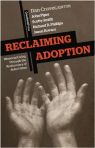
 Thanks to Cruciform Press the first 200 people will receive Reclaiming Adoption by Dan Cruver. Dan Cruver and his co-authors (John Piper, Scotty Smith, Richard Phillips, Jason Kovacs) are convinced that if Christians learn to first think about their adoption by God, and only then about the adoption of children, they will enjoy deeper communion with the God who is love, and experience greater missional engagement with the pain and suffering of this world. That’s what this book is about. What the orphan, the stranger, and the marginalized in our world need most is churches that are filled with Christians who live daily in the reality of God’s delight in them. Reclaiming Adoption can transform the way you view and live in this world for the glory of God and the good of our world’s most needy.

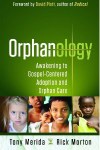
 Thanks to New Hope Publishers the first 200 people will also receive Orphanology by Tony Merida and Rick Morton. Orphanology unveils the grassroots movement that’s engaged in a comprehensive response to serve hundreds of millions of orphans and “functionally parentless” children. You’ll see a breadth of ways to care with biblical perspective and reasons why we must. Heartwarming, personal stories and vivid illustrations from a growing network of families, churches, and organizations that cross cultures show how to respond to God’s mandate. Discover how to adopt, assist orphans in transition, engage in foster care, partner with faith-based fostering agencies, and become orphan hosts. Along with their families’ adoption stories, Merida and Morton give steps for action and features on churches doing orphan ministry, faith-based children’s homes, orphanhosting groups, and other resources.

Crossway Books has also donated 200 copies of Russell Moore‘s book Adopted for Life. Dr. Moore gives a stirring call to Christian families and churches to be a people who care for orphans, not just in word, but in deed. The gospel of Jesus Christ-the good news that through Jesus we have been adopted as sons and daughters into God’s family-means that Christians ought to be at the forefront of the adoption of orphans in North America and around the world. Moore does not shy away from this call in Adopted for Life, a popular-level, practical manifesto for Christians to adopt children and to help equip other Christian families to do the same. He shows that adoption is not just about couples who want children-or who want more children. It is about an entire culture within evangelicalism, a culture that sees adoption as part of the Great Commission mandate and as a sign of the gospel itself. Moore, who adopted two boys from Russia and has spoken widely on the subject, writes for couples considering adoption, families who have adopted children, and pastors who wish to encourage adoption.

Tell us you are coming and help us spread the word by clicking here: Adoption & Orphan Care in the SBC

9 Books That Every Bible Student and Teacher Should Own

While there is no substitute for faithful, careful, and prayerful Bible reading, the Bible’s vast size and diversity can make understanding its message a daunting task. Therefore, most Christians benefit from supplemental resources to help learn and apply Scripture. But what resources are the most helpful? Which resources are reliable? In this post I have attempted to bring together a list of the resources that I reach for most often when studying the Bible and theological issues.

In preparation for this post I imagined a scenario that helped me narrow down my list. I’ll propose the qestion to you. What if you were offered a chance to teach pastors/missionaries in a seminary-like setting somewhere in a third world country? But you could only take one small suitcase of books. Which books would you take? Here is my list. (Note that the book descriptions are taken from the publisher and edited)

The ESV Study Bible, Crossway

This is the standard in study Bibles. The ESVSB combines the best and most recent evangelical Christian scholarship with the highly regarded “essentially literal” ESV translation of the Bible. The ESVSB boasts 2,752 pages, equivalent to a 20-volume Bible resource library. Also, this volume has over 50 articles—including articles on the Bible’s authority, reliability, and interpretation; on biblical archaeology, theology, worship, prayer, ethics, and personal application.
The ESV Comprehensive Concordance of the Bible, Crossway

This volume serves as an excellent study companion for the ESV Bible. With more than 310,000 references representing every verse in the ESV Bible, this makes an ideal reference tool for quickly locating particular passages or for conducting in-depth word studies. Every Bible student should have a concordance close by.
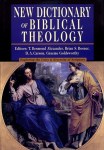
The New Dictionary of Biblical Theology, Edited by T.Desmond Alexander, Brian S. Rosner, D.A. Carson, and Grame Goldsworthy, Intervarsity Press

The NDBT takes readers to a higher vantage point where they can view the thematic terrain of the Bible in its canonical wholeness. This volume is organized with an A-to-Z encyclopedia of over 200 key biblical-theological themes such as atonement, creation, eschatology, Israel, Jesus Christ, the kingdom of God, redemption, suffering, wisdom and worship. Over 120 contributors drawn from the front ranks of biblical scholarship in the English-speaking world make the NDBT a benchmark in theological study resources.

The Dictionary for Theological Interpretation, Edited by Kevin Vanhoozer, Baker Book House

The DTI of the Bible is a reference tool that seeks to marry the tasks of exegesis and theology with the goal of theological interpretation of Scripture. This work also aims to provide a guide to understanding various interpretative approaches and a tool for evaluating them in light of this goal. The dictionary covers a wide range of topics including the theological interpretation of individual books of the Bible, issues of hermeneutics, various biblical interpreters and interpretative communities, and the interplay of interpretation with various doctrines and doctrinal themes. The contributors represent a diverse range of theological backgrounds and interpretative approaches and are experts in their respective fields.

Commentary on the New Testament use of the Old Testament, Edited by G.K. Beale and D.A. Carson, Baker Book House

Readers of the New Testament often encounter quotes or allusions to Old Testament stories and prophecies that are unfamiliar or obscure. In order to fully understand the teachings of Jesus and his followers, it is important to understand the large body of Scripture that preceded and informed their thinking. This volume is made up of entries from a distinguished team of scholars to provide readers with a comprehensive commentary on every quotation, allusion, and echo of the Old Testament that appears from Matthew through Revelation.
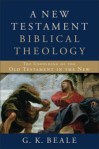
A New Testament Biblical Theology, G.K. Beale, Baker Book House

In this comprehensive exposition Beale explores the unfolding theological unity of the entire Bible from the vantage point of the New Testament and examines how the New Testament storyline relates to and develops the Old Testament storyline. Beale argues that every major concept of the New Testament is a development of a concept from the Old and is to be understood as a facet of the inauguration of the latter-day new creation and kingdom.
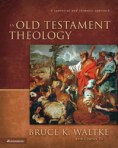
An Old Testament Theology, Bruce K. Waltke, Zondervan

The Old Testament’s every sentence is “fraught with theology, worthy of reflection.” This book is the result of decades of reflection informed by an extensive knowledge of the Hebrew language, the best of theological scholarship, a deep understanding of both the content and spirit of the Old Testament, and a thoroughly evangelical conviction. Taking a narrative, chronological approach to the text, Waltke shows that the unifying theme of the Old Testament is the “breaking in of the kingdom of God.” This theme helps the reader better understand not only the Old Testament, but also the New Testament, the continuity of the entire Bible, and ultimately, God himself.

The Christian Faith, Michael Horton, Zondervan

The Christian Faith broadly interacts with movements within the Protestant, Catholic, and Orthodox traditions. In this systematic theology Horton offers a brief synopsis of biblical passages that inform a particular doctrine; and surveys current and past works with contemporary emphasis on exegetical, philosophical, practical, and theological questions. Its features include: (1) a brief synopsis of biblical passages that inform a particular doctrine; (2) surveys of past and current theologies with contemporary emphasis on exegetical, philosophical, practical, and theological questions; (3) substantial interaction with various Christian movements within the Protestant, Catholic and Orthodox traditions, as well as the hermeneutical issues raised by postmodernity; and (4) charts, sidebars, questions for discussion, and an extensive bibliography, divided into different entry levels and topics.

Historical Theology, Gregg R. Allison, Zondervan

Allison offers students the opportunity to study the historical development of theology according to a topical-chronological arrangement, setting out the history of Christian doctrine one theological element at a time. Such an approach allows readers to concentrate on one tenet of Christianity and its formulation in the early church, through the Middle Ages, Reformation, and post-Reformation era, and into the modern period. The text includes a generous mix of primary source material as well, citing the words of Cyprian, Augustine, Aquinas, Luther, Calvin, Barth, and others. This volume is a great resource for those interested in understanding the development of Christian theology.

Which books would you choose?
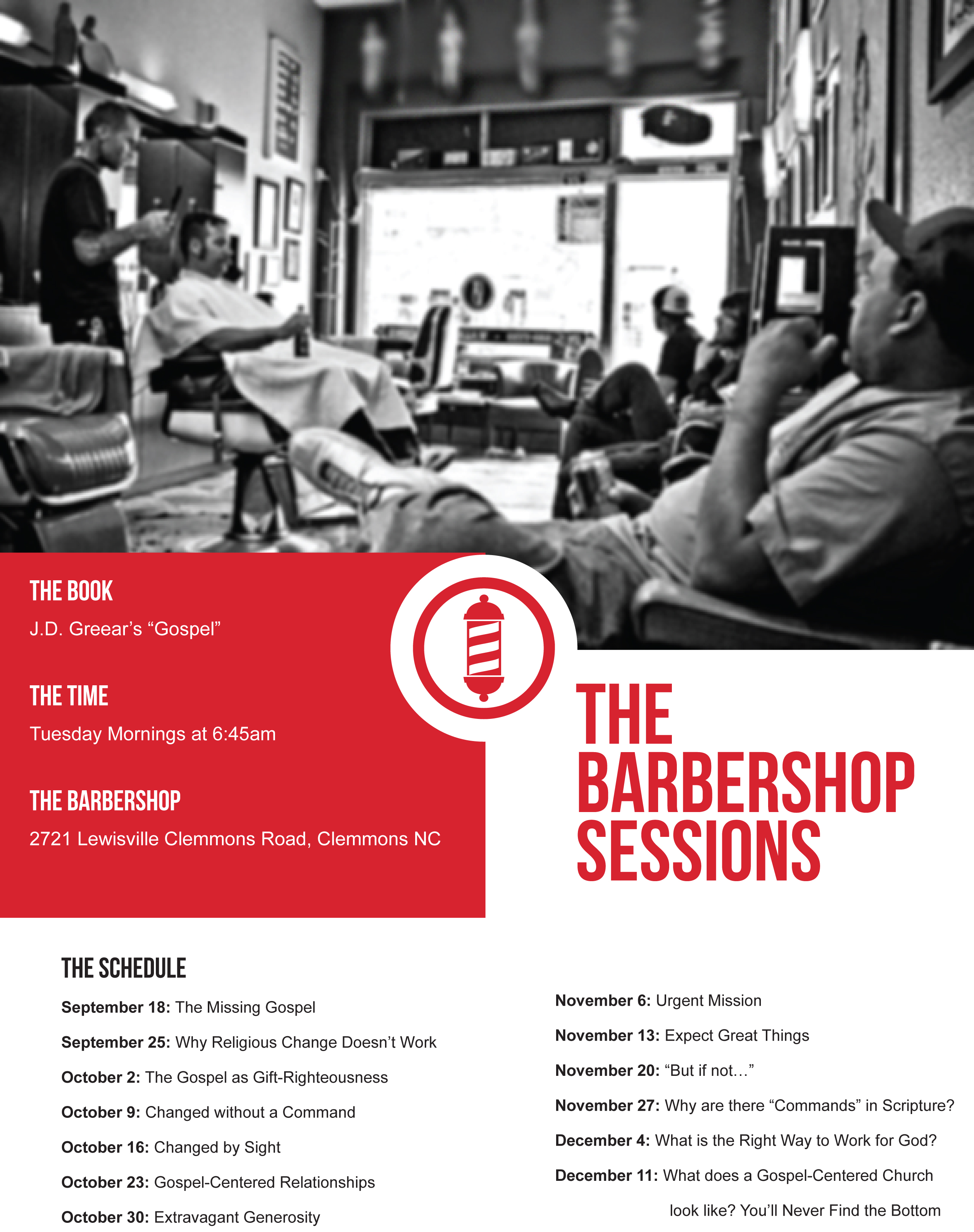
The Roots Reading Initiative from PLNTD, Round 4!

It has been my privilege to serve church planters by helping out with the Roots Reading Initiative which Tim Brister started for the PLNTD Network. Here’s a brief explanation:

The Roots Reading Initiative, focuses on providing church planters targeted self-feeding opportunities through an informal structure and accountability. The goal of this initiative is for church planters to “deepen their roots” in their understanding of God, the church, gospel, mission, and the world. In doing so, we believe the RRI will be an effective way of keeping church planters “grounded” and growing as leaders, missionaries, and churchmen.

Tim says that the “five areas ministry leaders need to continually cultivate are (1) man, (2) message, (3) mission, (4) marriage, and (5) methods. Through RRI, PLNTD tackles one of these areas every two months with books targeted to develop leaders for those purposes“. So far, here’s what we have covered:

Nov/Dec 2011 :: MISSION

Jan/Feb 2012 :: MESSAGE

Mar/Apr 2012 :: MARRIAGE

Starting this week, we are now taking up the area of methods, and here are the books we are working through:

May/June 2012: METHODS

Tim writes: “For each book, a reading schedule is provided for those who participate through our network.  Additionally, discussion questions are provided each week which, when the book is completed, are compiled in a downloadable format for a book-length study guide that can be used to disciple others or train leaders in your context. To take advantage of learning in community and accessing additional resources through RRI, you need to join PLNTD’s relational communities and jump into the “Training” community online. Now’s a great time join us if you haven’t already!  Leaders cannot afford to have shallow roots and no shade for their people.

I am grateful for Tim’s vision for the PLNTD Network, and for the Roots Reading Initiative and I am thankful to be a part of it!