The Importance of Biblical Community

Eric Geiger writes:

“Small groups in the life of a local church community are invaluable. This is why the writer of Hebrews admonished the early church to “…encourage each other daily, while it is still called today.” God uses community to supernaturally mature his people over time. He has designed us to grow together as a body. In many ways, Christian sanctification is a group project.

At LifeWay, we partner with pastors, writers, and ministry leaders to develop Bible studies for groups. In recent years, we have introduced or re-introduced ongoing Bible studies that are built around distinct starting points. While all of our studies are rooted in Scripture and focused on Christ, by clarifying unique group starting points we are able to bring greater focus to each line of studies.

For groups that want to start with real life issues and apply the Bible to those issues, we offer Bible Studies for Life. For groups who want to start with the text and walk through books of the Bible, we offer Explore the Bible. For groups that want to begin with theology to understand how the themes of Scripture fit together and point to Jesus, we offer The Gospel Project.

God has used the intentionality and focus to allow us to serve more groups/classes. While we have a great history at LifeWay, our ongoing Bible studies were on a 29-year decline. But in the last 18 months, the decline has turned. The Lord has been so good and gracious to us. We are honored to be serving groups/classes in churches around the world with trustworthy content.

If you are interested in The Gospel Project, we offer ongoing studies released every few months OR you can use the new small group study series. Regardless, The Gospel Project provides you with solid biblical theology along with missionally-driven application for your small group context.”

What Is Our Problem With Hell?

tgp_blogheader_oct13-Copy

I recently wrote this blog post for The Gospel Project in a series on A God-Centered Worldview. You can see the whole series on A God-Centered Worldview here.

Where Did Hell Go?

We all know that one thing is for certain, all men die (Hebrews 9:27). While death is a certain reality, it is not something we regularly talk about with others. As for the topic of eternal destinies after death, those conversations are even more scarce. More specifically, consider the topic of hell. Who wants to talk about, even ponder, the reality of hell as portrayed in the Bible?

Not too long ago, I was traveling and decided to take a few books with me in preparation for writing this blog post. One of these volumes was a full book-length treatment on the topic of hell. I distinctly remember taking notable pause when reaching down into my bag in order to retrieve this book. The dust jacket not only had images of flames but also had the word “hell” in large embossed letters. In that moment I could imagine the thoughts of the other two passengers in the seats beside me if I began reading a book on eternal punishment as we were being hurled five hundred miles an hour through the air. Nothing says let’s have a delightful chat to those around you, or gives an indication as to where the conversation might go, like holding a book covered in images of hell fire.

Now, let me be clear. I believe in the reality of hell. The Bible is very clear on this issue. The point of my anecdote was simply to illustrate the palpable social stigma that is attached to this biblical doctrine in our post-Christian culture. It is a stigma that I am very aware of, as are many other Christians. It’s just not something we talk about. Notably, the reality of hell has been a fixture in Christian theology for over sixteen centuries, but at some point in the 1960’s hell disappeared. And more recently, the traditional view of the nature of hell has been challenged more than ever before.

What Is Hell According to the Bible?

Historically; Christians have held that after death, believers will either dwell with God in paradise, heaven, and eventually the new heavens and new earth or be cast out of God’s presence forever into a place called hell. Hell has been taught as involving eternal conscious torment of persons who have rejected the forgiveness of God through the atoning sacrifice of Christ Jesus. In the book Hell Under Fire;Christopher Morgan summarizes the three predominant pictures of hell we find in the New Testament.

  • Punishment is the chief description of hell in the New Testament (Matt. 25:31-46; 2 Thess. 1:5-10; Rev. 20:10-15). Summarizing these passages; Morgan concludes that the punishment of hell is just, consists of suffering, is conscious, and is eternal.
  • Destruction is also a central descriptor of hell in the Bible; in fact, this descriptor of hell is used by almost all of the New Testament writers (the exception seems to be Mark). In 2 Thessalonians 1:5-10; we find the most developed section of this theme, where Paul explains the eternal destruction of hell. For Paul, hell as destruction is best understood as utter loss, ruin, or waste.
  • Banishment is the last central picture Morgan explores dealing with the difficult doctrine of hell. The picture of hell as banishment is also found in almost every New Testament book, with the exceptions of James and Hebrews. Banishment carries with it the connotation of separation, exclusion, or being left outside. Mark 9:42-48 provides a clear example as believers are welcomed into the kingdom of God and the wicked are banished outside of it.

In summary, punishment and destruction stress the active side of hell, while banishment stresses the horror of hell by highlighting what a person is excluded from. As we’ve already stated, secular thought and modern sentiment certainly make it hard to talk about the reality of hell. Moreover, while many Christians may hold to the historic convictions of the Christian faith, they find it very hard to align their emotional response to the doctrine of hell with the biblical teaching on it.

What Is Our Problem with Hell?

Perhaps some have trouble with the doctrine of hell emotionally because, deep down, we may find ourselves posing defensive questions in response. The question that hides under most questions regarding hell is “Isn’t hell unfair?”

In one sense this question is probably related to the judicial idea that people are innocent until proven guilty. True, if people are truly good and innocent; then God has no right to judge or punish. However, the apostle Paul said that no one is righteous; all are guilty in sin and without excuse before God (Romans 1:10, 3:10-11, 5:12). Russell Moore notes that hell is an affront to a non-Christians sense of justice, “…since no person except through the conviction of the Spirit deems himself worthy of condemnation.”

Another assumption behind this question is that people are neutral, generally good, or even innocent of God’s judgment. I don’t think it is a far stretch to assume that many non-Christians and ill-informed religious people assume that heaven is the common destination of humanity, except for the worst and most cruel humans: murders, pedophiles, genocidal dictators, etc. The broad assumption is that hell is only for other people, namely, people worse than I am. Again, the Bible is clear that all are guilty in sin (Isaiah 64:6). Simply put, no human stands on neutral ground when it comes to eternity.

Sadly, there is little talk about hell because too many people ignore the reality of sin or estimate they have too little sin. To put it bluntly, it would be just for God not to save one person from the depths of hell. This is where the good news of the cross deals with the “problem” of justice. On the cross of Christ, God makes it possible to justify sinners at the cost of His son and remain a just God. On the cross; Jesus took upon Himself what we deserved (death) and paid the penalty for our sin and through His resurrection; freely offers what we do not deserve (forgiveness and eternal life with God).

For this reason we need to be willing to tell the whole gospel story, even if it is uncomfortable. As Tim Keller has said, “there is an ecological balance to Scriptural truth that must not be disturbed.” To preach the good news, we must warn people of the bad. Keller argues that if we play down difficult doctrines; we will find, to our shock, that we have gutted all of our pleasant beliefs too.

Conclusion

For some people the doctrine of hell is extreme, and they are right. Hell is extreme because sin is extreme. However, Jesus Christ endured the hell of the cross so those who believe in Him might escape it. Michael Rogers rightly states that “Hell alarms us as nothing else can about the awful weight and penalty of sin.” The doctrine of hell should weigh heavy on the Christian heart as the Spirit leads us to plead with those who are without Christ. Hell is a horror to the Christian conscience. We shouldn’t deny the reality of hell, nor should we sheepishly avoid it. If anything, the doctrine of hell calls us to bold yet winsome evangelism. If modern sentiment, social tolerance, and relational indifference held the final votes about the doctrine of hell, the Bible’s view of hell surely would find few defenders.
Biblical Theology and Preaching with Dr. Greg Beale

Dr. Greg Beale (Professor of New Testament and Biblical Theology at Westminster Theological Seminary) explains the discipline of biblical theology and why a preacher might want to make use of it.

You can find the study notes here. Thank you to Charles Simeon Trust for making this resource available.

10 Reasons Church Leaders Need To Continue Their Education

Chuck Lawless recently wrote ten reasons why leaders should continue their education at Between The Times. Lawless serves as Dean of Graduate Studies and Professor of Evangelism and Missions at Southeastern Baptist Theological Seminary.

1. The Christian life is about growth. We are babies in Christ at new birth, yet called to continual growth and maturity (Heb. 5:12-14). Always, we are to be in the process of God’s conforming us to the image of His Son (Rom. 8:29). If we reach the point of assuming we’ve “arrived” and need no further training, we are instead neglecting our Christian responsibility.

2. A willingness to learn is a sign of humility. Education is seldom easy. An openness to become a student again, to be held accountable for assignments, and to be evaluated by others is a sign of the kind of humility all leaders should exhibit. We need no more arrogant leaders, and the education process can sift out our pride.

3. We always face theological issues. The authority of the Word of God, especially when evaluated against sacred documents of other world faiths, continues to be an issue. We must increasingly defend the truth that a personal relationship with Jesus is the only way to God. The doctrine of the Trinity is at times an issue when evangelizing around the world. Continued education can help us be better prepared to respond to these types of significant issues.

4. We continue to confront new ethical and moral issues. When I started in ministry over thirty years ago, I did not imagine ministering in a culture that affirms same-sex marriage. Internet pornography was not even an option. Never did I envision ministering to Sally, who actually began life as Sam. Issues like these are not, of course, separated from our theology, and further education equips us to minister in this changing culture.

5. The people we lead are frequently still learning. At least in North America, we often minister to educated parishioners. They are teachers, engineers, physicians, and accountants. Many of our congregations include professionals for whom continued education is assumed, if not required. Thus, they recognize the value that continued training offers for their spiritual leaders.

6. Distance learning options allow us to continue education without leaving our ministry. Gone are the days when education required students to move to a campus. Today, the Internet offers unprecedented opportunities for continued training without evacuating significant ministries. Southeastern Seminary now offers masters and doctoral degrees – including the PhD – that do not require full-time residence in North Carolina. The relocation obstacle to continued education simply doesn’t exist anymore.

7. Learning within a group of peers is important. Many opportunities for advanced training include small group, peer-to-peer learning that focuses on particular aspects of leadership. Few educational options are as valuable as these. Each student brings his/her own knowledge to the classroom, helping to build a community of scholars. Peers become not only classmates, but also prayer partners. Education thus becomes not only content-based, but also life-on-life.

8. We often learn better after leadership experience. Learning apart from practical experience is not insignificant, but it risks becoming only theory rather than life application. Frankly, it’s easy to decide how to be a leader until you actually have to be one. The best students I know are those who leadership experience gives them a grid through which to evaluate concepts and programs. These students are those who choose to continue their education throughout their ministry.

9. The discipline of learning is important. Let’s be honest: even leaders sometimes get lazy. We rely solely on yesterday’s learning to face today’s issues. We talk more about what we have read than about what we are reading. Personal preparation for daily ministry becomes more surface review than intense study. Continued education, on the other hand, challenges us to return to rigor and discipline.

10. Continued education stretches our faith.  The obstacles to further training are real. Too little time. Too few dollars. Too many years out of school. Too many other responsibilities. Too much risk of failure. Here’s the bottom line, though: sometimes we just have to trust God to help us do what He expects us to do.

Pastoring Is Not a Very Glamorous Job

A recent interview with Eugene Peterson by Religion News Service’s Jonathan Merritt was a refreshing view into the iconic pastor’s life. Here is a great quote by Peterson on the pastoral vocation:

“… Pastoring is not a very glamorous job. It’s a very taking-out-the-laundry and changing-the-diapers kind of job. And I think I would try to disabuse them of any romantic ideas of what it is. As a pastor, you’ve got to be willing to take people as they are. And live with them where they are. And not impose your will on them. Because God has different ways of being with people, and you don’t always know what they are.

The one thing I think is at the root of a lot of pastors’ restlessness and dissatisfaction is impatience. They think if they get the right system, the right programs, the right place, the right location, the right demographics, it’ll be a snap. And for some people it is: if you’re a good actor, if you have a big smile, if you are an extrovert. In some ways, a religious crowd is the easiest crowd to gather in the world. Our country’s full of examples of that. But for most, pastoring is a very ordinary way to live. And it is difficult in many ways because your time is not your own, for the most part, and the whole culture is against you. This consumer culture, people grow up determining what they want to do by what they can consume. And the Christian gospel is just quite the opposite of that. And people don’t know that. And pastors don’t know that when they start out. We’ve got a whole culture that is programmed to please people, telling them what they want. And if you do that, you might end up with a big church, but you won’t be a pastor.”

HT: Leadership Journal

An Unbelievably Powerful Story

This is an unbelievably moving story testifying to the power of the gospel.

“Erik is a youth pastor. Matthew is a firefighter/EMT. They meet together every month to discuss what God is doing in their lives. But Erik wishes he’d met Matthew under different circumstances. You see, a few years ago after a long shift, Matthew fell asleep at the wheel and crashed head-on into a car carrying Erik’s pregnant wife and daughter. His wife and unborn son didn’t survive.”

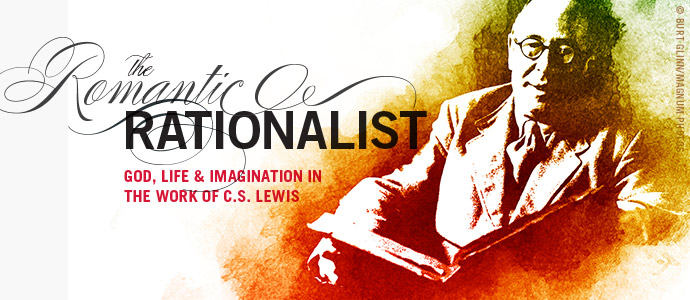
The Romantic Rationalist: God, Life, and Imagination in the Work of C.S. Lewis

CS Lewis - Copy

Desiring God has posted the audio and video files from this years national conference on imagination in the work of C.S. Lewis. Enjoy!

Be in Awe of Jesus Christ

I was with Trevin Wax the other night at a training session for bible teachers in Memphis, Tennessee. During Trevin’s session he used this story to illustrate why it is important not to jump right to application before leading people to awe at the power of Jesus Christ.

Mark Galli, in his book, Jesus Mean and Wild, illustrates this point wonderfully when telling about the time a group of Laotian refugees started attending the church he led in Sacramento.

After the service one Sunday, they approached him and asked to become members. They had only a rudimentary understanding of the Christian faith, so Pastor Mark suggested they study the Gospel of Mark together for a few weeks to make sure they knew what a commitment to Christ and his church entailed. They happily agreed. 

Mark says, “Those Bible studies were some of the most interesting he has ever led.” After they read the passage in which Jesus calms the storm, Mark began as he usually did with more theologically sophisticated groups: he asked them about the storms in their lives. 

There was a puzzled look among his Laotian friends, so he elaborated: “We all have storms—problems, worries, troubles, crises—and this story teaches that Jesus can give us peace in the midst of those storms. So what are your storms?” he asked. 

Again, more puzzled silence. Finally, one of the men hesitantly asked, “Do you mean that Jesus actually calmed the wind and sea in the middle of a storm?” 

Mark thought the man was finding the story incredulous, and Mark didn’t want to get distracted with the problem of miracles. So he replied: “Yes, but we should not get hung up on the details of the miracle. We should remember that Jesus can calm the storms in our lives.” 

There was another stretch of awkward silence until another replied, “Well, if Jesus calmed the wind and the waves, he must be a powerful man!” At this, they all nodded vigorously and chattered excitedly to one another in Lao. 

Mark says, “Except for me, the room was full of wonder. I suddenly realized that they grasped the story better than I did.”

(Mark Galli, Jesus Mean and Wild, Baker, 2006, p. 112)

New Book: Michael Kelley’s “Boring”

My friend and co-worker (and fellow fruit flavored candy lover) Michael Kelley has written an extremely helpful book titled Boring. Not only is Michael a good writer, he is also a good thinker. He applies these two God given gifts to challenge our perceptions of everyday average life.

“What if we are looking so hard for these grandiose experiences of significance that we are missing the opportunities for significance right in front of us,” he writes. “What if there is no such thing as ordinary when you follow an extraordinary God?” (8)

In Boring, Michael seeks to reorient the reader to this important and often neglected truth. Too many of us fear that our lives will be ordinary. However, for the Christian, an ordinary life is a paralyzing myth. If you are a follower of Christ – you are the child of a God that is anything but ordinary. The God of the Bible is the God who created, sustains, and providentially directs all things – including the seemingly mundane details of your life. This is not an abstract theological truth that has no impact on your daily activities, but should shape every aspect of your life.

boring-michael-kelleyThe problem is that too many of us miss what God is doing in the valley, because we are longing for the mountain top experience. However, all of us know that the majority of the Christian life is lived in the valley. According to Kelley, “…The truth is that we will all spend 90 percent of our time here on earth just doing life. Just being ordinary.” So, the heart of the problem is not with the routines of life, but with our understanding and expectations of them. Kelley argues that we should reorient our thinking to see the profound nature of our extraordinary God, and how that impacts the activities of daily life.

“What if God actually doesn’t want you to escape from the ordinary, but to find signifi­cance and meaning inside of it?”

The question isn’t whether or not God is present and active; the question is just how aware we are of that presence and activity.

“This greater reality is happening right in the middle of the ordinary people, singing in their off-key kind of way, trying to wrangle their ornery children. In the middle of the mundane there is something of cosmic significance going on…A regular life isn’t just a series of physical times and moment strung together; it’s a progression of being formed into the image of Jesus…Because an extraordinary and active God is there, constantly working, there is no such thing as ordinary anymore.”

Pick up this book and read. Prayerfully, Michael will show you how to see every relationship, every act of kindness, and every moment for what it is: a part of God’s exciting plan for your life.

Together for Adoption: “Why is Your Mommy White?”

The Ministry of Together for Adoption 

Laura and I are so grateful for the ministry of Together for Adoption. Several years ago we attended the national conference in Franklin, TN, while waiting to adopt our son Solomon. If you have adopted, are in the process of adopting, or praying about adopting I would encourage you to attend the Together for Adoption National Conference on October 4-5 at Southern Seminary. If you do attend, prepare to be inspired and equipped for adoption, foster care and global orphan ministry. Here are the details.

Six rich general sessions. Sixty tool-gathering workshops. One breathtaking Story.

In the Bible, Adoption is a story-word. God’s work of adoption within the world is a story that encompasses all of human history, from its pre-temporal beginnings when God predestined us to “adoption as sons through Jesus Christ” (Ephesians 1:3-6) to the eventual renewal of all creation (Romans 8:23)—the Day when everything sad comes untrue. From the Apostle Paul’s perspective, Adoption is the redemptive Story that changes everything for us and the fatherless.

Alongside the six rich plenary sessions, our national conference will provide more than sixty tool-gathering workshops led by Dr. Timothy Paul Jones, Dr. Randy Stinson, Johnny Carr, Dr. Jon Bergeron, Gerrit Dawson, Susan Hillis, Elizabeth Styffe, and many other global leaders.

Together for Adoption National Conference Details

General Session Topics

  1. The Story Gone Wrong (Mike Reeves, author of Delighting in the Trinity)
  2. Stories of the Fatherless (Dr. Sharen Ford, Manager of Colorado State’s Permanency Services Unit)
  3. The Story Re-Written (Dan Cruver)
  4. Our Lives Re-Written (Mike Reeves)
  5. Stories of the Fatherless Re-Written (Vermon Pierre)
  6. When Everything Sad Comes Untrue (Scotty Smith)

8 Breakout Session Tracks

  1. Stories about Beginning the Adoption Journey (Pre­-Adoption)
  2. Stories from Experienced Adoptive Families (Post-Adoption)
  3. Stories from Experienced Adoptive Families with Special Needs
  4. Stories about Foster Care within Families
  5. Stories about the Orphan Crisis from Experienced Organizations
  6. Stories about Financing your Adoption Journey
  7. Stories about Developing Ministries for Adoption/Orphan Care Movement
  8. Stories about God’s Work through the Theology of Adoption

Download the PDF version of the Breakout Sessions listed according to their Story-Tracks.

See the conference schedule.