“The Fullness of Time” – A Christmas Meditation

 “When the fullness of time had come, God sent forth his Son.”[1]

The good news of Christmas did not begin with the birth of Jesus. As Paul says in Galatians 4, God sent his Son when the time was complete. As if God was waiting for a specific time to unveil the most important part of redemptive history. What this verse affirms is that there had always been a plan. This story, this story that culminated in the life and work of Jesus began in the begining. As the Apostle John writes in opening words of his gospel account;

“In the beginning was the Word, and the Word was with God, and the Word was God. He was in the beginning with God. All things were made through him, and without him was not any thing made that was made.”[2]

Throughout human history we have had small tastes, small glimpses into this plan. See, In the beginning man and woman were created to live in the presence of God. To reflect his beauty and enjoy his presence and blessings. Yet, our first parents followed the lies of a serpent and turned their backs on God’s fatherly provision and tried to establish their own dominion, breaking the harmony of created order. As a result of the fall,  sin entered our world – with it came pain, suffering, disease, disaster, and death. Since then, the majority of human history has been a record of wars, conflict, and longings. But even in the hardest times, there have been small tastes of the redemption that was to come. Take a few examples from the story of humanity:

  • Immediately following the fall of mankind God covers Adam and Eve’s shame with the skin of a sacrifice. God also promises that from Eve, in her descendants, one would come to crush the head of the evil one, destroying his power.
  • Later God chooses a man by the name of Abraham, tells him to leave all he has known, and promises that he will Father a new, people, a people from many nations.
  • After Abraham, a man by the name of Moses is raised up to deliver God’s people out of slavery under Pharaoh in Egypt. Beyond this, Moses is also appointed to mediate between his people, all two million of them, and God almighty.
  • Consider the young Shepherd boy named David who stepped out against his people’s enemy Goliath in war. There he was, a young untrained boy representing his people against a fierce and decorated warrior. David won and was anointed King of Israel

Human history is a story of longing. A story of a people longing to see the end of pain, suffering, disease, disaster, and death. A story of an exiled people trying to get home in the presence and care of their loving Father. A people who have carried the burden of sin. A people who have cried out for deliverance. A people who long to have a good King who rules with perfect justice and mercy.

 And God delivered.

At just the right time. In the fullness of time. When longings of humanity had reached their fullness. When God’s plan of redemption was ready for its culmination, He sent Jesus. And in the birth of Jesus we find our answer. We find in his fullness, what the heroes of the Old Testament gave us a brief taste of.

  • We find in Jesus the true and greater Adam who passed the test in the garden and whose obedience is accredited to us. Jesus is the descendant of Eve who destroys the curse of sin and death.
  • Jesus is the true and greater Abraham who answered the call of God to leave all the comfortable and familiar and go out into wilderness not knowing where he went to create a new people of God gathered from every tribe, tongue, and nation.
  • Jesus is the true and greater Moses who delivers his people from slavery of sin, and from the hands of a tyrant named death. Jesus, like Moses, stands in the gap between the people and the Lord and who mediates a new covenant.
  • Jesus is the true and greater David whose victory becomes his people’s victory, though they never lifted a stone to accomplish it themselves. Jesus is also the eternal king from the line of David who’s perfect rein will never end.

This is why we sing, “glory to the new born King, peace on earth, and mercy mild, God and sinners reconciled!” Jesus is our long awaited answer to our deepest longings. At his birth God announced that his kingdom was here, and now we as followers of Christ wait for the day for it to be consummated.

Continue reading ““The Fullness of Time” – A Christmas Meditation”

The Gospel and Pastoral Burden

I have not been in full time ministry too long. But from what I can tell, pastoral ministry is one of the most unique vocations on earth. It is paradoxically one of the most rewarding and yet the heaviest things I have ever dedicated my life to. I reading a fellow pastor’s blog in which he described the “burden of pastoral ministry” as follows:

  • The leadership and financial stress and uncertainty of a high level entrepreneur.
  • The responsibilities teacher to clearly communicate the truth.
  • The weight of a counselor as everyone shares their deepest, darkest secrets, and problems expecting meaningful help.
  • The burden of an artist that weekly crafts and presents a message for all to see, hear, and critique.
  • The heart of a parent to make sure others experience the needed love and care.

If you are a pastor you can probably resonate with the general idea of these descriptions. What pastors can easily fail to recognize is that the desire to do well ministry can sometimes become elusively sinful. It’s very easy for pastors to take something good like ministry and allow it to become an idol (we place all of our hope in performing these expectations well) or a crushing self-righteous burden (we think we can and try and carry these expectations alone).

When we give in to performance idolatry or self-righteous burden carrying we have failed to believe the claims of the gospel itself. This is where I have found Tim Chester’s “four truths” so helpful. In the book You Can Change Chester argues that most of our sinful behavior and negative emotions arise because we are not believing one of these four truths as we should.

  1. God is great so we do not have to be in control.
  2. God is glorious so we do not have to fear others.
  3. God is good so we do not have to look elsewhere.
  4. God is gracious so we do not have to prove ourselves.

In another book, Everyday Church, he writes that “for the most part, our pastoral interventions go wrong not because we lack technique or knowledge or experience but because we as pastors have failed truly to believe one of these four truths about God.” (91) He then applies the four truths to pastoral ministry:

  1. If we don’t believe these truths we will think people need us to save them.
  2. If we don’t believe these truths we will fear how people will respond to us.
  3. If we don’t believe truths we will avoid difficult situations.
  4. If we don’t believe these truths we will try to impress others constantly.

If these claims are true, then we can deduce that most poor pastoral care comes down to not believing in the sufficiency of the gospel for every aspect of ministry. Pastor, you need to believe these truths. You need to feel these truths deep down in your heart. These gospel truths will set you. The first step in the process is to identify the sin. Think through these questions based on Chester’s list in Everyday Church (95).

  • Are you overbearing?
  • Are you inflexible or risk-averse?
  • Are you impatient with people?
  • Do you avoid responsibility?
  • Do you avoid confrontation?
  • Do you crave approval?
  • Do you behave differently around certain people?
  • Do you pretend or hide your true self?
  • Do you feel that ministry is a burden?
  • Do you crave approval?
  • Do you often complain?
  • Do you make people feel a burden of duty?
  • Do you have trouble sticking at things?
  • Do you take criticism and failure badly?
  • Do you find it hard to relax?
  • Are you proud, do you envy the success of others?
  • Do you make people feel guilty?

Pastor, do you see yourself in any of these descriptions? Remind yourself of the “four truths” and remember the words of Jesus:

“Come to me, all who labor and are heavy laden, and I will give you rest. Take my yoke upon you, and learn from me, for I am gentle and lowly in heart, and you will find rest for your souls. For my yoke is easy, and my burden is light.”

How Do You Respond To King Jesus? – Matthew 2:1-12

This is an edited manuscript of a sermon I preached at Calvary Baptist Church, West Campus, on December 11th, 2011.

Introduction

In Matthew 2:1-12 we don’t only find the well-known characters of Herod and the religious leaders who appear throughout the gospels, but we also briefly meet a band of travelers who have mystified and fascinated Bible students for centuries – the wise men.

The story of the wise men is so familiar in American culture. Perhaps when you read this text you think of the carol written by the 19th century hymn writer John Hopkins Jr., “we three kings of Orient are”. Or you imagine the scene as it is depicted on the Christmas cards with infant Jesus, Mary, the Shepherds, Angels, and three Kings surrounding a trough. Much like the nativity set that sits on the mantel at your grandmother’s house. We are familiar with this story, or so we think we are. There are certain things about this story that we assume are true, but are not. Now, the point is not to encourage you to go home and rearrange your nativity set, mail back Christmas cards that falsely depict this story, nor to ban your children from singing “we three kings.” That’s not the point.

The purpose is for us to see the deeper meaning of this text. There is much more in this passage than our Christmas traditions present to us. At its very heart this passage is about God’s work in salvation and the call of response to man. So the driving question for this passage is simple – How Do You Respond To King Jesus? C. S. Lewis the Oxford historian composed the famous logic in his book Mere Christianity that has become known as Lewis’s “trilemma”. He said that people often say:

“I’m ready to accept Jesus as a great moral teacher, but I don’t accept his claim to be God. That is the one thing we must not say. A man who was merely a man and said the sort of things Jesus said would not be a great moral teacher. He would either be a lunatic — on the level with the man who says he is a poached egg — or else he would be the Devil of Hell. You must make your choice. Either this man was, and is, the Son of God, or else a madman or something worse.”[1]

Lewis was arguing that either Jesus was Lord, Liar, or Lunatic. Now, if you take him for a lunatic you can refuse him, if you take him for a liar you can ignore him, but if you take him as Lord you will fall at his feet and worship. I am asking us a similar question today. This is a very straightforward and simple message. How do you respond to Jesus? – not only when it comes to conversion, but also in your day to day life?

  1. Do you refuse him?
  2. Do you ignore him?
  3. Or do you worship him above all else?

I believe we see all 3 three different responses in this passage – Herod refuses Jesus, the religious leaders ignore Jesus, and the wise men worship Jesus.

The Refusal of King Herod (3, 7-8)

1 Now after Jesus was born in Bethlehem of Judea in the days of Herod the king, behold, wise men from the east came to Jerusalem, 2 saying, “Where is he who has been born king of the Jews? For we saw his star when it rose and have come to worship him.” 3 When Herod the king heard this, he was troubled, and all Jerusalem with him;

and assembling all the chief priests and scribes of the people, he inquired of them where the Christ was to be born. 5 They told him, “In Bethlehem of Judea, for so it is written by the prophet:

From the very outset, we see that Jesus birth creates a political crisis. He was born during the reign of Herod. You cannot mention Herod’s name without moral scandal being attached to it.[2] There are many names in human history like this. Herod basically came into power by crushing all those who were in opposition to his rule with the help of Roman forces. All Rome wanted from Herod, was for Herod to keep Judea quiet. In exchange for his duties he got to live like a king. But this rule, this power, this lifestyle – was something easily threatened, so it was something he guarded at all costs.

In fact historians tell us that in his last years his paranoia “of losing power” compounded, and in order to protect his throne he brutally murdered his closest associates, his wife, and at least two of his sons.[3] What made this even worse was the fact that Rome did not love him, Rome needed him, and the Jewish people he ruled over despised him.[4] So when we look at the text and we see, “Behold” – look, be surprised. This is an attention getting word. This is important. Here Matthew is telling us that somehow Herod gets wind of wise men going around, in his kingdom, inquiring about one who has been “born king of the Jews.” Born king of the Jews? If there is one who is born king they would have a greater claim to the throne than Herod. This is riot material. This is enough to make the throne of Herod shake.

It becomes obvious that “Jesus is born into an occupied land, a small outpost, on the edge of a mighty empire.”[5] And Herod could not tolerate the thought of homage being paid to another king. This is why the text tells us that he was troubled – literally, in turmoil, deeply disturbed. The text also tells us that all of Jerusalem is troubled with him. Quite simply, when the king is not happy, no one is happy. Jerusalem was afraid of Herod’s reaction, of violet retaliations which such a threat might be expected to evoke. Fear of this baby reveals the depth of Herod’s fragility.[6] So what does Herod do in his fear? What does Herod do to protect his throne?

7 Then Herod summoned the wise men secretly and ascertained from them what time the star had appeared. 8 And he sent them to Bethlehem, saying, “Go and search diligently for the child, and when you have found him, bring me word, that I too may come and worship him.”

Wanting no undue publicity, Herod calls the wise men secretly and to inquire with high concern the exact date of the stars first appearance as to figure out when this child was born, and as we see later on, he uses this information to issue a decree of death to all male babies born around that time. While his secrecy was designed to hide his treachery,[7] “it is difficult to believe that the magi had not heard of Herod’s reputation or that they were unable to estimate his character as to see the hypocritical humility[8] behind his words – “come and worship him.” [9] It becomes clear that Herod has no intention of worshiping Jesus; he has refused King Jesus and wanted to eliminate his rule.

In the very beginning when Adam and Eve sinned against God it was an act of defiance – proclaiming to God that he would not have dominion over them. They would be their own rulers, their own kings. We inherit this deadly desire from our first parents. Not only are their people who out rightly reject and refuse the rule of Christ in their lives completely. There are also those of us who have the mistaken idea that we can refuse the rule of Christ on this or that in our lives. There is a part of each of us that wants to exercise dominion over certain areas of our lives, especially when it comes to something that we find pleasure, comfort, or power in. So like Herod we do anything we can to protect the sinful desire, action, or life pattern. When that thing becomes confronted, the throne of our hearts shakes. Our occupied hearts become troubled, deeply disturbed. How many of you are bowing down, sacrificing and pledging your allegiance to something in your life that has you completely mastered? That is your king. You, like Herod are refusing Jesus for something that will never satisfy you and in the end will destroy you. There is another rejection, another response to Jesus.

The Indifference of the Religious Leaders (4-6)

4 and assembling all the chief priests and scribes of the people, he inquired of them where the Christ was to be born. 5 They told him, “In Bethlehem of Judea, for so it is written by the prophet:

6 And you, O Bethlehem, in the land of Judah,

are by no means least among the rulers of Judah;

for from you shall come a ruler

who will shepherd my people Israel.

Question; Why does it take pagan wise men from the far east to ask the question “where is he who is born king of the Jews?” This is a question that every Jewish citizen should be embarrassed was asked by a foreigner.[10] Why would this not be a primary concern of the Jewish people? When Herod catches wind of what’s going on and calls in the chief priests and scribes of the Jews and consults with them. These are the experts who we would expect Herod to consult. Interesting – from the mouths of his theological consultants – the religious leaders affirm what he Scriptures teach, for they knew the Old Testament intimately. And they got it exactly right! When Herod asked them “where is this Christ to be born”? They pull their answer from Old Testament passages and name Bethlehem. Jewish readers would understand that Bethlehem[11] is where David was born[12], brought up, and anointed as King of Israel.[13] Were not the Jewish people waiting for a Messiah who would come from the line of David? It makes sense even more if you notice the description of the Messiah in the passages that the religious leaders quote:

  1. He will be a caring shepherd which is picked up from 2 Samuel 5:2.
  2. He will be the true king, the ruler which is found in Micah 5:2.

Here is the point, the religious leaders own scriptural confirmation that the Messiah is to be born in Bethlehem does not lead them to seek out or even worship Jesus. The religious leaders of all people were “unspiritual men…they had so little interest in the birth of the Messiah that they did not even accompany the Magi to Bethlehem to investigate his arrival for themselves.”[14] In fact, as Matthews gospel account progresses we find that it is the religious leaders and Herod that plot together against Jesus.[15] The people who have should have known these things most clearly went on with things as usual, affirming the words of the Apostle John who said of Jesus: “He came to his own, and his own people did not receive him.” This king Jesus is none other than the one who fulfills the promise to David, but he is also the king who will bring the promised hope of blessing to all the nations.[16] But the religious leaders were indifferent.

This my friends, indifference, is the biggest danger in American Christianity – especially in the South, right here in the buckle of the Bible belt. For many people in our churches the conclusion based on numerous research studies holds true.

“In short, the spirituality of American is Christian in name only…We embrace preferences rather than truth. We seek comfort rather than growth…We have enthroned ourselves as the final arbiters of righteousness, the ultimate rulers of our own experience and destiny.”[17]

In other words, we are the religious leaders of the new millennium. We skip across the surface of churches with the veneer of Christian faith. There are many in our church who can, like the religious leaders, affirm what the scriptures teach. They have the outer appearance of Christianity – they have walked down the aisles, prayed a prayer, regularly attend church. But in reality, deep down in their hearts – they feel indifferent towards Jesus. Like the religious who should have known these things most clearly and went on with things as usual at the arrival of Christ, they treat holy things as common place. See rejection can take the form of outright refusal, or cold indifference – either way, the response shows no joy in the messiah, their lives reflect no fruit in response to the grace of God shown in the gospel, their actions and attitudes reflect opposition to the Spirit of God. The dangerous thing is that many in these situations refuse to acknowledge it and are indifferent to the signs. Yet how do the wise men respond to Jesus?

The Worship of the Wise Men (1-2, 9-12)

1 Now after Jesus was born in Bethlehem of Judea in the days of Herod the king, behold, wise men from the east came to Jerusalem, 2 saying, “Where is he who has been born king of the Jews? For we saw his star when it rose and have come to worship him.”

The Greek “having been born” indicates that the birth had already occurred when the magi arrived in Jerusalem. In fact, based on a few indicators we can estimate Jesus’ birth.

  1. In the OT the holiness codes set certain expectations said that after childbirth (blood and tissues) a mother was confined for 40 days, away from their homes and their families.[18]
  2. When Herod calls the wise men and asked about the timing of the appearance of the star, we can safely assume by Herod’s response in verse 16 that we are looking at some time in a 2 year period.

Based on these few indicators we can assume that Jesus was at least 1 month old, and up to 2 years old when they arrived. He was no longer an infant when the wise men visited his home. But more importantly, who were these magi? Unlike the Christmas carol proclaims the magi were not kings, but they were men who served kings. Magi were astrologers[19], “men who gained special insight into world affairs from their observation of planets and stars”[20]. Here is another reason why Matthew jars the attention of the reader in verse 1 by proclaiming “Behold, wise men arrived.”

In the Old Testament it is clearly, unmistakably proclaimed that wise men, astrologers, were witches – evil doers. To get the image here, imagine your nativity set with witches in the place of wise men. This is how the Jewish people would have seen these magi.[21] Pagan astrologers were unlikely witnesses to God’s redemption.[22] This is a shocking reality. So here we have[23] Gentile witches, considered alien to God’s people, traveling into the Jewish land, into Herod’s territory, with eager receptivity to worship the one born king of the Jews. Matthew is telling us something significant here. To have the king of the Jews recognized first by Gentiles, and not by Israel, sets the scene for the ministry of the Israelite Messiah, who would be, again as the apostle John says,

“He came to his own, and his own people did not receive him. But to all who did receive him, who believed in his name, he gave the right to become children of God, who were born, not of blood nor of the will of the flesh nor of the will of man, but of God.”

It points to the inclusive nature of the gospel, because Matthews account begins with gentiles coming to pay homage to the king and ends with the disciples worshiping Jesus on the mountain and being sent to all gentile nations.[24] Jesus is a global messiah; he is the king of all peoples. The star leads these Gentiles in ways they did not know into Jerusalem in order to make the announcement of the Messiah’s birth! After Jerusalem, God puts the star back in the sky so that the wise men find Bethlehem – even the spot where the child would be found. The ancient world, innocent of streetlights, never forgot the night sky – and had a more realized belief that everything in the world was interconnected, so “when something important was happening on earth you could expect to see it reflected in the heavens.”[25]

9 After listening to the king, they went on their way. And behold, the star that they had seen when it rose went before them until it came to rest over the place where the child was. 10 When they saw the star, they rejoiced exceedingly with great joy. 11 And going into the house they saw the child with Mary his mother, and they fell down and worshiped him. Then, opening their treasures, they offered him gifts, gold and frankincense and myrrh. 12 And being warned in a dream not to return to Herod, they departed to their own country by another way.

Matthew’s words indicate that the star[26] moved ahead of the magi and stopped, or more literally “having took its stand”, in a position that indicated the location of the child.[27] The point of the star is simple, that it is by divine guidance that they are able to complete their quest to find the child. God leads them to Jesus. This is God beginning the work of drawing all men to Himself. And how do the gentile witches respond? The magi fall down and worship Jesus.[28] In other words, they “pay homage to him” as one would a superior. See, bringing gift’s was particularly important in the ancient East when approaching a superior.[29] The magi opened their treasure boxes[30] and gave Jesus gifts fit for a king.

  1. Gold – A precious metal. Gold has always been extremely valuable. You would not give a king a precious metal less than Gold.
  2. Frankincense – A perfume. In the ancient world something with an attractive aroma, perfume like odor, would have been of great value. It was a very rare commodity.
  3. Myrrh – anointing substance, a spiced gum. It is a substance used in the embalming of a corpse. It was not uncommon to bring such things because they are of great value.

These are luxury gifts, fit for a king.[31] This account is much like the account of Israel’s King Solomon receiving “gold and a great quantity of spices” from the Queen of Sheba found in 1st Kings.[32] Consider, Isaiah 60 where we read that a great light will shine in Israel and nations will come to this light and the wealth of the nations will come bringing gold and frankincense. This is an event that all of Israel should have seen coming. You wonder why not all of Judah had come to worship? – It was only gentile wise men, witches. It is clear that the magi represent the “first fruits of the salvation of the all nations and their submission to the one true God.”[33] Our one true King and caring shepherd. Note that after they encounter Jesus “the wise men return home, becoming an outpost, a witness, to the joy they have experienced.”[34] It’s funny how God uses an unusual cast of characters, sorcerers from the east, to accomplish his purposes. It’s funny that in this narrative – it is the pagan, gentile, witches that recognize Jesus as king.

Conclusion

What we need to remember about Matthew’s gospel account is that “Matthew records history so as to bring out its theological significance and its relation to [the rest of] Scripture.”[35] We have, and the Jewish reader would have, seen the obvious Old Testament parallels to this story. What is Matthew saying here?

  1. The story of Herod’s fear for his throne and his ruthless political massacre reminds us of the Pharaoh at the time of Moses birth whose infanticide threatened to destroy Israel’s future deliverer, Moses.[36] Just like Moses, Jesus escapes the wrath of the tyrant king while a child. See, Moses delivered Israel out of slavery in Egypt, delivered them from the tyranny of Pharaoh, but Jesus is a greater deliverer. It is Jesus who delivers all nations from slavery to sin. It is Jesus who delivers all nations from the tyranny of death.
  2. We may also recall how God had led his own people after the exodus by fire and cloud through the wilderness to the Promised Land.[37][38] Just like God led Israel to the Promised Land, and led the Gentile wise men to Jesus, the promised one.

This is the beauty of the good news. God draws men to himself, delivers them from slavery to sin and the tyranny of death – through his son Jesus Christ. How, through his perfect sacrifice for our sin on the cross. Something that Matthew hints at here in the narrative of the wise men.

  1. Consider again that the wise men gave child Jesus the gift of Myrrh. Why would they bring an embalming substance as a gift to a child? As was custom, we read in the gospels that Nicodemus would later use a mixture of Myrrh to prepare Jesus’ body for burial.[39]
  2. Back in verse 2, the wise men name Jesus as “king of the Jews.” The only other occurrence of the title “king of the Jews” in Matthew is found in chapter 27 in the passion narrative, in the shadow of the cross where it is used in mockery while Jesus is beaten.[40] In the end these Gentile soldiers gave him a crown made of thorns and his throne a cross.[41]

Here is a great reversal we find in the gospel of Jesus Christ. Just like we see in Herod and the religious leaders – symbols of power and prominence, who reject Jesus and are rebuked – it is the outsiders, the witches are lifted up and exalted.[42] See, in the end, this narrative presents us with two kings.

  1. Herod the illegitimate king who takes innocent lives to protect his throne and save himself.
  2. Jesus the true king by birth who offers his own innocent life to establish his throne and save others.

Beyond the implicit contrast between Jesus and Herod[43], we are also presented with different responses.[44] This, simply put, is a story of acceptance and rejection. Matthew contrasts the eagerness of the magi to worship Jesus with the apathy of the Jewish leaders and the outright hostility of Herod.[45] “For us, we must recognize the internal contrast between that part of the inner self which willingly and joyfully accepts the Lordship of Christ and that darker side of the self which firmly and persistently rejects his right to rule. Scoff not at Herod [or the religious leaders] until you have acknowledged the Herod [religious leader] in yourself.”[47]

Are you wise enough to seek Jesus? Are you wise enough to lay down the things that to you, are as valuable as gold? Are you wise to offer worship, like frankincense, like a fragrant offering, an acceptable sacrifice[48] to King Jesus? Are you willing to place all of your faith and hope in the one who from his very birth was marked by myrrh to die and rise again as King of the Jews and Gentiles?

As the popular slogan says, “wise men still seek Him”.[46]

The Full Story of Christmas: An Animation

HT Justin Taylor

Church Growth.

20111129-102516.jpg

CORE Classes – Training the Local Church in Theology and Mission

We are about to begin another semester of CORE Classes at Calvary West. I am very excited about the vision of CORE and its potential to train our people in theology and mission. Here is what we are doing.

Vision

The Apostle Paul charged the leaders in the Ephesian church to “equip the saints for the work of ministry, for building up the body of Christ, until we all attain to the unity of the faith and of the knowledge of the Son of God, to mature manhood.” The church is to be a learning-and-teaching fellowship in which the passing on of the faith is central. These COREclasses are designed to ground and grow you in the gospel and its implications for doctrine, devotion, duty, and delight. Each course will give you a comprehensive exposition of the gospel of Jesus Christ, will explain it in the context of the whole counsel of God, and apply it to the life of the people of God.

We believe that the call to teach what is CORE to the faith in the church is a biblical imperative.Beyond that, throughout the two millennia of Christian history, the health of Christian communities has often been linked to the presence of theological training ministries.

The Five Courses

To continue in this rich history the five core classes listed below follow the catechetical structure designed by the church fathers and the reformers.These five classes will be offered continually in rotation.

  •  Gospel: The gospel in its simplicity and depth.
  • Story: The story of redemption of which the gospel is the climax.
  • Doctrine: The doctrines of the faith that conform to the gospel.
  • Community: The power in the gospel that flows from our relationship with God.
  • Mission: The manner of living that conforms to the truth of the gospel.

 Note: We will also offer occasional CORE ELECTIVES that supplement these ongoing core classes such as Church History, Apologetics and Evangelism, Marriage and the Family, Book Studies, and other courses that focus on specific theological issues or trace major themes throughout the bible.

Gospel Centrality

We hold that the gospel of Jesus Christ is central not only for conversion but also for sanctification. We believe that one never moves away from the gospel, but moves forward in the gospel. Therefore, in CORE we proclaim Christ by teaching the glorious gospeland seek to show how He is not only the center of redemptive history but is also the way, the truth, and the life for you and I now. Jesus is the great prophet who proclaims truth and gives us faith. Jesus is the perfect priest who mediates eternal life and brings us hope. Jesus is the true king who declares the way and empowers us to love God and our neighbors.

Our prayer is that as you move through CORE, you would be shaped by the truth, liberated by the life, and will find joy in walking in the way. Once you have completed these CORE courses we will come alongside of you to develop a vision for your own ministry. Again, the purpose of these courses is to equip the saints for the work of ministry.

Class Environment

Each class will last for 10 weeks and will be 1 hour and 30 minutes, from 6:30-8:00pm. The chairs will be set up like 3 sides of a square. This allows the participants to see each other and interact directly much easier. Each class will begin with fellowship, prayer requests, and guided prayer. The teacher will seek to maintain balance between clear information communication and discussion facilitator (group interaction/problem-solving).

End Goal

Each course will involve elements that contribute to the development of the participants head, hearts, and hands.

  • Head: Clear teaching that aims at forming a clear theological understanding and framework in the participants.
  • Heart: Active group discussion that will aim at the participants to applying the truths to their own lives and each other.
  • Hands: Accountability within the group to see that each participant is either actively involved or is developing personal ministry .

We take Paul’s charge to “equip the saints for the work of ministry” very seriously. Our goal is just that. In America we have too many people who come to ongoing classes at the church house as perpetual consumers. After one is finished with these five classes we feel that they have a solid foundation for personal ministry – and that is what we are going to encourage. When you have completed the five courses you have graduated from CORE. Along with Worship and Bible Fellowship Groups, we feel that CORE is essential to the spiritual development of our people.

Visit our website – http://www.calvarynow.com/corewest

The Parable of the Soils – Matthew 13:1-23

To watch the sermon video click here, for the audio click here.

The Gospel and the Heart

The prayer is simple, that you would ‘hear’. By hear, I am not speaking of the ability to perceive sound by detecting vibrations through your ears. I am talking about spiritual hearing. On the surface, this prayer ‘to hear’ seems simple. This is not as easy as it sounds. In a culture over-saturated with messages it seems that the art of hearing has been lost. We have forgotten how to hear. See, when we want to truly hear, when we want to understand a story, we cannot just passively observe it. We have to enter deeply into it, wrestle with it. This is the only way in to really understand. Ernest Hemingway once advised, “when people talk, listen completely. Most people never listen.” In this passage Jesus is talking. I ask you to hear his words here in the gospel of Matthew. When Jesus talks, you need to hear, you need to understand. If you are not really hearing it is very easy to miss the obvious.

The introductory words “on that day” tells us that we are to connect this parable with that which has preceded it, namely Jesus’ encounter with the religious leaders. In the gospel of Matthew it was the religious that had the hardest hearts, and in turn will not hear nor understand Jesus. This brings the question; Why is it that people, not only religious people, but many people reject – don’t ‘hear’ Jesus? I think this parable provides an explanation as to why so many do not respond to his gospel.[1] As we step into this encounter, this scene, we note that;

  1. Specifically, this parable is addressed to all people: This is the only one of the five major sermons in Matthew’s gospel that we find Jesus addressing, not to the disciples (in the broad sense[2]), but to the crowds. Here, Jesus is broadcasting the truth to all. But,
  2. Generally, we see that parables are not meant to be understood by all people: Parables[3] are proverbs, they are allegory used by a teacher to deliver deep truths. Now, obviously parables do not carry their meaning on the surface. Parables require that the hearer dive deep into an interactive process of understanding. When it comes to a parable, you can’t just passively listen, you need to hear and understand.

You do not need to be a farmer to understand the illustration used in this parable. Obviously this parable, the parable of the sower, is not advice on how to plant seed.[4] There is always a deeper meaning in the parables. For those who hear, parables are explosive – they have the power to make people angry, and yet give others incredible hope.[5] In order to really hear what Jesus is saying, we must allow the parable to question us.[6] We must examine our own hearts and wrestle with the central question that is veiled within this parable. The question that challenges us as hearers to ask ourselves: What kind of soil are you?[7]

The 3 Unfruitful Soils

Hard Heart (4, 19)

4 And as he sowed, some seeds fell along the path, and the birds came and devoured them.

19 When anyone hears the word of the kingdom and does not understand it, the evil one comes and snatches away what has been sown in his heart. This is what was sown along the path.

In ancient times when people traveled mostly by foot, paths ran around and through unfenced fields.[8] Over time the foot trodden paths would become too hard to receive seed. And this seed that sat on the surface of the path became easy food for scavengers. In verse 19, Jesus explains that the imagery of a bird snatching the seed is an allegory for the work of the evil one. But let’s make sure we are clear. The activity of the enemy here works together with, but does not excuse, those who have rejected the message.

In other words, the evil one is able to snatch away the seed because it has been rejected by the hearer. What Jesus is saying is that some people hear the gospel, but like hardened paths, they do not let the gospel penetrate their hearts, and as they ignore it, the devil comes and snatches it away. It’s almost like the “hearer knows that there is some spiritual truth here intended for his profit, but does not find out what it means, does not act on it, and soon finds that what he heard is lost.[9]

In the parable it is clear that the seed cannot germinate unless it goes deep, unless it lodges underneath the surface. My fear is that there are many people in American Christianity that have contact with God’s word on a regular basis – you come to church, maybe you have read some Christian books – but the gospel has never made a personal penetration into your heart.

Let me ask a question – have you ever come under the power of the gospel deep in your heart? Has there ever been a time in your life when the word of God began to dawn on you and you began to see things as you have never seen them before? Has there ever been a time when hearing God’s word, you felt that you finally woke up from a deep sleep? Has there ever been a time when you suddenly realized that the gospel shows you your deepest needs and at the same time meets them. Perhaps, you are not allowing the gospel to move beyond the surface. It is one thing to mentally grasp the gospel, but it is quite another thing to experience the gospel in such a way that it fundamentally changes us and becomes our source of identity and security. We need to let the gospel master us by opening ourselves up to its changing power through a relationship with the risen Christ. When the gospel spreads its roots in our hearts we are truly transformed. Perhaps you have a hard heart.

Shallow Heart (5-6, 20-21)

5 Other seeds fell on rocky ground, where they did not have much soil, and immediately they sprang up, since they had no depth of soil, 6 but when the sun rose they were scorched. And since they had no root, they withered away.

20 As for what was sown on rocky ground, this is the one who hears the word and immediately receives it with joy, 21 yet he has no root in himself, but endures for a while, and when tribulation or persecution arises on account of the word, immediately he falls away.

In the rocky ground of Palestine, limestone bedrock rested close to the surface, right under the soil, and prevented plants from digging their roots deep enough to reach the water sources. The results could be deceiving because such soil would warm rapidly with the rock, and the seed would sprout quickly. But, because the plant had no deep root system to pull in moisture, the unrelenting heat would cause the plant to dry and wilt away.[10] In rocky soil the plants wither before they can grow.[11] When Jesus explains the parable in verses 20 and 21 it is interesting to note the hearer immediately responds with joy, and then immediately falls away when things get tough. So, the initial response is not deep or lasting. The external pressures, troubles, and persecution are like the harsh conditions beating on a rootless plant.

Maybe there are times when you receive the word with joy! Your spiritual and emotional vigor springs up. But soon fades away. Perhaps you get this feeling from attending a conference, a concert, or a retreat. It’s what we might call the “church camp experience.” There is nothing necessarily wrong with these experiences – but the problem is that the experience itself is never the source of true spiritual life, the gospel is. We meet God as we encounter the beauty of what Christ has done for us, in becoming the forsaken man of sorrows so that we could have a joy unmitigated by our circumstances. Some really struggle with this. You move from experience to experience. You have been on top of the mountain, and when you come down to the valley the emotion fades away. As in the parable, the roots are not deep enough to stand the circumstances of life. You can’t take the heat. As soon as trouble comes in your life, as soon as you experience suffering, as soon as the emotional high fades away, as soon as you begin to loose important things – your faithfulness withers. In other words, you want the gifts and not the giver. You want immediate help not a savior. Functionally, “Christ is a service provider”[12], and as soon as he no longer provides what you want, or you think you need, he is no longer important. You truly never worship Christ, only the things he provided. How do you know this is you? Let me ask you a question, as soon as you lose the things you love, the real things you worship, does your faith wither?

Does your faith wither when you get outside of your Christian bubble? Would your faith wither if your high paying job is taken away? Would your trust in God wither if your house burnt down? Does your trust in God wither when you and your spouse and you are going through a rough patch? Perhaps you have a shallow heart.

Occupied Heart (7, 22)

7 Other seeds fell among thorns, and the thorns grew up and choked them.

22 As for what was sown among thorns, this is the one who hears the word, but the cares of the world and the deceitfulness of riches choke the word, and it proves unfruitful.

This soil right here is the hardest  to recognize. There is nothing wrong with the soil here. You could even argue that there is nothing wrong with the plant, “the problem is that [the soil] is already occupied and there is no room for a new”[13] growth. This is why Jesus uses the word “choke” in his explanation of the parable. The picture is of plants crowding together. In occupied soil “seeds find intense competition for nourishment. The thorny plants are much stronger than the tender seedling. They choked out and prevent them from getting the nourishment they need.[14]

Jesus explains that both anxiety and wealth[15], “the cares of this world” are the thorns that choke out genuine gospel faith. Ultimately, this person never permits the message of the gospel to dig in deep and conform their lives: life has too many other commitments that slowly choke it out. Now I want you to notice something particularly dangerous concerning this soil.  In this third soil it is hard to tell what is really going on. In this soil the plants have roots, right? They stick around. Notice that Jesus uses the word “deceit” in verse 22. This seems to imply an added warning that these “thorns” are so subtle that one may not be aware of the choking that is going on.

When you examine your life do you see much fruit? If you were honest with your church family, would you would say that Christ shares control with other things in your life. Friends, this is where I feel that many of us can be. Some of you feel choked by other desires. You have a divided heart. Other things are choking the work of the gospel out of your heart. You don’t see yourself progressing in your faith. You don’t see yourself growing in unusual ways. You don’t see others being changed through you. Perhaps, you have an occupied heart.

Consider the First Three Soils

“The first seed never started, the second seed started well but did not survive, and the third seed may have survived but produced nothing. The main point is this; none of them are of any use to the farmer.”[16] The parable of the soils is a warning – to all who hear. There are many people ‘in church’ who think they understand, who think they ‘hear’, but don’t. This is very disconcerting. Make sure you hear. The point of the parable of the soil is to deliver the truth that while the gospel is broadcast to all, different people will respond in different ways; “not all seed that is sown is productive.”[17] Essentially, the fate of the seed, is dependent on the type of soil it lands on. This is why in different people, “the same seed produces no crop, some crop, or much crop according to the soils character.”[18] Before we get to the last soil, I want to ponder why you might be one of the first three soils.

What is the Problem with the First Three Soils?

In verse 9 Jesus proclaims to the crowds, “he who has ears let him hear.” You know, it is easy to nod at Jesus words. Acknowledge what he has said. But he is calling for something much greater. He is calling for incredible perception. In the parable, Jesus has essentially shown us two hearers.[19]

  1.  Those who have truly heard, and understood: This is the person who has welcomed the gospel message and has responded – is being transformed and is continually producing fruit. There is also,
  2.  Those who have not truly heard, nor understood: some people respond to the gospel with rejection, some respond with superficial interest, and some respond with mixed motivations.

So Jesus recognizes that there are different kinds of hearts as there are different types of soil. And the gospel is sown though not everyone will believe. Perhaps this helps us understand the motive behind the disciples question in verse 10. They come to Jesus and ask, “Why do you speak to them [the crowds] in parables?” Jesus, you missed your chance! Jesus simply responds that understanding “has been given” to you. In other words, God is the acting subject in granting, giving the hearers understanding.[20] Remember, right before we reach this parable in Matthew 11:25 and following, Jesus declares that God has:

“Hidden…things from the wise and revealed them to little children…All things have been handed over to me by my Father, and no one knows the Son except the Father, and no one knows the Father except the Son and anyone to whom the Son chooses to reveal him.”

But this does not release the responsibility of the hearers. As Jesus assumes with the crowd, we must acknowledge that all hear with different levels of interest and commitment. In order to hear, we need to hear in faith – trusting in Jesus as a child would trust the words of his earthly father. My guess is that you are like me. At different times and in different situations you find that you have a different level of interest, commitment, and receptivity to the gospel. The allusion Jesus makes to Isaiah 6:9-10 furthers the point.[21]

“You will indeed hear but never understand, and you will indeed see but never perceive. For this people’s heart has grown dull, and with their ears they can barely hear, and their eyes they have closed, lest they should see with their eyes and hear with their ears and understand with their heart and turn, and I would heal them.”

The people will not hear, they will not perceive, unless they turn and repent. In this Isaiah passage the people have willingly rejected God’s word over and over. As judgment God gave them over to their own hard hearts – therefore, they could no longer understand or perceive.[22] The root problem in Israel, and in many of us, is an unwillingness to receive and apply the gospel message to the heart.[23] The result is that every time we reject God’s word, we in a sense harden ourselves to its goodness. “When anyone uses the spiritual truth he has, that truth grows. By contrast, if he does not use it, he finds that it vanishes away little by little.”[24] As in verse 15, ignoring god’s word results in one becoming dull or sluggish.

The good news it that this is a message for all people – the crowd, the Christian and non-Christian. It’s a message we need to hear over and over. And like a persistent sower, God will continually broadcast the gospel. So, what type of soil are you? See, there will never come a time when our hearts will be completely conformed to loving and worshiping God – at least on this side of heaven. Even though we as believers have been given a new heart, and our thoughts and desires have changed, we will still struggle with the remnants of our old nature, just as Paul confessed in Romans 7. For now we see in a mirror dimly.[25] There is a deep battle going on in every one of us – “the battle for the motives of the heart.”[26] In biblical language the heart is the real or essential you. Your heart is the core of everything you are.[27]

  1. Your understanding and beliefs
  2. Your longings and desires
  3. Your determination to take action

So the heart is the root of every human being. Everything we do is shaped and controlled by what our hearts desire. The bible tells us that the heart is deceitful above all things. So, our greatest problem is not our circumstances or others, but our own hearts. In other words, we should never think that we have “spiritually arrived”. Rather, God calls us to a life of constant working the soil, constant growth, and constant confession and repentance – tilling the soil of the heart. Keeping your heart receptive to the gospel is a lot like gardening. How do we do this?

  1. Allow God’s Word to Diagnose Your Hard Heart. God has given us a tool to use as we seek to understand our hearts, namely, his word. Remember Hebrews 4:12-13; The word of God is living and active, sharper than any two-edged sword, piercing to the division of soul and of spirit, of joints and of marrow, and discerning the thoughts and intentions of the heart. As we read, pray, meditate on, study, and hear preaching of the word we will continue to get glimpses of our true selves.
  2. Pull the Weeds of Sin Immediately from Your Heart. We need to make a conscious effort to weed the sin out in our lives. Removing sin is hard work – and the work is never done. Every day of neglect makes the task harder. I am not talking about simply changing behavior. Jesus often uses the imagery of “tree’s and their fruit.”[28] The point is that the type of fruit that emerges tells you the type of tree. You discover that a desire is sinful when it produces bad fruit in your life.

Now, let me change focus here for a second. It is possible that some of you might be thinking, “if I could just direct my thinking toward God, learn to desire him, and then choose him, I’d be okay…right? Well, yes and no.”[29] Certainly, you and I can take pragmatic steps like the ones I have just talked about. But there is a deeper truth that is revealed in this parable. We cannot accomplish heart change on our own. Consider again the imagery of the parable.

The productivity of the seed is the primary concern of the farmer. The fruit produced is for the farmer. It’s the farmer’s fruit to use as he sees fit. Famers sow seed only in order for it to bear fruit; without this result there is no use for the plant.[30] Before sowing the seed, the preparation of the soil is considered the major determining factor in the success of the harvest.”[31] When it comes to soil, the sowers[32] till it, water it, fertilize it, and do all in their power to increase its potential for productivity. This, friends, is the good news of the gospel.

  1. If you heart is hard and you feel that you have no hope. God is the good farmer who can till the soil and soften the hardness of your heart.
  2. If your heart is shallow and you wonder why you don’t care. God is the farmer who can break through the bedrock of your heart so that the roots of the gospel can begin to grow deep.
  3. If your heart is occupied, crowded by the things of this world, God is the good farmer who can come and find the weeds that are choking out the gospel – and pull them out.

Only God can grant you to hear and perceive. Only God can open your heart to receive the word of the gospel. Only God can work in and through you for fruitful soil.

The Fruitful Soil

Receptive Heart (8, 23)

8 Other seeds fell on good soil and produced grain, some a hundredfold, some sixty, some thirty.

23 As for what was sown on good soil, this is the one who hears the word and understands it. He indeed bears fruit and yields, in one case a hundredfold, in another sixty, and in another thirty.

What is beautiful about the Greek language here is that we are told that the seed keeps producing because it is in good soil. It’s said that most crops in Palestine average about a tenfold yield.[33] In other words, a thirty, sixty, and a hundred fold crop is extraordinary. When we get to Jesus explanation of this soil, we see that the word “understanding” is decisive, it implies receptivity, response, transformation. This person not only hears the gospel, but understands it. See, good soil is the heart that receives the seed of the gospel, cultivates it in the heart, which in turn produces fruit in life.[34]

When the seemingly gentle seed lands in fertile soil it spreads and eventually the entire field of the heart has been transformed. In other words, when the gospel is planted in a fertile heart – everything changes. This is the good news of the gospel! As we see in the parable of the sower, there is still hope. This gospel is being broadcast over the fields of the earth, and when the harvest is ripe (just as the very next parable tells us), Christ will come and consummate his kingdom – separating the wheat and the tares. “He who has ears, let him hear.”

Allow me to ask one more question. When a seedling sprouts, the soil being good soil, the roots starting to deepen into the earth, where does that seedling first turn when breaking the surface of the soil? It turns toward the sun. It gathers nourishment from the sun. Even when other plants grow and cast a shadow over the growing seedling, it will turn and seek out the sun, never settling for the darkness. This is the way we respond in faith.

  1. If your heart is hard towards the gospel and you have never really had a time of breakthrough, I warn and encourage you turn towards the Son.
  2. If your heart is shallow and you find yourself unable to endure when things get tough, I warn and encourage you turn towards the Son.
  3. If your heart is occupied by the cares of this world and you see no fruit in your life, I warn and encourage you, turn towards the Son.

Continue reading “The Parable of the Soils – Matthew 13:1-23”

Jack the Poet’s Wicked Heart

This post originally published on The Bottle and Cricket.

C.S. Lewis loved poetry. In his late teens he had great ambitions of becoming a poet. This desire grew after he published Spirits in Bondage in 1919. Perhaps his initial love of poetry came from his father Albert, who was an amateur yet soulful poet. No doubt that this love was fed as Lewis immersed himself in classic literature. It’s not clear if Lewis had high pretensions about his poetry or not. When Lewis published his long narrative poem Dymer in 1926 it was not met with much positive review, except from a few close friends. Years later Lewis confessed with ironic disappointment (alluding to T.S. Eliot’s favorite image) that…

I am so coarse, the things poets see
Are obstinately invisible to me.
For twenty years I’ve stared my level best
To see if evening – any evening – would suggest
A patient etherized upon a table;
In vain. I simply wasn’t able.

Nevertheless, Lewis continued to write poetry. While Lewis never published a book of verse during his lifetime, some of his poetry appeared scattered throughout his prose. In 1964, the year after Lewis died, Walter Hooper collected, edited, and published a collection of his poems from scraps, letters, and miscellaneous works. In this collection is a short poem titled As the Ruin Falls. In this poem Lewis illustrates the painful and necessary beauty of introspection.

All this is flashy rhetoric about loving you.
I never had a selfless thought since I was born.
I am mercenary and self-seeking through and through:
I want God, you, all friends, merely to serve my turn.

Peace, re-assurance, pleasure, are the goals I seek,
I cannot crawl one inch outside my proper skin:
I talk of love–a scholar’s parrot may talk Greek–
But, self-imprisoned, always end where I begin.

Only that now you have taught me (but how late) my lack.
I see the chasm. And everything you are was making
My heart into a bridge by which I might get back
From exile, and grow man. And now the bridge is breaking.

For this I bless you as the ruin falls. The pains
You give me are more precious than all other gains.

Lewis echos the prophet Jeremiah, who reveals his own grief when proclaiming that “my heart is sick within me.” It seems that in this particular poem Lewis took his own advice, which can be found in English Literature in the Sixteenth Century, “look in thy heart and write is good counsel for poets.” This is not only good advice for poets, but also for all who desire to live a wise and contemplative life.

Lewis’ poetry may have never captured the attention of literary critics, but it was honest and beautiful in its own right.

The Roots Reading Initiative from PLNTD

I’m excited to be a part of a new project from PLNTD called the Roots Reading Initiative. Tim Brister explains:

Over the past several months, we have been working on the creation of a whole new approach to leadership and networking in church planting through what we are calling the PLNTD ecosystem. We endeavor to create an environment through which church planters and churches flourish in the Great Commission.

The first new project, the Roots Reading Initiative, focuses on providing church planters targeted self-feeding opportunities through an informal structure and accountability. The goal of this initiative is for church planters to “deepen their roots” in their understanding of God, the church, gospel, mission, and the world. In doing so, we believe the RRI will be an effective way of keeping church planters “grounded” and growing as leaders, missionaries, and churchmen.

RRI will consist of bi-monthly installments of thematically-driven self-feeding. By embarking on this challenge with other church leaders, RRI will offer encouragement and accountability that we so often need to press on in growing ourselves in the midst of the daily grind. Each bi-monthly installment will have two books to read–one book for each month, along with discussion questions provided by those in the network.

The first installment of the RRI begins November 1, and the theme is “the mission of the church”.  Here’s the details for the first installment:

November: The Mission of the Church by Kevin DeYoung and Greg Gilbert

Nov 6-12             [pages 1-66]
Nov 13-19           [pages 67-140]
Nov 20-26          [pages 141-222]
Nov 27-Dec 3    [pages 223-66]

December: Everyday Church by Steve Timmis and Tim Chester

Dec 4-10            [pages 1-40]
Dec 11-17           [pages 41-96]
Dec 18-24          [pages 97-152]
Dec 25-31          [pages 153-188]

For those who would like to help us get the word out on Twitter, the hashtag is #RRI. More information will be made available in the Training Community of PLNTD, including when the discussions will take place and additional artwork that you can download for your own use.

To get in on the Roots Reading Initiative (and the discussions and book study guides), you will need to join PLNTD on Cobblestone.  You can do here.  This new resource will be helpful for church planters, pastors, and other ministry leaders seeking to grow in their leadership and stewardship of their calling.

Small Group Discussion Guide for “What is the Mission of the Church?”

One Year Ago Today Solomon Became Our Son

One year ago today Laura and I pulled up to our adoption agency’s foster home on the side of a hill in Ethiopia. We had come to receive a baby boy named Selamu into our family. I will never forget it. We stood outside the gate of the home while a worker for our agency went inside to bring him out.

So, we just stood there and waited in the street.

I can still hear the sounds of the children playing and talking on the other side of the wall. I can still hear the sound and the women saying goodbye to Selamu. These were the women who had cared for him since he arrived.

When the gate opened our worker stepped out holding Selamu, walked over and handed us our son.

Solomon had nothing with him but the clothing he was wearing. But that was all he needed.

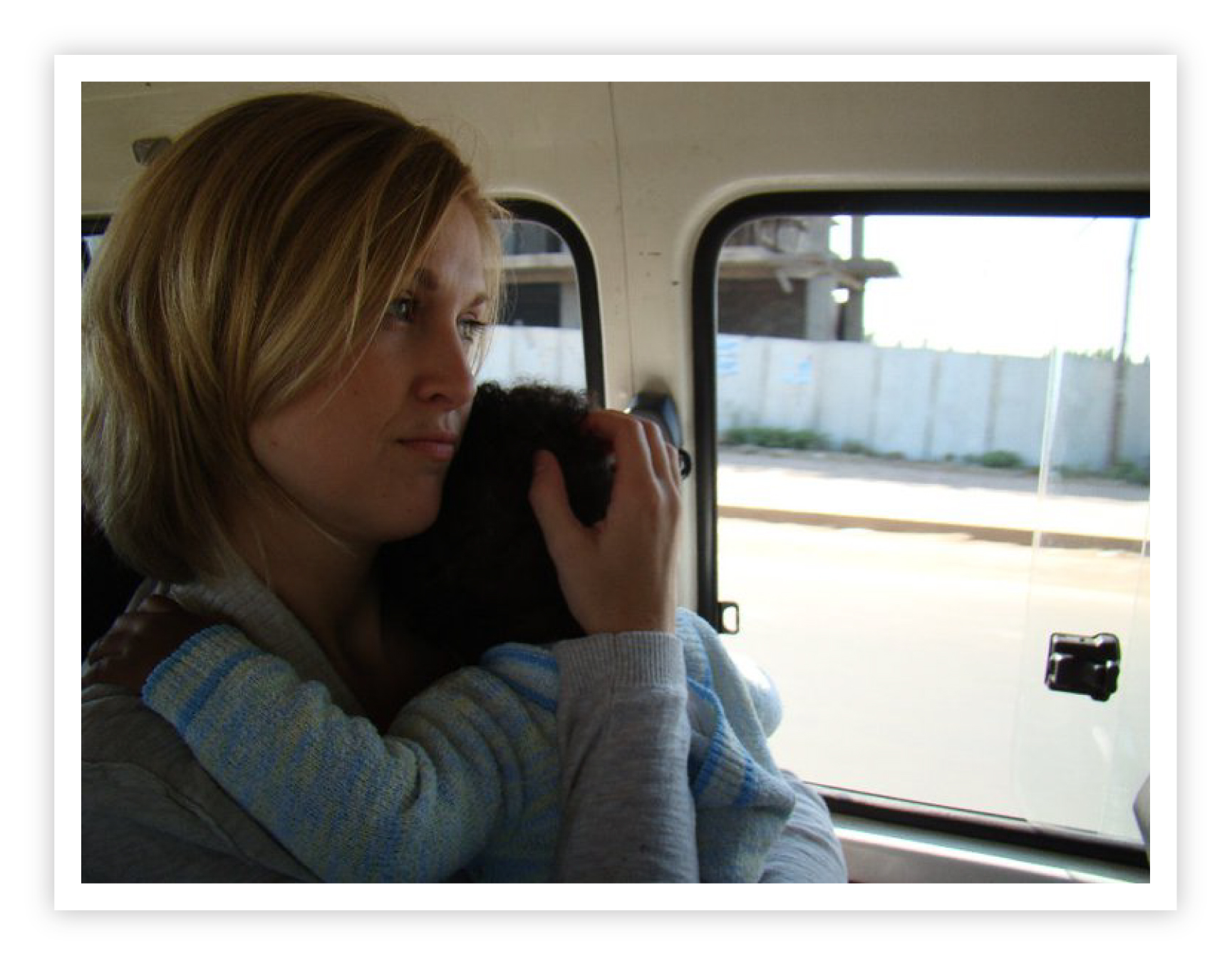
When we got back into the van to leave the orphanage Solomon started crying. He was scared. He did not know where we were going. He did not know who we were. But in his fear, he did one of the most moving things I have ever witnessed.

He reached his little arms around his forever mommy’s neck, placed his head on her chest, stopped crying and held on.

In that moment he experienced the love and assurance of adoption. He was our son, and we became his mommy and daddy. We are so thankful for what God has done. Solly is truly a gift of God. A blessing.

– Happy Gotcha Day –