Charles Spurgeon on being Christ-centered

“Don’t you know, young man, that from every town and every village and every hamlet in England, wherever it may be, there is a road to London? So from every text of Scripture there is a road to Christ. And my dear brother, your business is, when you get to a text, to say, now, what is the road to Christ? I have never found a text that had not got a road to Christ in it, and if ever I do find one, I will go over hedge and ditch but I would get at my Master, for the sermon cannot do any good unless there is a savor of Christ in it.”

Lectures to My Students (Grand Rapids: Baker, 1975), 49.

The Importance of Biblical Community

Eric Geiger writes:

“Small groups in the life of a local church community are invaluable. This is why the writer of Hebrews admonished the early church to “…encourage each other daily, while it is still called today.” God uses community to supernaturally mature his people over time. He has designed us to grow together as a body. In many ways, Christian sanctification is a group project.

At LifeWay, we partner with pastors, writers, and ministry leaders to develop Bible studies for groups. In recent years, we have introduced or re-introduced ongoing Bible studies that are built around distinct starting points. While all of our studies are rooted in Scripture and focused on Christ, by clarifying unique group starting points we are able to bring greater focus to each line of studies.

For groups that want to start with real life issues and apply the Bible to those issues, we offer Bible Studies for Life. For groups who want to start with the text and walk through books of the Bible, we offer Explore the Bible. For groups that want to begin with theology to understand how the themes of Scripture fit together and point to Jesus, we offer The Gospel Project.

God has used the intentionality and focus to allow us to serve more groups/classes. While we have a great history at LifeWay, our ongoing Bible studies were on a 29-year decline. But in the last 18 months, the decline has turned. The Lord has been so good and gracious to us. We are honored to be serving groups/classes in churches around the world with trustworthy content.

If you are interested in The Gospel Project, we offer ongoing studies released every few months OR you can use the new small group study series. Regardless, The Gospel Project provides you with solid biblical theology along with missionally-driven application for your small group context.”

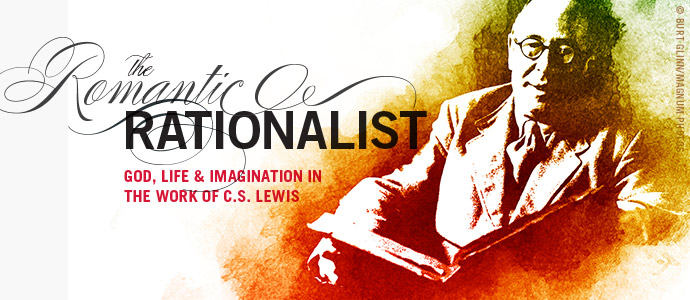
The Romantic Rationalist: God, Life, and Imagination in the Work of C.S. Lewis

CS Lewis - Copy

Desiring God has posted the audio and video files from this years national conference on imagination in the work of C.S. Lewis. Enjoy!

New Book: Michael Kelley’s “Boring”

My friend and co-worker (and fellow fruit flavored candy lover) Michael Kelley has written an extremely helpful book titled Boring. Not only is Michael a good writer, he is also a good thinker. He applies these two God given gifts to challenge our perceptions of everyday average life.

“What if we are looking so hard for these grandiose experiences of significance that we are missing the opportunities for significance right in front of us,” he writes. “What if there is no such thing as ordinary when you follow an extraordinary God?” (8)

In Boring, Michael seeks to reorient the reader to this important and often neglected truth. Too many of us fear that our lives will be ordinary. However, for the Christian, an ordinary life is a paralyzing myth. If you are a follower of Christ – you are the child of a God that is anything but ordinary. The God of the Bible is the God who created, sustains, and providentially directs all things – including the seemingly mundane details of your life. This is not an abstract theological truth that has no impact on your daily activities, but should shape every aspect of your life.

boring-michael-kelleyThe problem is that too many of us miss what God is doing in the valley, because we are longing for the mountain top experience. However, all of us know that the majority of the Christian life is lived in the valley. According to Kelley, “…The truth is that we will all spend 90 percent of our time here on earth just doing life. Just being ordinary.” So, the heart of the problem is not with the routines of life, but with our understanding and expectations of them. Kelley argues that we should reorient our thinking to see the profound nature of our extraordinary God, and how that impacts the activities of daily life.

“What if God actually doesn’t want you to escape from the ordinary, but to find signifi­cance and meaning inside of it?”

The question isn’t whether or not God is present and active; the question is just how aware we are of that presence and activity.

“This greater reality is happening right in the middle of the ordinary people, singing in their off-key kind of way, trying to wrangle their ornery children. In the middle of the mundane there is something of cosmic significance going on…A regular life isn’t just a series of physical times and moment strung together; it’s a progression of being formed into the image of Jesus…Because an extraordinary and active God is there, constantly working, there is no such thing as ordinary anymore.”

Pick up this book and read. Prayerfully, Michael will show you how to see every relationship, every act of kindness, and every moment for what it is: a part of God’s exciting plan for your life.

The Gospel Project is now available with ESV Bible text!

ESV TGP Banner. Now Available

The Gospel Project is now available with the ESV Bible text in the curriculum. As part of this exciting news, LifeWay and Crossway are partnering together to give away 15 Group Starter Kits worth $100, each including:

  • ESV Heritage Bible
  • 2 Gospel Project leader guides
  • 10 Gospel Project personal study guides

Win this, and you’ll have all you need to start a new small group, home group, or bible study class. To earn your chance to win simply follow these steps!

  1. Sign up to download free samples of The Gospel Project with ESV text at gospelproject.com/esv
  2. Post about The Gospel Project and ESV combination on your blog including the Gospel Project and ESV graphic, linking back to the download page (gospelproject.com/esv).
  3. For a greater chance to win, include #2 in a blog post related to the importance of studying the Bible with others. These posts can focus on a range of issues from teaching, leading, or being involved in small groups, homes groups, or Sunday school. If you have an earlier post related to these topics, dust if off and add #2.
  4. Feed your blog post through twitter (make sure to tag @gospel_project) and facebook.

On August 19th the 15 winners of the Group Starter Kits will be announced!

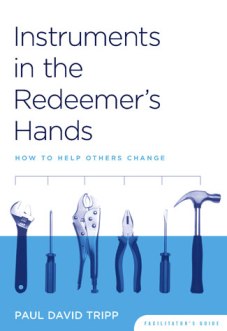
Instruments in the Redeemer’s Hands by Paul Tripp

Here are some quick thoughts on Paul Tripp’s Instruments in the Redeemer’s Hands. I love this book for several reasons. In Instruments in the Redeemer’s Hands, Tripp explores the practical applications of the belief that we must not simply offer people a system of redemption, a set of insights and principles – but offer the redeemer. Tripp argues that counselors are  instruments in the redeemer’s hands, being used to bring about change. In my opinion, the sections that emphasize community as the context for change, and asking the right questions to get at the heart of a matter, are the most compelling portions of the book.

InstRdmsHandsTripp rightly argues that “personal insight is the product of community. I need you in order to really see and know myself…If I am going to see myself clearly, I need you to hold the mirror of God’s Word in front of me.” (54) Again, “God transforms people’s lives as people bring his Word to others . . . . The combination of powerful truth wrapped in self-sacrificing love is what God uses to transform people” (21). God’s purpose is for relationships to be the setting/environment/etc. in which his work of change can thrive.

The sections of the book exploring how the heart relates to particular struggles are an excellent resource for counselors and pastors. From my experience, the guiding questions that outline Tripp’s method have been very helpful in pastoral counseling sessions, teaching, and preaching – especially in exploring the deeper issues of the heart.

  1. Our hearts are always being ruled by something.
  2. The most important question: “what is ruling your heart in this particular situation?”
  3. God changes us not by teaching us different things, but by recapturing our hearts.
  4. The deepest issues of humanity are worship issues. What rules your heart?

I believe that Tripp is most helpful in unearthing heart issues by teaching one to ask the right questions. He argues that “…asking good questions is doing the work of change. Through them, we give sight to blind eyes and understanding to dull minds, we soften hardened hearts, encourage flagging souls, and stir hunger that can only be filled by the truth.” (173).

I Just Received My First Book Contract!

about_main_image

Last night I signed my first book contract. If you cannot tell by my picture below, I am thrilled. I will be writing a 12-week study on the book of Hebrews for Crossway‘s “Knowing The Bible” series. I am not only excited about publishing a Bible study; I am also excited about the series as a whole. Here is the vision for the Knowing the Bible:

The Knowing the Bible series is a new line of Bible studies designed to help Bible readers better understand and apply God’s Word.

Each study covers one book of the Bible over 12 weeks, making practical applications and connections between the passage and the rest of Scripture. The series is edited by theologian J. I. Packer, and includes contributions from an array of influential pastors and church leaders. Perfect for both small groups and individuals, these gospel-centered studies will help you see and cherish the message of God’s grace on each and every page of the Bible. Each study includes:

  • Reflection Questions designed to help you engage the text at a deeper level
  • Gospel Glimpses highlighting the gospel of grace throughout the book
  • Whole-Bible Connections showing how a passage connects to the Bible’s overarching story of redemption culminating in Christ
  • Theological Soundings identifying how historic orthodox doctrines are taught or reinforced throughout Scripture

I am thankful for Dane Ortlund and Crossway, who are granting me this opportunity. Pray for me, that I write well for the glory of God and the good of the church!

photo (2)

Clear Winter Nights by Trevin Wax

A few weeks ago Trevin Wax walked into my office and handed me an advanced copy of his first fiction book Clear Winter Nights. I have read Trevin’s blog for years. I’ve also read his previous non-fiction works Holy Subversion and Counterfeit Gospels. Trevin is a gifted writer and thoughtful theologian. As he walked out of my office that day I was excited for him, not only because he’s my friend, but also because of what this book means to him. Trevin has been calling for artistic portrayals of truth for a while now. In several of his blog posts he has expressed concern about conservative Christians picking apart works of art without offering something better. This concern seems to be one of the driving forces behind Clear Winter Nights. For someone who has done well in the non-fiction market, writing fiction is a risky move.

Clear-Winter-Nights_1a-716x1024Offering a work of fiction to the public puts an author in new territory beyond a change of literary genre. In non-fiction a writer has the privilege of shoring up his or her arguments with evidence, his or her points with the thoughts of other thinkers. Fiction pushes an author into a much more vulnerable position. Trevin has not only personally crafted this entire story, but also intimately created each character, and shaped their thoughts and actions. A fiction novel is a work of art. And because it is a work of art the writer becomes susceptible to criticism on many levels. In my opinion this makes Clear Winter Nights Trevin’s most personal venture yet.

I am not a literary critic. Nor, do I read fiction on a level that allows me to be conversant with it as an art form in the strictest sense. I tend to read theological, sociological, and philosophical works. On my honeymoon I read C.S. Lewis’ The Abolition of Man while enjoying the breathtaking beaches of the Riviera Maya. On our trip to finalize our adoption in Ethiopia I read Graeme Goldsworthy’s Gospel-Centered Hermeneutics while relaxing in the cool of the night. My library is made up of ninety five percent non-fiction. However, I would like to offer my thoughts on Clear Winter Nights, for whatever it’s worth.

First, I was delighted by Trevin’s ability to render the context of each scene in such a way that it added to the beauty of the narrative without slipping into the melodramatic. In each chapter Trevin was able to paint the surroundings in such a way that I was transported into the ethos of the moment without losing a sense of the narrative trajectory. The reader can not only visualize the setting, but also see the physical posture of each character at almost every turn in the movement of the story. In my opinion, this only strengthens to the emotive force of the story line. For someone like me, who dwells in abstract literature, this is meaningful because it adorns the truth and adds to the beauty of the narrative.

Second, Trevin was able to communicate thoughtful biblical truth using a storyline that was captivating, and did so with memorable characters. Clear Winter Nights includes both fiction elements and non-fiction elements, namely, sustained theological discussion and logical reasoning. However, the story does not get weighed down by the theological elements. Trevin transported theology through story exceptionally well. At the right moments and in the right way, the discussion would lift so that I, as the reader, would remain grounded in the narrative. The beauty of narrative is that truth delivered from specific characters adds contextual force, which leaves a more lasting mark on the reader.

Finally, this book will resonate with many readers because of the content of the discussion between the characters. Many readers will sympathize with, and find themselves reflected in the thoughts and actions of each character. One of the main characters of Clear Winter Nights is a young and intellectually ambitious Christian dealing with disillusionment and doubt. The story centers on this young Christian spending a weekend with an elderly retired pastor, who is not only wise but broken and full of grace. During the course of the weekend these two men discuss some of the most pressing subjects of life and faith, and it is clear that no subject is off limits. As I followed every interaction, every response, and every question in the conversation I was not only entertained but educated. In Clear Winter Nights you are taken on a journey through philosophical and thoughtful discussions on the biggest dilemmas of faith. The characters discuss the equality and inequality of world religions, the nature of Christian discipleship, and the reality of sin, pain, and suffering. Through engaging dialogue Trevin aptly explores the relevance of solid biblical truth in an unstable world.

A few years ago I was encouraged by one of my closest friends Zach Hawkins to take an occasional break from academic reading to enjoy fiction. I am glad I did. I am also thankful for Trevin’s new book. I pray that many more volumes will be published in this line of literature. If you are looking to read a short and reflective fiction work, I commend Clear Winter Nights to you. I read it in a few sittings. And each time, it was hard for me to put it down.
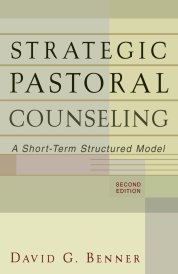
David Benner’s Strategic Pastoral Counseling

Strategic Pastoral Counseling is a model developed by David Benner described as a brief, structured counseling approach that is explicitly Christian and that appropriates the insights of contemporary counseling theory without sacrificing the resources of pastoral ministry. There is much debate about the uses and differences of secular counseling and biblical counseling. I will not examine those here. My purpose is to give a brief account of Brenner’s work. There are a few characteristics of Strategic Pastoral Counseling (SPC) that I found helpful for pastoral ministry.

SPCSPC is brief and time-limited, working within a suggested maximum of five sessions. Both the pastor and the parishioner are encouraged to work continuously at maintaining focus and direction. One of the benefits of this model is that is presupposes that the counseling relationship is a partnership, which increases the participation and expectation of change in the counselee.

The use of written materials is central to SPC. The Bible as well as a variety of other devotional, inspirational, and practical books and booklets could be assigned to the client. The literature should be integrated within the counseling session, not simply offered as a supplement to them and serve as a support and extension of the counseling. Moreover, it also seems that Benner advocates a holistic approach to pastoral counseling that aims at the behavioral (action), cognitive (thought), and affective (feeling) aspects of the personality – with a focus on spirituality.

Lastly, the SPC process is very structured. Each of the sessions has a clear focus and each builds upon the previous ones in contributing to the accomplishment of the overall goals. SPC  involves three stages:

  1. The encounter stage, where boundaries are set, the central concerns and history are explored, a pastoral diagnosis is conducted, and a mutually agreeable focus is achieved.
  2. The engagement stage, where the problem is explored holistically and resources are identified for coping or change.
  3. The disengagement stage, where progress is evaluated, concerns are accessed, referrals are arranged, and counseling is terminated.

Overall I found this little book helpful and would encourage pastors who are developing their counseling philosophy to read it. Counseling in a Christian context can be highly effective when it maintains narrowly focused goals in a time-limited setting. The details of this model of pastoral counseling are outlined well in this little practical guide.

The Beauty, Truth, and Goodness of The Cross

Evangelical Christians prize truth and goodness. It seems like we write and talk about what is true and good often. We should. But, what ever happened to beauty? For the ancient philosophers and theologians beauty was always considered in relation to truth and goodness. If something was true, it was also good and beautiful. For something to be good, it also had to be beautiful and true.

The CrossFor many of our theological forefathers, compartmentalizing these great transcendental realities would deconstruct the majesty of the whole. Yet we rarely talk about beauty anymore. For us, beauty is no longer in concert with truth and goodness. So its always refreshing when I find a theologian who explores all three.

Drawing from the writing of Hans Urs von Balthasar, specifically The Glory of the Lord: A Theological Aesthetic, theologian Dr. Stephen Garrett makes a wonderful observation relating the transcendental realities of beauty, truth, and goodness to the work of Jesus Christ and the cross.

“[Beauty] seen through the One who is beauty, truth, and goodness, reveals an intertwined and interpenetrating triad that should not be compartmentalized.  To separate beauty, truth, and goodness results in distortion and misunderstanding not only of the triad but also of Christ himself. 

  • To see the act of Christ on the cross as merely beautiful is to turn towards sentimentality. 
  • To see the act of Christ on the cross as merely good is to understand Christ as a good moral example incapable of transforming humanity. 
  • To see the act of Christ on the cross as merely true is to reduce Christ to a brute unattractive historical fact that has no relevance for our lives. 

To keep beauty, truth, and goodness together however lifts up Christ’s act of love on the cross in order to draw humanity to himself so that they may live a virtuous life full of meaning.  Beauty understood then in concert with truth and goodness works to glorify and make God known yet when separated from them disparages Christian worship, wisdom, and witness.”

According to Garrett, the reasons for retaining an interconnected relationship between beauty, truth, and goodness are significant. The dangers of separating them are massive.