G.K. Chesterton: The Lunacy of Believing Too Much in Oneself

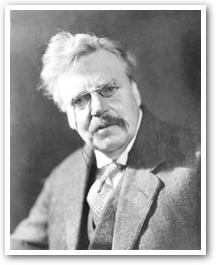
I revisited G. K. Chesterton’s Orthodoxy the other day while traveling and was reminded of his splendid indictment against the lunacy of believing too much in oneself. This is still a problem in our society today. His prophetic words ring true. He wrote;

chesterton

“Once I remember walking with a prosperous publisher, who made a remark which I had often heard before; it is, indeed, almost a motto of the modern world. Yet I had heard it once too often, and I saw suddenly that there was nothing in it. The publisher said of somebody, “That man will get on; he believes in himself.”…I said to him, “Shall I tell you where the men are who believe most in themselves? For I can tell you. I know of men who believe in themselves more colossally than Napoleon or Caesar. I know where flames the fixed star of certainty and success. I can guide you to the thrones of the Super-men. The men who really believe in themselves are all in lunatic asylums.” He said mildly that there were a good many men after all who believed in themselves and who were not in lunatic asylums.”

Chesterton then quipped, consider the actors who cannot act and still believe in themselves. See, according to Chesterton complete self-confidence is not only a sin; complete self-confidence is also a weakness. It is a blindness. It is hysterical. In response to Chesterton’s comments his walking partner responded;

“Well, if a man is not to believe in himself, in what is he to believe?”

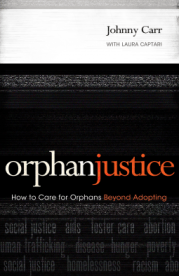
New Book: Orphan Justice by Johnny Carr

Congratulations to my friend Johnny Carr! On March 1st his book Orphan Justice will be released. In this valuable and needed book Carr calls the church to move from talking about orphan care to actually doing something about it. Here is Russell Moore‘s endorsement;

“No one has stood more at the forefront of the evangelical orphan care movement than Johnny Carr. He prophetically calls the church to care for orphans by combating racism, trafficking, poverty, and abortion.”

Orphan JusticeIn Orphan Justice Carr explores the orphan care and adoption movement in the U.S., and discusses the role of the church worldwide in meeting the needs of orphaned and vulnerable children. Moreover, Carr helps the reader understand the connections between social justice and biblically based orphan care. All this is done with an aim to provide the reader with practical steps to getting involved and making a difference today.

I highly recommend Orphan Justice to anyone interested in doing something about the global orphan crisis.

John Stott’s “The Living Church”

Stott’s The Living Church is a very good, concise, and introductory general ecclesiology. Reading this little volume gives one the feeling of sitting under a well-seasoned churchman as he talks about life within the church. A few insights were very helpful:

Stott notes that we must listen to the voices of the world in order to be able to “respond to them sensitively though without compromise” (12). The church should transform secular space, rejecting the sacred-secular divide. Later in the book Stott picks this idea back up by asking the question: Will Christians be able to influence the secular world so that the values and standards of the kingdom of God will permeate their communities? Stott rightly notes that Christians cannot be utopians. A point that modern Christians often leave out of the missional equation. He also charges that while Christians are spiritually and morally distinct, they are not to be separatists. Stott writes: “…the influence of Christians on society is intended by Jesus to be both negative (checking the spread of evil) and positive (promoting the spread of truth and goodness, and especially the gospel)” (133). The Living Church

Stott’s threefold common commitment for the local church is helpful – to the church, its mission, and its renewal (see pages 19-21). Moreover, his explanation of God’s vision for the church as a learning church, a caring church, a worshiping church, and a evangelizing church are good categorical marks (The second appendix of Mark Dever’s book 9 Marks of a Healthy Church titled “The Numerical Nineties and Beyond” has several lists that are similar.) Both of these explanations would be helpful for training church members and outlining the ministry of the church for potential church members.

Continue reading “John Stott’s “The Living Church””

We are moving to Nashville, TN!

il_fullxfull.361604888_440s

After much prayer and wise counsel I accepted a position with LifeWay Church Resources in Nashville, TN. I will be joining the Church Resources Division as the Brand Manager and Strategist for The Gospel Project.

The Gospel Project is a Bible study resource that invites adults, students, and kids of all ages to dive deeply into God’s story of redemption through Jesus Christ. In every lesson, participants are immersed in the gospel and learn how when the gospel works on them, they become a part of the story, the very hands and feet in God’s gospel project.

This is a solid biblical resource for the church. I have linked to a few PDF’s from The Gospel Project website to give you a sense of the material.

There are a few particular elements of The Gospel Project that are unique when compared to other small group or Sunday school resources. First, the material delivers a combination of story, systematic and biblical theology, and missional application. Moreover, the material is always pointing to the gospel of Jesus Christ. Second, each session offers an in-depth study with discussion questions, focusing small groups and Sunday School classes toward a lifestyle of gospel-centered discipleship. Third, The Gospel Project is designed to unify an entire church under a single Christ-centered curriculum. Separate study plans for adults, students, and kids ensure the proper focus and depth for each age group.

Beyond the material, I also look forward to joining The Gospel Project team! LifeWay has assembled a stellar team of churchmen and theologians.

  • The Marketing Department is led by Jon Emery, from whom I have a lot to learn.
  • The Church Resources Division is led by Eric Geiger.
  • The Gospel Project is led by General Editor Ed Stetzer and Managing Editor Trevin Wax.
  • Our new neighbors will be Micah Fries and Jonathan Howe.

Pray for us as we make this transition to Nashville by mid-February. We will miss our church family at Calvary West dearly, but we believe this is a wonderful opportunity to minister to the universal church. Allow me to borrow the words of the Apostle Paul in regards to Calvary:

I thank my God in all my remembrance of you, always in every prayer of mine for you all making my prayer with joy, because of your partnership in the gospel from the first day until now. And I am sure of this, that he who began a good work in you will bring it to completion at the day of Jesus Christ.

The Roots Reading Initiative from PLNTD – Round 6!

This week starts a new chapter with the Roots Reading Initiative. I have truly enjoyed being a part of this project with Tim Brister. With the next two books we close out our first full year of deepening our roots in great books to grow leaders in local churches. If you’d like to get the scoop on what RRI seeks to accomplish and how we are doing this, here’s a great place to start. So far, here are the emphases and corresponding books we have studied:

During the next two months we will consider the question: how are we to make disciples of Jesus? The two books we have selected for this focus is Gospel-Centered Discipleship by Jonathan Dodson and Transformational Discipleship: How People Really Grow by Eric Geiger, Michael Kelly, and Phillip Nation. For those interested in joining in the reading, here’s the breakdown we are working off of each week:

Gospel Centered Discipleship by Jonathan Dodson

  • September 2-8 (1-50)
  • September 9-15 (51-74)
  • September 16-22 (75-118)
  • September 23-30 (119-56)

Transformational Discipleship by Eric Geiger, Michael Kelly, and Phillip Nation

  • October 1-6 (1-68)
  • October 7-13 (69-112)
  • October 14-20 (113-74)
  • October 21-31 (175-225)

I echo Brister, “let me encourage those of you interested in deepening your roots in discipleship to join us for the next two months, especially those of you who are church planters. At the heart of the mission is the command to make disciples of Jesus. Everything else is secondary. What is your disciple-making plan? How are you going to make, mature, and multiply gospel-centered disciples? I believe resources like these will be a great encouragement to you, so join us!”

The Barbershop Sessions 2012: Gospel

9 Books That Every Bible Student and Teacher Should Own

While there is no substitute for faithful, careful, and prayerful Bible reading, the Bible’s vast size and diversity can make understanding its message a daunting task. Therefore, most Christians benefit from supplemental resources to help learn and apply Scripture. But what resources are the most helpful? Which resources are reliable? In this post I have attempted to bring together a list of the resources that I reach for most often when studying the Bible and theological issues.

In preparation for this post I imagined a scenario that helped me narrow down my list. I’ll propose the qestion to you. What if you were offered a chance to teach pastors/missionaries in a seminary-like setting somewhere in a third world country? But you could only take one small suitcase of books. Which books would you take? Here is my list. (Note that the book descriptions are taken from the publisher and edited)

The ESV Study Bible, Crossway

This is the standard in study Bibles. The ESVSB combines the best and most recent evangelical Christian scholarship with the highly regarded “essentially literal” ESV translation of the Bible. The ESVSB boasts 2,752 pages, equivalent to a 20-volume Bible resource library. Also, this volume has over 50 articles—including articles on the Bible’s authority, reliability, and interpretation; on biblical archaeology, theology, worship, prayer, ethics, and personal application.
The ESV Comprehensive Concordance of the Bible, Crossway

This volume serves as an excellent study companion for the ESV Bible. With more than 310,000 references representing every verse in the ESV Bible, this makes an ideal reference tool for quickly locating particular passages or for conducting in-depth word studies. Every Bible student should have a concordance close by.
The New Dictionary of Biblical Theology, Edited by T.Desmond Alexander, Brian S. Rosner, D.A. Carson, and Grame Goldsworthy, Intervarsity Press

The NDBT takes readers to a higher vantage point where they can view the thematic terrain of the Bible in its canonical wholeness. This volume is organized with an A-to-Z encyclopedia of over 200 key biblical-theological themes such as atonement, creation, eschatology, Israel, Jesus Christ, the kingdom of God, redemption, suffering, wisdom and worship. Over 120 contributors drawn from the front ranks of biblical scholarship in the English-speaking world make the NDBT a benchmark in theological study resources.

The Dictionary for Theological Interpretation, Edited by Kevin Vanhoozer, Baker Book House

The DTI of the Bible is a reference tool that seeks to marry the tasks of exegesis and theology with the goal of theological interpretation of Scripture. This work also aims to provide a guide to understanding various interpretative approaches and a tool for evaluating them in light of this goal. The dictionary covers a wide range of topics including the theological interpretation of individual books of the Bible, issues of hermeneutics, various biblical interpreters and interpretative communities, and the interplay of interpretation with various doctrines and doctrinal themes. The contributors represent a diverse range of theological backgrounds and interpretative approaches and are experts in their respective fields.

Commentary on the New Testament use of the Old Testament, Edited by G.K. Beale and D.A. Carson, Baker Book House

Readers of the New Testament often encounter quotes or allusions to Old Testament stories and prophecies that are unfamiliar or obscure. In order to fully understand the teachings of Jesus and his followers, it is important to understand the large body of Scripture that preceded and informed their thinking. This volume is made up of entries from a distinguished team of scholars to provide readers with a comprehensive commentary on every quotation, allusion, and echo of the Old Testament that appears from Matthew through Revelation.
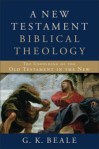
A New Testament Biblical Theology, G.K. Beale, Baker Book House

In this comprehensive exposition Beale explores the unfolding theological unity of the entire Bible from the vantage point of the New Testament and examines how the New Testament storyline relates to and develops the Old Testament storyline. Beale argues that every major concept of the New Testament is a development of a concept from the Old and is to be understood as a facet of the inauguration of the latter-day new creation and kingdom.
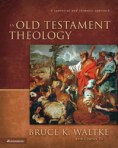
An Old Testament Theology, Bruce K. Waltke, Zondervan

The Old Testament’s every sentence is “fraught with theology, worthy of reflection.” This book is the result of decades of reflection informed by an extensive knowledge of the Hebrew language, the best of theological scholarship, a deep understanding of both the content and spirit of the Old Testament, and a thoroughly evangelical conviction. Taking a narrative, chronological approach to the text, Waltke shows that the unifying theme of the Old Testament is the “breaking in of the kingdom of God.” This theme helps the reader better understand not only the Old Testament, but also the New Testament, the continuity of the entire Bible, and ultimately, God himself.
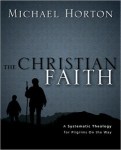
The Christian Faith, Michael Horton, Zondervan

The Christian Faith broadly interacts with movements within the Protestant, Catholic, and Orthodox traditions. In this systematic theology Horton offers a brief synopsis of biblical passages that inform a particular doctrine; and surveys current and past works with contemporary emphasis on exegetical, philosophical, practical, and theological questions. Its features include: (1) a brief synopsis of biblical passages that inform a particular doctrine; (2) surveys of past and current theologies with contemporary emphasis on exegetical, philosophical, practical, and theological questions; (3) substantial interaction with various Christian movements within the Protestant, Catholic and Orthodox traditions, as well as the hermeneutical issues raised by postmodernity; and (4) charts, sidebars, questions for discussion, and an extensive bibliography, divided into different entry levels and topics.

Historical Theology, Gregg R. Allison, Zondervan

Allison offers students the opportunity to study the historical development of theology according to a topical-chronological arrangement, setting out the history of Christian doctrine one theological element at a time. Such an approach allows readers to concentrate on one tenet of Christianity and its formulation in the early church, through the Middle Ages, Reformation, and post-Reformation era, and into the modern period. The text includes a generous mix of primary source material as well, citing the words of Cyprian, Augustine, Aquinas, Luther, Calvin, Barth, and others. This volume is a great resource for those interested in understanding the development of Christian theology.

Which books would you choose?
The Roots Reading Initiative from PLNTD, Round 4!

It has been my privilege to serve church planters by helping out with the Roots Reading Initiative which Tim Brister started for the PLNTD Network. Here’s a brief explanation:

The Roots Reading Initiative, focuses on providing church planters targeted self-feeding opportunities through an informal structure and accountability. The goal of this initiative is for church planters to “deepen their roots” in their understanding of God, the church, gospel, mission, and the world. In doing so, we believe the RRI will be an effective way of keeping church planters “grounded” and growing as leaders, missionaries, and churchmen.

Tim says that the “five areas ministry leaders need to continually cultivate are (1) man, (2) message, (3) mission, (4) marriage, and (5) methods. Through RRI, PLNTD tackles one of these areas every two months with books targeted to develop leaders for those purposes“. So far, here’s what we have covered:

Nov/Dec 2011 :: MISSION

Jan/Feb 2012 :: MESSAGE

Mar/Apr 2012 :: MARRIAGE

Starting this week, we are now taking up the area of methods, and here are the books we are working through:

May/June 2012: METHODS

Tim writes: “For each book, a reading schedule is provided for those who participate through our network.  Additionally, discussion questions are provided each week which, when the book is completed, are compiled in a downloadable format for a book-length study guide that can be used to disciple others or train leaders in your context. To take advantage of learning in community and accessing additional resources through RRI, you need to join PLNTD’s relational communities and jump into the “Training” community online. Now’s a great time join us if you haven’t already!  Leaders cannot afford to have shallow roots and no shade for their people.

I am grateful for Tim’s vision for the PLNTD Network, and for the Roots Reading Initiative and I am thankful to be a part of it!

The “ethos” of The Lord’s Supper

Dr. Russell Moore offers some good thoughts on the “ethos” of the Lord’s Supper in the book Understanding Four Views on the Lord’s Supper.

The sign aspect of the Lord’s Supper is often obscured in contemporary churches — and not only in those who hold to the Zwinglian/Baptist view of the Supper as a memorial meal. Often this has as much to do with the ethos of the Supper as with any teaching regarding it. Often Lord’s Supper services are characterized by a funereal atmosphere, complete with somber, droning organ music as the ministers or deacons distribute the elements to the congregation. The congregation is sometimes led to believe (if for no other reason than the omission of pastoral teaching) that the point of the meal is to screw up one’s face and try to feel sorry for Jesus. This is often accompanied by a psychological attempt to meditate on the physical pain of Jesus’ sufferings — an emphasis that is markedly understated in the biblical text itself. In order to recover a biblical model of the Lord’s Supper, churches need not tacitly accept a sacramental understanding of the “real presence of Christ” in the elements of bread and wine.

Instead, they must recapture the vision of the eschatological messianic banquet — and seek to recover the joyfulness and triumph of this event within their own churches. This would mean that the Lord’s Supper would be characterized by even more celebrative singing, and even laughter, than the rest of the service. The congregation would be taught to understand that the Supper is a victory lap — announcing the triumph of Christ over the powers of sin, death, and Satan. At the same time, the Supper would maintain the gravity of the moment, as the congregation recognizes that it is performing a sign of God’s freeing us from slavery through Christ — a sign of a new covenant that addresses not only other believers but God himself, the unseen demonic rulers, and even unbelievers who might marvel from outside at the meaning we find in this ancient rite. (33)

Pastors…Read and Get Out of Your Office!

A good word from Pittsburgh Theological Seminary’s Andrew Purves from The Crucifixion of Ministry.

“Get out of your offices and get into your studies. Quit playing office manager and program director, quit staffing committees, and even right now recommit yourselves to what you were ordained to do, namely the ministry of Word and sacraments. Pick up good theology books again: hard books, classical texts, great theologians. Claim the energy and time to study for days and days at a time. Disappear for long hours because you are reading Athanasius on the person of Jesus Christ or Wesley on sanctification or Augustine on the Trinity or Calvin on the Christian life or Andrew Murray on the priesthood of Christ. Then you will have something to say that’s worth hearing” (44).