The Boston Marathon Bombs and the Love of God

“It’s utter pandemonium…Everybody’s just in disbelief and sadness.”

These are the words of one witness to the bombings at the Boston marathon on Monday. Runners and spectators scattered in pandemonium as loud explosions went off near the finish line. As the news broke my first thought was…why? Why would anyone do something like this? We’ve seen it before…but it sickens my stomach every time.

Boston Marathon logo 2015We live in a broken world for sure. And we should expect suffering and even death as a result of sin’s entrance into creation order, but gratuitous evil human actions like these leave us not only weeping – but scratching our heads.

When it comes to suffering, death, and evil there will always be questions. Honestly, there are some questions, like “why”, that often have no clear explanation when it comes to the particulars. What happened in Boston was a tragic case of what theologians call moral evil. Moral evil  is that which is the direct result of human volition. Someone did this. Rest assured that the persons who planted those explosives will answer for their actions – hopefully to the law, certainly to God almighty (Matthew 12, Romans 14, Revelation 20).

As a Christian I believe that ultimately the Gospel of Jesus Christ is the only comfort we have in facing these horrible realities. The days are evil. But one day Christ will return. Listen to the words of the Apostle John in Revelation 21:3-5;

And I heard a loud voice from the throne saying, “Behold, the dwelling place of God is with man. He will dwell with them, and they will be his people, and God himself will be with them as their God. He will wipe away every tear from their eyes, and death shall be no more, neither shall there be mourning, nor crying, nor pain anymore, for the former things have passed away.”

And he who was seated on the throne said, “Behold, I am making all things new.” Also he said, “Write this down, for these words are trustworthy and true.”

As we long for that day let us seek justice in all wrongs, peace when all possible, and always point to Christ as the hope that is within us. And what about those who ask – why does God allow things like this to continue? I think Tim Keller deals with this question well from the perspective of an evangelical Christian in his book The Reason for God;

“The death of Jesus was qualitatively different from any other death. The physical pain was nothing compared to the spiritual experience of cosmic abandonment. Christianity alone among the worlds religions claims that God became uniquely and fully human in Jesus Christ and therefore knows firsthand despair, rejection, loneliness, poverty, bereavement, torture, and imprisonment. On the cross he went beyond even the worst human suffering and experienced cosmic rejection and pain that exceeds ours as infinitely as his knowledge and power exceeds ours. In His death, God suffers in love, identifying with the abandoned and godforsaken. Why did he do it? The Bible says that Jesus came on a rescue mission for creation. He had to pay for our sins so that someday he can end evil and suffering without ending us.

If we were to ask the question: “why does God allow evil and suffering to continue” and we look at the cross of Jesus, we still do not know what the answer is. However, we now know what the answer isn’t. It cant be that He doesn’t love us. It cant be that he is indifferent or detached from our condition. God takes our misery and suffering so seriously that he was willing to take it on himself.

So, if we embrace the Christian teaching that Jesus is God and that he went to the cross, then we have deep consolation and strength to face the brutal realities of life on earth. We can know that God is truly Immanuel- God with us- even in our worst sufferings”

Let us continue to turn to Christ as our only hope. In these moments let us pray for the families of those who died. Let us pray for those who are hurt. All the while asking in our hearts, How long, O Lord? with the Psalmist.

In Honor of Will Toburen: The Transition to Summit Church in Durham, N.C.

Today marks the end of Will Toburen’s pastoral ministry at Calvary Baptist Church in Winston-Salem, N.C. However, Will’s legacy will continue at Calvary for many years to come. Will served as an Associate Pastor and Senior Associate Pastor at Calvary for well over a decade. He will now join the pastoral team at the Summit Church in Durham as the Executive Pastor for Discipleship Ministry. I’ve talked with the Summit’s pastor J.D. Greear recently and he, along with the rest of their team, is excited to welcome Will to their staff. What a great addition to an already stellar team!

photoWhen I came to Calvary as a seminary student in the Calvary School of Pastoral Leadership in 2006, Will along with Al Gilbert immediately pulled me in and began investing in my life. These two men have a very special place in my heart (and heart of hearts). They have both shaped my own life and ministry in ways they may never fully know. As for Will specifically, I view him as an older brother in the Christian life. A much wiser brother.

Will’s belief in me, his loving support, and his timely challenges have been formative and affirming – something that every Christian needs and few have the opportunity to receive. Not only has Will become a dear friend, he was part of our wedding ceremony, supported our adoption process, and always encouraged me to grow in ministry through preaching, teaching, and dozens of other ministry opportunities in the local church. Since I cannot be at Calvary for his last Sunday, or attend his going away fellowship, I would like to offer a few thoughts on Will here.

Will is a gifted preacher. I would put him up there with almost anyone. While Will is one of the best, he will never seek his own fame – he gladly points to the Father. I watched Will bring passion and humility to the pulpit for almost 7 years. First and foremost, Will always preached with Jesus as the center of his sermons. Will understands the gospel and works hard to apply the gospel through every text he preached. Will was also humbly honest from the pulpit. One of the things I valued dearly in his ministry was his willingness in admitting where he had failed and where he could work harder in his own personal life. Unlike some preachers who believe that one must always “have it together” to maintain strong leadership, he lead through repentance and humility.

While he was strong in the pulpit, he was so gentle with the people. Calvary loves Will. He grew up at Calvary. He was taught in Sunday School by many of the people who eventually sat under his preaching. I could always sense the mutual endearment when Will would visit some of those dear saints in the hospital or when he would stand by them as they slipped into eternity. I have watched Will weep with those who weep, hold congregants hands when they needed a pastors love, and celebrate the joys of life with many of the people. These are lessons I will treasure for the rest of my life. When I think of servant leadership – many of my lessons were learned under Will.

As a West Campus team we would meet once a week to pray, plan, and hold each other accountable. Each week Will would not only ask us hard questions, but he would also ask for our feedback on his life and ministry. He was always quick to go above and beyond to serve others. He rightly sought chances to grow and learn from others, even guys like me who were well under his ministry age. As I look back I can only conclude that Will wanted to be the most God honoring pastor that he could be. He wanted to preach the word with clarity and with Jesus as the hero. He also wanted to be sensitive to the Spirit when it came to his own life. And being open to allow others to speak into his sanctification process speaks volumes of his character and love for the church.

Strong in the pulpit, gentle in the hospital room. Always growing, and desiring others to grow. Like all of us Will has his faults, but he acknowledges them seeking to grow in the gospel. More importantly, Will loves Jesus, loves his family, and loves the church. I am grateful for our years of ministry together. I am also thankful for our friendship. I look forward to seeing what God has in store for this gentle giant of the faith.

I love you as a dear brother Will, and pray that God would continue to bless you as you begin this new chapter. Rock that sweater vest in your new ministry setting.

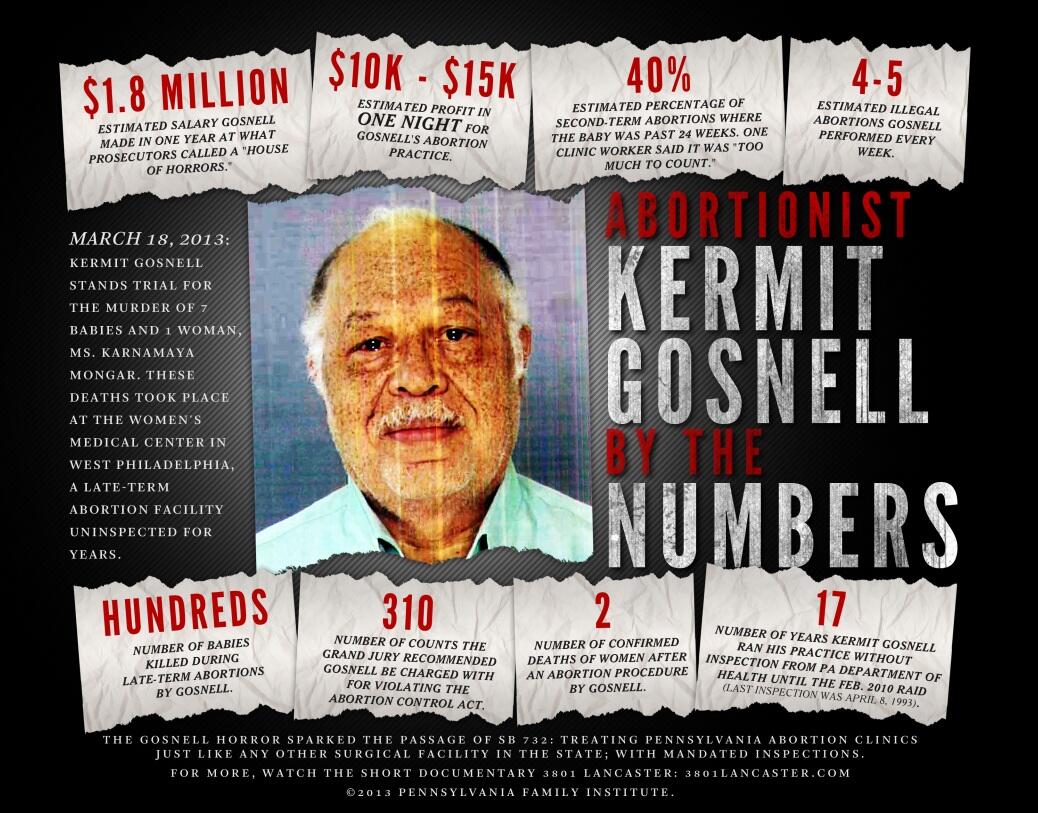
Kermit Gosnell and His Shop of Abortion Horrors

____________

Below is the full text of a post written by my friend Trevin Wax titled 8 Reasons for the Media Blackout on Kermit Gosnell

On Twitter and FaceBook today, #Gosnellis trending. The reason for the social media buzz is the strange silence of the mainstream media regarding one of the most gruesome murder trials in American history.

To put the Kermit Gosnell trial in perspective, consider other famous cases of child-killing. From Susan Smith toAndrea Yates, and most recently the horror of Newtown, we are accustomed to 24/7 news coverage of these types of tragedies.

Not so with Dr. Gosnell.

Here are the reasons why:

1. The Gosnell case involves an abortionist.

Whenever we see news stories about abortion, the abortionist must be portrayed as a victim of hate and intolerance, not a perpetrator of violence. But it is impossible to spin this story in a way that keeps “abortionist” separate from testimony about dead women and children.

2. The Gosnell case involves an unregulated abortion clinic.

Whenever we see news stories about abortion, the clinic must be portrayed as a “refuge” for women in distress, not a “house of horrors” where women are taken advantage of. But it is impossible to spin this story in a way that keeps “abortion clinic” away from negative connotations.

3. The Gosnell case involves protestors who, for years, stood outside 3801 Lancaster and prayed, warning people about what was taking place inside.

Whenever we see news stories about abortion, the protestors must be portrayed as agitators and extremists, not peaceful people who urge mothers to treasure the miracle inside them. But it is impossible to spin this story in a way that keeps the abortion protestors from looking like heroes.

4. The Gosnell case involves gruesome details about living, viable babies having their spinal cords “snipped” outside the womb.

Whenever we see news stories about abortion, the details of an abortion procedure are to be avoided. But it is impossible to spin this story in a way that keeps people from asking why such violent killing is unjust moments after birth, yet acceptable at any other time during the pregnancy.

5. The Gosnell case raises the question of human rights.

Whenever we see news stories about abortion, the discussion must always be framed in terms of a woman’s “reproductive rights,” not a baby’s “human rights.” But it is impossible to spin this story in a way that keeps people from asking why “reproductive rights” should trump “human rights” – or why a doctor devoted to “reproductive rights” would (without any apparent twinge of conscience) violate human rights so egregiously.

6. The Gosnell case involves the regulation of abortion clinics.

Whenever we see news stories about abortion, the clinic must be portrayed as under siege from anti-abortion extremists. But it is impossible to spin this story in a way that will keep people from pushing for policy change and further regulation of Planned Parenthood and other abortion clinics.

7. The Gosnell case exposes the disproportionate number of abortion clinics in inner cities and the disproportionate number of abortions among minority groups.

Whenever we see news stories about abortion, the discussion must be framed in terms of providing “access” for low-income, minority women. But it is impossible to spin this story in a way that keeps people from wondering if perhaps some abortion providers are “targeting” low-income, minority women.

8. The Gosnell case competes with recent stories about states enacting broad laws banning many abortions.

Whenever we see news stories about abortion, the choice of coverage must focus on the threat to a woman’s “right to choose.” But it is impossible to spin this story in a way that will keep Americans from joining together to enact more common-sense regulation of late-term abortions.

Lord, have mercy on us.

“Watch Me” featuring D.A. Carson


Using audio from Don Carson, this short video challenges us from the Bible how we must be sharing our lives, opening up the Bible and changing generations as we point them to Jesus.

(HT Tim Challies)

Ken Sande’s “The Peace Maker”

The Peace Maker has become a modern classic in the genre of popular level Biblical counseling books.  The Peace Maker is Sande’s approach to resolving conflict – which can be summarized by four basic principles.

  1. Biblical peacemaking is motivated and guided by a deep desire to bring honor to God by revealing the reconciling love and power of Jesus Christ by breaking free from self-centered decisions and actions that often make conflicts worse.
  2. Attacking others often agitates counterattacks. When we overlook others minor failures and honestly admit our own faults, our opponents will often respond in kind.  Once the tension is decreased there is a greater probability that sincere discussion, negotiation, and reconciliation will happen.
  3. When others fail to see their own contributions to a conflict we must gently and graciously show them their fault, if needed we should follow Jesus teaching and involved respected third parties.
  4. Peacemaking involves a commitment to restoring damaged relationships and negotiating just agreements. Forgiveness has the power to allow for genuine peace between once warring parties.

Sande offers a helpful plan for responding to others with the aim of finding agreeable solutions to conflict and restoring peace. “These responses are commanded by God, empowered by the gospel, and directed toward finding just mutually agreeable solutions to conflict. (25)”

9780801064852-sande-peace-makerI found Sande’s chapter on speaking the truth in love especially helpful in guiding how one communicates in a potentially explosive relationship. He argues that one can, with God’s help, learn to speak the truth in love by only saying what will build others up, by listening responsibly to what others say, and by using principles of wisdom.

Sande rightly reminds the reader that while one can provide an abundance of practical techniques for implementing the Biblical principle of peacemaking, these principles by themselves cannot accomplish the end goal in and of themselves. The peacemaking strategy simply provides opportunities for reconciliation, and that’s it. True reconciliation is always a heart issue and can only happen through the power of the Holy Spirit in an obedient believer. This foundational principle makes Sande’s method appealing to a confessional pastor like myself. I really appreciated Sande’s “peacemakers pledge” at the end of the volume.

As people reconciled to God by the death and resurrection of Jesus Christ, we believe that we are called to respond to conflict in a way that is remarkably different from the way the world deals with conflict. We also believe that conflict provides opportunities to glorify God, serve other people, and grow to be like Christ. Therefore, in response to God’s love and in reliance on his grace, we commit ourselves to responding to conflict according to the following principles (259).

His principles are simple – glorify God, get the log out of your own eye, gently restore, and go and be reconciled.

We the Priesthood of All Believers!

I doubt many people missed the election of the pope recently. It was a worldwide event. The papacy is one of the most enduring institutions in the world. Most Protestants have some vague idea concerning the function of the pope. Essentially, the pope has supreme spiritual authority over the Roman Catholic Church. He controls doctrine, and his decisions often impact societies and governments all over the world. Diversion from this doctrine and practice is one of the reasons for the Protestant reformation. And while Protestants may not affirm such powerful positions like the papacy by profession, many affirm such positions of power in practice – especially on the level of the local church.

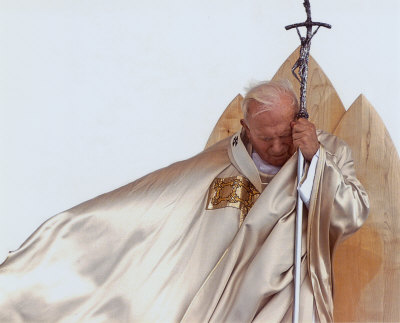
pope-john-paul-ii-1920-2005In the Middle-Ages priesthood was limited to, and regulated by, the clergy. One of the marks of the reformation was Martin Luther’s call for “the priesthood of all believers”. Timothy George has called this doctrine one of Luther’s greatest contributions to the Protestant Church. Luther argued that “all Christians are truly of the spiritual estate, and there is among them no difference except that of office (Open Letter to the Christian Nobility).” Luther was not arguing for leaderless anarchy in local churches (offices imply order), but was stressing the equal access and spiritual importance that each believer has with God through their grace given relationship in Jesus Christ.

The priesthood of all believers has been especially important to Baptist church life since it forms the basis for Congregationalism. I am a Baptist. As a Baptist I am partial to Congregationalism. In God’s Word, the people of God are referred to as “a holy priesthood”, “a royal priesthood”, and “a kingdom of priests” (1 Peter 2:5, 9; Revelation 1:6, 5:10). As a Baptist I believe that all true believers are priests and have equal access to God the Father through our high priest Jesus Christ (Read the book of Hebrews). Moreover, no one person or group should have supreme and unchecked spiritual authority within a local church as if they and they alone can hear from God.

There is not one person in the church, or group of persons in the church, that have a closer connection to God over and above their brothers and sisters in Christ. All believers have priestly access to the heavenly sanctuary and need no other mediator but Jesus Christ. Yet some Protestant churches, while professing to priesthood of all believers, ignore this precious doctrine in practice. And some Protestant leaders even parade their “unique” relationship with God, lording it over others in their church family.

Holding to the priesthood of all believers also implies that all “believer-priest church members are able and responsible to help the church find God’s direction for its life”[1]. While pastors may be set apart to lead through the teaching of the Word, and certain leaders may be set apart to make decisions, the entire congregation should humbly shoulder the responsibility of acting as the final court to recognize, respond, affirm, and even challenge the direction of its leaders if necessary. The church is the body of Christ, and Jesus Christ is the only head. The church should function as a body.

So why do some leaders take it upon themselves to wield supreme (and some times negligent) spiritual authority within local congregations? Why do some leaders over-spiritualize decisions in order to trump everyone else in their congregation? Why do some leaders talk as if they, and they alone, receive and impart special divine revelation to their people? I am not sure. There could be many reasons. I admit, I have implied this “power” before as a pastor, and repent. Implying papal-like authority is the easy way out when it comes to leadership. Its a way to avoid the often messy life of church community.

Most Protestant leaders would never bluntly admit any of these things. But, many leaders within Protestant churches communicate these ideas by implication. The saddest thing is that such papal attitudes within Protestant leadership ranks pronounces lower spiritual status of everyone else in the congregation. How did we arrive at Evangelical Catholicism within local church leadership? May we repent and seek to uphold the priesthood of all believers!


[1] John Hammett, Biblical Foundations for Baptist Churches, 46.

Jesus The Coming King!

I have been reading What Happens After I Die? by Michael Allen Rogers. My review of this book will be published at The Gospel Coalition website in the near future. I will not expound on the many benefits of this book here, but I do want to point you to a particular section that I found encouraging and challenging.

In his chapter titled The Final Heaven Inaugurated, Rogers expounds on the momentous event of Christ’s final return. He writes;

No eye on earth will miss this! All the splendor, honor, and authority presently belonging to Jesus as Lord will be supernaturally visible to the entire world. Christ will not display more glory than he already has, but finally all mankind will see what is true about him as he now is. Every eye will see him and every knee will bow to him…When he appears, the present dimension will be ripped away, and Christ will be manifest to all eyes throughout the earth (See Matt. 24:27).

He continues:

Tragically for many, that recognition of Jesus lordship will come too late. They will recognize him as Lord without adoring him by faith. But for those who greet him with settled faith, this hour means a transformation of everything. God’s great saving work will be concluded in us and all around us. Enemies of Christ will be banished entirely from his presence, and his loving subjects will step forward to be invested as knights and ladies of his eternal court, enfolded into the brightness of his kingly splendor (pg.130).

What a wonderful picture of what is to come for the children of God! What a terrible picture of what is to come for those who reject Christ’s kingship. Oh that we would long for those around us to intimately know and lovingly adore Jesus as their savior, king, and treasure!

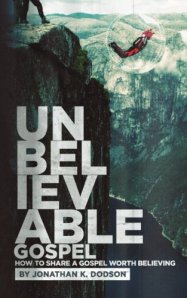
Unbelievable Gospel by Jonathan Dodson

Francis Schaeffer was once asked what he would say if he had an hour to share the gospel with someone. He responded by saying: “I will spend the first fifty-five minutes asking questions and finding out what is troubling their heart and mind, and then in the last five minutes will share something of the truth. (18-19)”

DodsonThis quote is refreshing to those of us who grew up in the age of canned gospel presentations. Many of us have been trained to put others in evangelistic headlocks and wait for them to tap out with a decision to follow Christ. This is why many readers will find Jonathan Dodson’s Unbelievable Gospel refreshing. Dodson does a good job of balancing gospel truth with patient proclamation.

According to Dodson, an “…evangelist isn’t someone who coughs up information about Jesus or proselytizes people…an evangelist is someone who communicates the gospel of Jesus with patience and wisdom. (18)” Like Schaeffer modeled, the work of an evangelist includes listening patiently in order to wisely show others why the gospel is actually worth believing.

“How is the gospel good news to those we evangelize? Evangelicals are proficient at rehearsing the information of the gospel but we often lack the ability to situate the gospel in the lives of others. (9)”

When we share the gospel with others do we wonder if they are able to perceive how the gospel is good news for them? What people need to know is not only what the gospel is, but also what the gospel does. We need to show how Jesus is better! Dodson suggest that using gospel metaphors at the prompting of the Holy Spirit is a more effective way to aim at the heart of the listener. In other words, use the gospel for how we share the gospel. Here are some examples:

  • To those searching for acceptance in all the wrong places, we can point them to perfect acceptance in the gospel of justification.
  • To those searching for fulfilling relationships, we can point them to profound, personal union with Christ.
  • To those who struggle with tolerance, we can show them the uniqueness of Christ in the gospel of redemption.
  • To those who fear disapproval or demand the applause of others, we can share the gospel of adoption, which offers an enduring approval and produces humble confidence.
  • To anyone longing for a new start, there is the hope of new creation.

Moreover, Dodson argues that Gospel theology should drive evangelistic methodology. People do not want to hear a memorized presentation, they want to know how the gospel is good news to them. So the gospel is not only the evangelistic message but also provides an evangelistic method. In other words, the gospel also informs how we share the good news.

  • Instead of preachy self-righteousness, we can point people to Christ’s righteousness, which is based on his performance not ours.
  • Instead of impersonal evangelism, we can share the hope of Jesus from our personal union with Christ.
  • Instead of being intolerant, we can lovingly tolerate the differences between religions while also communicating the unique redeeming work of Christ.
  • Instead of using right answers to gain approval or applause, we can share an enduring approval that comes through faith in the Father who adopts through the Son.
  • Instead of sharing a shallow gospel of information, we can communicate the deep transformative gospel of new creation.

The premise of this book is simple. Dodson observes that people often find the gospel unbelievable and reasons that two groups of Christians contribute to this unbelief.

  • The first group shares a gospel that is preachy, impersonal, intolerant, condescending, or shallow—mediocre news at best. We may mention who Jesus is, even what he has done, without lifting a finger to delve into the doubts and struggles people face.
  • The second group remains silent hoping their actions will remedy evangelistic concerns. The problem, however, is that the “good news” must be heard.

Dodson offers a better way. Using the concept of gospel metaphors, illustrated with real life stories, Dodson suggests that we listen to others in order to share a gospel worth believing. This concise book is a very welcome addition to the category of evangelism. Pick up your copy here.

Jesus in Exodus

The story of Matthew 1-2 finds its roots in the Old Testament stories we heard as children in Sunday School. We all know the story line of the book of Exodus. In the first pages we find that while in Egypt Israel had been “fruitful and multiplied”, echoing God’s call to Adam and Eve. Israel became so many that Pharaoh became fearful and enslaved, even killed the sons, of all these people known as “God’s son” (Exodus 4:22-23).

But God raised up a deliverer by the name of Moses who called for Israel’s release. When Pharaoh refused to release Israel from slavery, God threatened to execute judgment on every first born son in Egypt. Keeping to His covenant love, God instructs the Israelites to spread the blood of a spotless lamb over their doorpost so they will be graciously spared from death. God judged Egypt, and He also delivered Israel out of slavery with His servant Moses leading the way.

It is interesting that here in Matthew we find that Jesus, God’s Son is immediately seen as a threat to Herod. Like Pharaoh, Herod became so fearful that he also executed all the male children in Bethlehem and the surrounding regions trying to kill God’s Son. But God called Joseph to flee and take Jesus into Egypt for safety. And once Herod died, Joseph is instructed to bring Jesus “out of the land of Egypt” echoing Hosea 2:15.

What you see is that Jesus is whispered in the Exodus account. Furthermore, if you are seeking Jesus, every story in the Old Testament points to Him. Jesus, God’s Son, is even more than the true and greater Israel. Jesus is also the spotless lamb whose blood is spread over our hearts to spare us from death (1 Peter 1:18-20). Jesus is the true and greater Moses who delivers us out of slavery to sin. This is the Good News, foreshadowed long ago in the book of Exodus.

Devotions in Hosea

Hosea 1-3

Hosea is a story of marital brokenness and redeeming love. On one level it is a story about a married couple, Hosea and his unfaithful wife, Gomer. Yet the marriage of Hosea and Gomer is much more; it is a parable of God’s relationship with his people.

Often we read these passages in the Old Testament and we are horrified at the despicable morality of people like Gomer. We are even shocked by the continual spiritual adultery of Israel in light of God’s persistent grace. As we are swept into the narrative of the story something begins to swell deep within our souls, a cry for justice. “Shouldn’t Hosea abandon Gomer?” “Shouldn’t Israel be cast from God’s presence?”

But something different happens. Hosea pursues his wife like God allures His people. In 3:1-5 Hosea reflects the relentless love of God by purchasing his estranged and adulterous wife off the slave block and restoring their relationship. What a breath-taking picture of the gospel of Jesus Christ.

According to the Bible all people are sinful, rebellious and adulterers. We don’t deserve God’s mercy. Like Gomer and Israel, it would be just for God to crush us in judgment. But what does God do? God pursues us and makes us “His people” and shows us His mercy.

Continue reading “Devotions in Hosea”