Who Are You Wearing?

I was flipping through the tv channels recently and caught a few seconds of an interview with a cultural icon. The interviewer pulled this star aside as she was headed into an entertainment award show. What held me on that channel was the reporter’s first question.

Who are you wearing?

tuxThe question sounds a bit odd. However, we can discern the intended meaning of the question from the context. Who designed that dress? Who are you representing by wearing that dress? See, the name of an elite designer communicates status, importance, meaning, and worth. Most of us cannot afford custom designer clothing. Most of us are not invited to televised award shows to be displayed before the watching world. Yet we are on display to those around us.
Nakedness and the Search for Meaning

We are all searching for value and meaning in some sense or another. And we are all judged, and judge others, on these grounds. So we clothe ourselves in cultural signifiers that communicate worth and status. Why?

Immediately following the fall of mankind our first ancestors were found naked and ashamed. Adam and Eve rejected their covering under the Lordship of God and grasped for worth and status in and of themselves. Ashamed of their nakedness they grasped for new covering. And we have tried to clothe our shame and find significance in our coverings ever since. There is only one covering that will sufficiently clothe our nakedness and give us true rest.

One of the Apostle Paul’s favorite metaphors describes “putting on” or “clothing oneself” in Christ (Gal. 3:27; Rom.13:12; Eph.4:24; Col.3:12f.). Paul likens Christ to a garment. The idea of “putting on” Christ implies 3 very important gospel truths. (These truths were outlined similarly in Tim Keller’s study on Galatians)

  • Clothing Communicates Our Identity

Our clothing communicates to the world who we are. Clothing shows others that we are identified with a particular gender, social class, or national group.To say that Christ is our clothing is to say that our ultimate identity is found in him and not in any other classification.

  • Clothing Shields Our Nakedness

Clothes are kept closer to you than any other possession. We rely on clothing for shelter every moment of every day. To say Christ is our covering is to call us to continual dependence and awareness of Him. Clothing ourselves in Christ should remind us of his presence.

  • Clothing Adorns Us

Clothing is also worn as adornment. To say that Christ is our clothing is to say that in God’s sight we are loved because of Jesus’ work and salvation. The metaphor of “putting on Christ” is a comprehensive metaphor for the entirety of  life. In Christ we have his Spirit and are imputed his record. This should permeate everything we think, say, and do.

As Christians we are covered by Jesus, “wearing Christ” before God. But if your neighbor or friend were to ask you – who are you wearing? – what would you say? More importantly, who would they say?

Christ-Centered Preaching and Teaching Discussion Panel


tgpCHRISTwebad960x355

At this year’s Southern Baptist Convention in Houston The Gospel Project is hosting a discussion panel on Christ-Centered Preaching and Teaching. Ed Stetzer will moderate the panel with Trevin Wax, Eric Hankins, and Jon Akin. We are working with several publishers to give each attendee free resources on Christ-Centered preaching and teaching. There will also be a free breakfast. We only have room for 350 so sign up soon!

Here are the details;

Christ-Centered Preaching and Teaching: A Discussion Panel
Tuesday June 11, 2013
George R. Brown Convention Center
Room 351A-F on Level 3
6:30 a.m. to 8:00 a.m.

 REGISTER HERE

Kathryn Joyce, Orphan Care, and the Southern Baptist Convention

Introduction

I thought it would be helpful to provide some context to the discussion on adoption and orphan care in light of Kathryn Joyce’s recent comments on NPR related to her new book The Child Catchers. Joyce does raise legitimate concerns about orphan care and adoption systems in her article, though she is a little too inflammatory and cynical in her diagnosis. Joyce rightly observes that we live in a fallen and broken world. However, broken systems do not dismantle our call to care for neglected children. Christians are also broken people saved by the grace of God. We still see through a glass dimly. There are times when we could have addressed these issues with more wisdom. My concern here is that Joyce is a little off the mark in discerning our motivation behind orphan care.

As for Southern Baptists…

In this post I can only offer one opinion from a specific sector of the evangelical world, namely, the Southern Baptist Convention. Also, I am only going to respond to part of her observation about the evangelical world of adoption. I have not read the book. But, in the interview she argues that;

“Evangelicals felt that they had kind of unfairly lost a claim to the good works side of Christianity, the social gospel, the helping the poor,” she tells Fresh Air‘s Dave Davies, “and so they wanted a way to get back into doing something for poor people’s rights, and adoption and orphan care came about as something that, I think, they could really invest themselves into without challenging or changing their stances on the other social issues that they care about.”

To be fair, evangelicals have picked up involvement in adoption and orphan care in recent history. But the reason for doing so is not because adoption and orphan care are simple social causes that we can jump on without challenging or changing our stances on the other social issues. The impetus behind the movement is rooted in the resurgence of conservative theology. In June of 2009 the SBC overwhelmingly passed a resolution proposed by Russell D. Moore promoting adoption and orphan care, which in part reads:

That we encourage local churches to champion the evangelism of and ministry to orphans around the world, and to seek out ways to energize Southern Baptists behind this mission.[1]

Interestingly, orphan care has long been a part of Southern Baptist life. Since our very beginning, Southern Baptists have taken the call to orphan care as a divine mandate. In 1845 the Southern Baptist Convention was formed with two cooperative ministries and one agenda. The two ministries were the Foreign Mission Board (Now the International Mission Board) and the Domestic Mission Board (Now the North American Mission Board). The initial agenda of the Convention was simple; to combine the efforts of autonomous churches for one sacred effort, namely, the proclamation of the gospel and the demonstration of Jesus kingdom. One phrase in the original constitution of the SBC reflects this clearly:

“It shall be the design of this convention to promote Foreign and Domestic Missions, and other important objects connected with the redeemer’s kingdom.”[2]

While orphan care fell under the banner of ‘other important objects’, it was important none the less. The foundation for such social ministries came from the desire to provide gospel signs amid the rubble of a broken world.[3]

Adoption in Early Southern Baptist Theology

“Baptists have long been considered a ‘people of the Book.’ Various Baptist confessions demonstrate the way in which the Bible is viewed as the Word of God and is, therefore, authoritative for the faith and practice of every believer and church”.[4] In the larger framework of evangelical Christianity, Southern Baptists have not always been known for their contributions to theology. As one historian put it, Southern Baptists “have been more active than contemplative; they have produced more doers than thinkers”.[5]

Yet searching the work of early Southern Baptist theologians provides a glimpse into the importance of the biblical doctrine of adoption. Baptist Theologian John L. Dagg opens his discussion on the theology of adoption by explaining it as it is practiced among men: “an individual receiving the son of another into his family, and conferring upon him the same privileges and advantages, as if he were his own son.”[6] Unlike Northern Baptist theologian Augustus Strong, who placed adoption as a sub-category of justification[7], Dagg argued that the theological truth of adoption is a blessing that rises higher than justification because in its relational aspects adoption secures the love of God, the discipline of God, and believers are made heirs of God.

The relational aspect of the doctrine of adoption is further described by Southern Baptist James Petigru Boyce, who wrote that “the sonship ascribed to the believer in Christ, is best understood by considering its gracious origin, its peculiar nature, and the wondrous blessing which it confers.”[8] Boyce noted that one experiences a “closer and more endearing relation to God” because of one’s adoption through Christ. Like today, the stunning reality of one’s adoption in Christ was most likely the theological motivation for the early Southern Baptist’s orphan care endeavors.

Orphan Care in Early Southern Baptist History

If one takes a close look at the denomination’s history they will find that Southern Baptists organized several orphanages across the southern states dating back to the 1860’s, most of which ministered to Civil War orphans. The correspondence of the Domestic Mission Board’s secretary, W.S. Webb, concerning the situation of orphans in Mississippi following the Civil War enables us to see the importance of orphan care in our early history as a convention. Historian Keith Harper notes that Webb “estimated that there were some 5,000 to 10,000 orphans in the state and some 50,000 Baptists whom he chided for neglecting Biblical commands to care for the poor and needy”.[9] Ignoring the call to care for orphans, argued Webb, “would mark [Southern Baptists] with a pusillanimity that would deserve contempt from the world.”[10] While Webb’s challenge went unheeded by some of his specific audience, there were Southern Baptists who took up the call for orphan care. Harper writes:

Southern Baptist orphanages tried to provide the best possible medical care and education for their children. They also tried to provide a homelike atmosphere that gave orphaned children, in addition to mere shelter, a sense of stability in community.[11]

Beyond that, Baptists were influential in developing orphan care systems such as the ‘cottage plan’ orphanage (placing children in self-sustaining cottages with a housemother), the ‘placing out system’ (a forerunner to modern foster care), and even the ‘apprenticeship model’ (placing children in specific homes for training in an industrial trade or framing skills) throughout the American south. Even today state children’s homes continue to be a part of  the Southern Baptist convention’s care for domestic orphans.

What Now?

There is a rich history behind the efforts of orphan care in the Southern Baptist Convention. Though we are currently separated from the founding efforts recalled above by over a century, Southern Baptists still have a divine mandate and a social situation that calls us to care for the orphans. It is interesting to note, as one historian posits, that the controversies of the 1970’s and 1980’s between the conservatives and moderates over the authority of the Bible was more closely tied to the abortion issue, thus the sanctity of human life, than many Southern Baptists realize.[12] However, there seems to be little evidence of an adoption and orphan care movement during this period.

Perhaps this was due to the hesitation among conservatives towards social endeavors as an implication of the moderate’s drift towards a theologically bankrupt social agenda. Even still, there has always been a desire among Southern Baptists to seek the welfare of the city[13] and to love one’s neighbor[14] as a sign accompanying the proclamation of the gospel, even if we haven’t gone about engaging these issues in the wisest way. Nevertheless, the divine mandate is still before us. The specific call pertaining to orphan care is well reflected in our current denominational summary of faith, The Baptist Faith and Message:

We should work to provide for the orphaned, the needy, the abused, the aged, the helpless, and the sick. We should speak on behalf of the unborn and contend for the sanctity of all human life from conception to natural death.[15]

Since its conception, the Southern Baptist Convention has out grown its name. Our gospel efforts reach far beyond the southern states of North America. Moreover, there is still an orphan crisis. Immediate indigenous situations (like the civil war) are no longer the sole source of the orphan crisis. Globalization has flattened our distance from third world poverty, the AIDS epidemic, and unwanted pregnancies.

Conclusion

The Southern Baptist Convention is the largest protestant denomination in the United States, with over 44,000 churches in all fifty states, and is now more than 160 years old. If the Church is truly, as Merida and Morton argue, the most powerful force in the world, then we must not remain silent or still.[16] As for the Southern Baptist Convention specifically, according to historian Nathan Finn, the strength and longevity of the convention is evidence that, “…autonomous churches believe that they can accomplish more when they work together than they can as individual congregations.”[17]

I am thankful for the resurgence in connecting our orthodoxy to orthopraxy. Like our early Southern Baptist theologians, are regaining a sense of God’s heart for the helpless. Moreover, we need to consider the model of early Southern Baptists who saw their mission in terms of both evangelization and social outreach to the less fortunate. May we be faithful and fruitful in advocating for the poor, marginalized, abandoned, and fatherless.[18]

Continue reading “Kathryn Joyce, Orphan Care, and the Southern Baptist Convention”

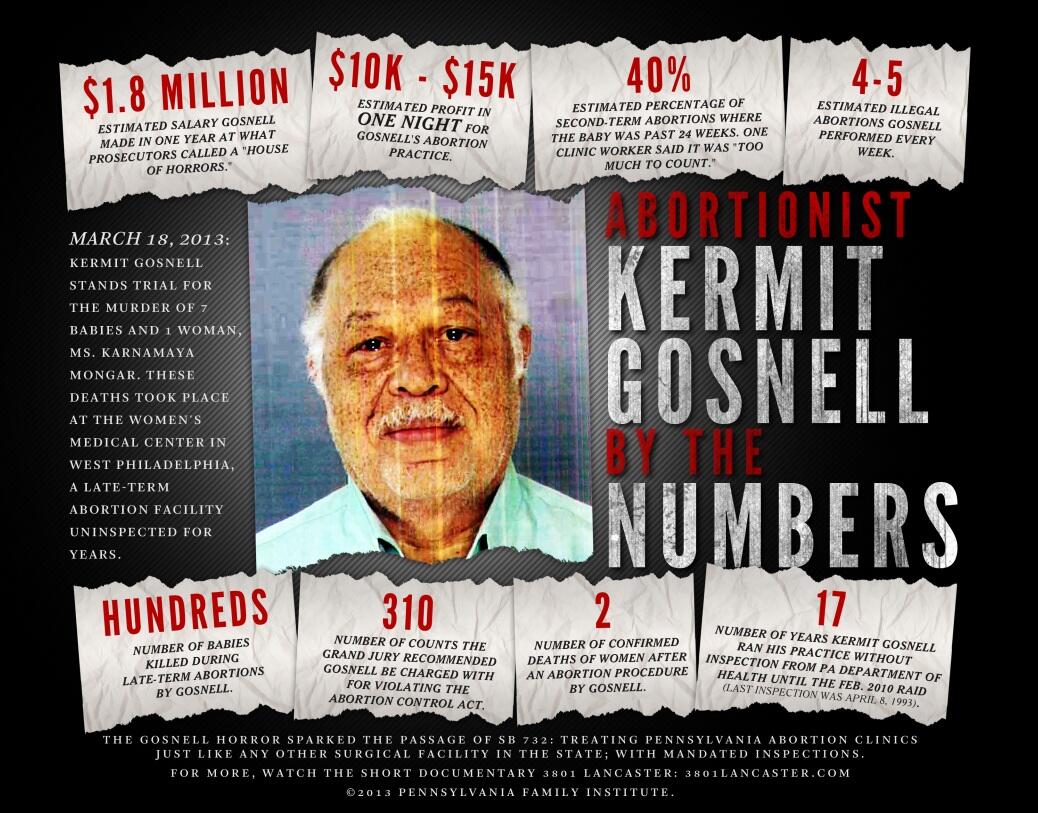
Kermit Gosnell and His Shop of Abortion Horrors

____________

Below is the full text of a post written by my friend Trevin Wax titled 8 Reasons for the Media Blackout on Kermit Gosnell

On Twitter and FaceBook today, #Gosnellis trending. The reason for the social media buzz is the strange silence of the mainstream media regarding one of the most gruesome murder trials in American history.

To put the Kermit Gosnell trial in perspective, consider other famous cases of child-killing. From Susan Smith toAndrea Yates, and most recently the horror of Newtown, we are accustomed to 24/7 news coverage of these types of tragedies.

Not so with Dr. Gosnell.

Here are the reasons why:

1. The Gosnell case involves an abortionist.

Whenever we see news stories about abortion, the abortionist must be portrayed as a victim of hate and intolerance, not a perpetrator of violence. But it is impossible to spin this story in a way that keeps “abortionist” separate from testimony about dead women and children.

2. The Gosnell case involves an unregulated abortion clinic.

Whenever we see news stories about abortion, the clinic must be portrayed as a “refuge” for women in distress, not a “house of horrors” where women are taken advantage of. But it is impossible to spin this story in a way that keeps “abortion clinic” away from negative connotations.

3. The Gosnell case involves protestors who, for years, stood outside 3801 Lancaster and prayed, warning people about what was taking place inside.

Whenever we see news stories about abortion, the protestors must be portrayed as agitators and extremists, not peaceful people who urge mothers to treasure the miracle inside them. But it is impossible to spin this story in a way that keeps the abortion protestors from looking like heroes.

4. The Gosnell case involves gruesome details about living, viable babies having their spinal cords “snipped” outside the womb.

Whenever we see news stories about abortion, the details of an abortion procedure are to be avoided. But it is impossible to spin this story in a way that keeps people from asking why such violent killing is unjust moments after birth, yet acceptable at any other time during the pregnancy.

5. The Gosnell case raises the question of human rights.

Whenever we see news stories about abortion, the discussion must always be framed in terms of a woman’s “reproductive rights,” not a baby’s “human rights.” But it is impossible to spin this story in a way that keeps people from asking why “reproductive rights” should trump “human rights” – or why a doctor devoted to “reproductive rights” would (without any apparent twinge of conscience) violate human rights so egregiously.

6. The Gosnell case involves the regulation of abortion clinics.

Whenever we see news stories about abortion, the clinic must be portrayed as under siege from anti-abortion extremists. But it is impossible to spin this story in a way that will keep people from pushing for policy change and further regulation of Planned Parenthood and other abortion clinics.

7. The Gosnell case exposes the disproportionate number of abortion clinics in inner cities and the disproportionate number of abortions among minority groups.

Whenever we see news stories about abortion, the discussion must be framed in terms of providing “access” for low-income, minority women. But it is impossible to spin this story in a way that keeps people from wondering if perhaps some abortion providers are “targeting” low-income, minority women.

8. The Gosnell case competes with recent stories about states enacting broad laws banning many abortions.

Whenever we see news stories about abortion, the choice of coverage must focus on the threat to a woman’s “right to choose.” But it is impossible to spin this story in a way that will keep Americans from joining together to enact more common-sense regulation of late-term abortions.

Lord, have mercy on us.

“Watch Me” featuring D.A. Carson


Using audio from Don Carson, this short video challenges us from the Bible how we must be sharing our lives, opening up the Bible and changing generations as we point them to Jesus.

(HT Tim Challies)

Free Easter Resources: For Personal Devotion or Lesson Preparation

Here’s one for all you procrastinators. My hope is that this post will serve you, your family, and your church in making much of King Jesus this Easter.

The Gospel Project

The writers of The Gospel Project have provided a lesson on The Resurrection and Exaltation of King Jesus. Below are the PDF versions of this session in both Adult and Student Leader Guide and Personal Study Guide.

Gospel Centered Discipleship

Jonathan Dodson and Brad Watson have written an excellent free e-book titled Raised: Doubting the Resurrection. The authors write: “We wrote this book out of our love for skeptics and respect for the questions they help us ask. We also write as believers who oscillate in real belief in the resurrected Christ. We hope it proves to be an insightful, stirring reflection on the resurrection.” You can download it below.

Desiring God

Desiring God has provided eight biblical devotions to prepare for Easter. 

They have also provided definitions for some words of the season

  1. Holiday: From a combination of two Old English words, halig + daeg—holy day; day set apart for special religious observance.
  2. Lent: From an Old English word related to lengthen. It meant springtime, when the days are lengthening. Now we use it to refer to the days between Ash Wednesday and Easter.
  3. Ash Wednesday: In the Bible, ashes are a sign of mourning, an appropriate symbol as we think of our part in the death of our Lord.
  4. Maundy Thursday: The night when we look back to the Lord’s Last Supper gets its name from the Latin word mandatum—commandment, remembering Jesus’ words to the Apostles during the Last Supper, “A new commandment I give to you, that you love one another: just as I have loved you, you also are to love one another” (John 13:34).
  5. Good Friday: This worst day in history is also good because of the reconciliation that comes through the cross.

Tim Keller

A few years ago Tim Keller wrote an article for Relevant Magazine on the Resurrection. In the article Keller writes:

Jesus had risen, just as He told them He would. After a criminal does his time in jail and fully satisfies the sentence, the law has no more claim on him and he walks out free. Jesus Christ came to pay the penalty for our sins. That was an infinite sentence, but He must have satisfied it fully, because on Easter Sunday He walked out free. The resurrection was God’s way of stamping PAID IN FULL right across history so that nobody could miss it.

Keller also wrote an article titled The Resurrection and Christian Mission, in which he argues:

Christians move out into a violent world as agents of peace, into a broken world as agents of reconciliation, into a needy world as servants of the poor. We do so knowing that it is God’s will to eventually end all war and division, all poverty and injustice. The resurrection of Christ assures us that God will redeem not just souls but bodies, and will bring about a new heavens and new earth. As the risen Christ, he stands not just with us in our present time, but he waits at the end of history to heal and renew everything. That is his promise. Therefore, we will not fear.

We the Priesthood of All Believers!

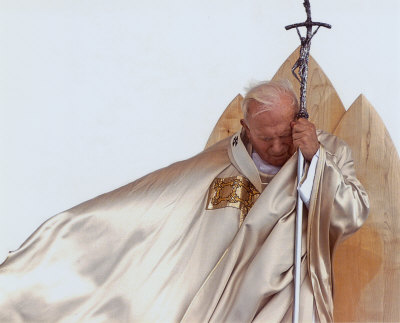
I doubt many people missed the election of the pope recently. It was a worldwide event. The papacy is one of the most enduring institutions in the world. Most Protestants have some vague idea concerning the function of the pope. Essentially, the pope has supreme spiritual authority over the Roman Catholic Church. He controls doctrine, and his decisions often impact societies and governments all over the world. Diversion from this doctrine and practice is one of the reasons for the Protestant reformation. And while Protestants may not affirm such powerful positions like the papacy by profession, many affirm such positions of power in practice – especially on the level of the local church.

pope-john-paul-ii-1920-2005In the Middle-Ages priesthood was limited to, and regulated by, the clergy. One of the marks of the reformation was Martin Luther’s call for “the priesthood of all believers”. Timothy George has called this doctrine one of Luther’s greatest contributions to the Protestant Church. Luther argued that “all Christians are truly of the spiritual estate, and there is among them no difference except that of office (Open Letter to the Christian Nobility).” Luther was not arguing for leaderless anarchy in local churches (offices imply order), but was stressing the equal access and spiritual importance that each believer has with God through their grace given relationship in Jesus Christ.

The priesthood of all believers has been especially important to Baptist church life since it forms the basis for Congregationalism. I am a Baptist. As a Baptist I am partial to Congregationalism. In God’s Word, the people of God are referred to as “a holy priesthood”, “a royal priesthood”, and “a kingdom of priests” (1 Peter 2:5, 9; Revelation 1:6, 5:10). As a Baptist I believe that all true believers are priests and have equal access to God the Father through our high priest Jesus Christ (Read the book of Hebrews). Moreover, no one person or group should have supreme and unchecked spiritual authority within a local church as if they and they alone can hear from God.

There is not one person in the church, or group of persons in the church, that have a closer connection to God over and above their brothers and sisters in Christ. All believers have priestly access to the heavenly sanctuary and need no other mediator but Jesus Christ. Yet some Protestant churches, while professing to priesthood of all believers, ignore this precious doctrine in practice. And some Protestant leaders even parade their “unique” relationship with God, lording it over others in their church family.

Holding to the priesthood of all believers also implies that all “believer-priest church members are able and responsible to help the church find God’s direction for its life”[1]. While pastors may be set apart to lead through the teaching of the Word, and certain leaders may be set apart to make decisions, the entire congregation should humbly shoulder the responsibility of acting as the final court to recognize, respond, affirm, and even challenge the direction of its leaders if necessary. The church is the body of Christ, and Jesus Christ is the only head. The church should function as a body.

So why do some leaders take it upon themselves to wield supreme (and some times negligent) spiritual authority within local congregations? Why do some leaders over-spiritualize decisions in order to trump everyone else in their congregation? Why do some leaders talk as if they, and they alone, receive and impart special divine revelation to their people? I am not sure. There could be many reasons. I admit, I have implied this “power” before as a pastor, and repent. Implying papal-like authority is the easy way out when it comes to leadership. Its a way to avoid the often messy life of church community.

Most Protestant leaders would never bluntly admit any of these things. But, many leaders within Protestant churches communicate these ideas by implication. The saddest thing is that such papal attitudes within Protestant leadership ranks pronounces lower spiritual status of everyone else in the congregation. How did we arrive at Evangelical Catholicism within local church leadership? May we repent and seek to uphold the priesthood of all believers!


[1] John Hammett, Biblical Foundations for Baptist Churches, 46.

Jesus The Coming King!

I have been reading What Happens After I Die? by Michael Allen Rogers. My review of this book will be published at The Gospel Coalition website in the near future. I will not expound on the many benefits of this book here, but I do want to point you to a particular section that I found encouraging and challenging.

In his chapter titled The Final Heaven Inaugurated, Rogers expounds on the momentous event of Christ’s final return. He writes;

No eye on earth will miss this! All the splendor, honor, and authority presently belonging to Jesus as Lord will be supernaturally visible to the entire world. Christ will not display more glory than he already has, but finally all mankind will see what is true about him as he now is. Every eye will see him and every knee will bow to him…When he appears, the present dimension will be ripped away, and Christ will be manifest to all eyes throughout the earth (See Matt. 24:27).

He continues:

Tragically for many, that recognition of Jesus lordship will come too late. They will recognize him as Lord without adoring him by faith. But for those who greet him with settled faith, this hour means a transformation of everything. God’s great saving work will be concluded in us and all around us. Enemies of Christ will be banished entirely from his presence, and his loving subjects will step forward to be invested as knights and ladies of his eternal court, enfolded into the brightness of his kingly splendor (pg.130).

What a wonderful picture of what is to come for the children of God! What a terrible picture of what is to come for those who reject Christ’s kingship. Oh that we would long for those around us to intimately know and lovingly adore Jesus as their savior, king, and treasure!

The Beauty, Truth, and Goodness of The Cross

Evangelical Christians prize truth and goodness. It seems like we write and talk about what is true and good often. We should. But, what ever happened to beauty? For the ancient philosophers and theologians beauty was always considered in relation to truth and goodness. If something was true, it was also good and beautiful. For something to be good, it also had to be beautiful and true.

The CrossFor many of our theological forefathers, compartmentalizing these great transcendental realities would deconstruct the majesty of the whole. Yet we rarely talk about beauty anymore. For us, beauty is no longer in concert with truth and goodness. So its always refreshing when I find a theologian who explores all three.

Drawing from the writing of Hans Urs von Balthasar, specifically The Glory of the Lord: A Theological Aesthetic, theologian Dr. Stephen Garrett makes a wonderful observation relating the transcendental realities of beauty, truth, and goodness to the work of Jesus Christ and the cross.

“[Beauty] seen through the One who is beauty, truth, and goodness, reveals an intertwined and interpenetrating triad that should not be compartmentalized.  To separate beauty, truth, and goodness results in distortion and misunderstanding not only of the triad but also of Christ himself. 

  • To see the act of Christ on the cross as merely beautiful is to turn towards sentimentality. 
  • To see the act of Christ on the cross as merely good is to understand Christ as a good moral example incapable of transforming humanity. 
  • To see the act of Christ on the cross as merely true is to reduce Christ to a brute unattractive historical fact that has no relevance for our lives. 

To keep beauty, truth, and goodness together however lifts up Christ’s act of love on the cross in order to draw humanity to himself so that they may live a virtuous life full of meaning.  Beauty understood then in concert with truth and goodness works to glorify and make God known yet when separated from them disparages Christian worship, wisdom, and witness.”

According to Garrett, the reasons for retaining an interconnected relationship between beauty, truth, and goodness are significant. The dangers of separating them are massive.

Devotions in Jonah

These devotions were recently published as a series in The Biblical Recorder.

Jonah 1-2

Most likely you know the story of Jonah from Sunday School. The first few chapters describe Jonah’s call from God to go and cry out against the great and evil city of Nineveh. Instead of obeying God’s call, Jonah traveled downward in the opposite direction of Nineveh toward Tarshish and away from the presence of God.

While Jonah was on a ship full of pagan sailors headed for Tarshish, God hurled a great wind at the sea. The storm was so strong that the boat was close to breaking apart. The pagans called out to their gods and begged Jonah to call out to his God with the hope that He would save them from death.

It is revealed that Jonah’s disobedience had brought about this judgment of God in the form of a storm. Finally, the pagan sailors hurled Jonah into the sea and the storm stopped. While this story is already amazing it also points to something even more magnificent, namely, the gospel of Jesus Christ. If we read this story through the lens of Jesus we see that the saving of pagans through the sacrifice of Jonah points to the salvation of all nations through the death of Christ (1 John 2:2). Moreover, Jonah’s rescue from death points to the resurrection of Christ from the dead (Matthew 12:40). In a certain sense, Jesus is like Jonah in that He hurled himself into the storm of God’s wrath so that we could be brought in to safety.

Continue reading “Devotions in Jonah”