This is the first message in a series on the book of Jonah that Philip Nation and I are preaching at The Fellowship in Nashville, TN. The sermon starts at around 23:30 (and ends at 54:40…Boom! Almost 30 minutes on the dot.)
Navigating Patriotism and Christianity

Patriotism is a good thing. As C.S. Lewis once put it, patriotism is the natural emotional connection we have with place. We’re wired to ache for this notion of home. However, as Christians we understand that this world is not our home. As American Christians, we also understand that the USA is not our promised land. We are settlers, but we are only passing through.
Many younger evangelicals have wrestled with the issue of patriotism theologically. So, here are a few blog posts that explore the relationship between patriotism and Christian theology.
Why Younger Evangelicals May Feel Uneasy In A Patriotic Service by Trevin Wax.
Older Southern Baptists are more likely to see the U.S. as Israel. Younger Southern Baptists are more likely to see the U.S. as Babylon. If this statement is true (and I admit it is a generalization), then it may help explain why many millennial church leaders feel a sense of angst regarding patriotic services in the church. As we witness the quickly shifting tides of morality in the United States, evangelicals who feel embattled in the cultural maelstrom are less likely to see the U.S. as the de facto “good guy” in all we do. The culture shift makes patriotic celebrations in church a sensitive issue.
Thinking Theologically About Patriotism by Kevin DeYoung.
In some parts of the church, every hint of patriotism makes you a jingoistic idolater. You are allowed to love every country except your own. But in other parts of the church, true religion blends too comfortably into civil religion. You are allowed to worship in our services as long as you love America as much as we do. I don’t claim to have arrived at the golden mean, but I imagine many churches could stand to think more carefully about their theology of God and country.
Rightful Revelry: Cautions Concerning Combining Patriotism and Worship by Ed Stetzer.
Christians are, in a sense, dual citizens– of the Kingdom and of the nation where they live. I live in a country that is not without fault, but I am proud to be a citizen of that nation. I teach my children to be proud of their nation– not unaware of its challenges– and patriotic citizens. Yet, I think that Christians in all those places need to be careful about mixing their faith and worship with their patriotism and nationalism.
Reconsider God and Country Services by Chris Martin
Millennials have a general lack of interest in religious matters and are somewhat apathetic when it comes to patriotism. How might these facts affect how we plan our God and Country services? I don’t think it would be a stretch to say that singing God Bless America and peddling politics from the pulpit this Sunday may not be a draw for young people outside your church who do not know Jesus or share the same views as you…Don’t burn bridges on the altar of political partisanship. Don’t build a wall around the gospel with bricks fashioned by your political passion.
Should Churches Display The American Flag? by Douglas Wilson, Lisa Velthouse, and Russell D. Moore.
I tend to sympathize with Doug Wilson on this one. However, Russell Moore makes a compelling case. Moore writes:
Removing a flag doesn’t remove the tendency to idolatry or triumphalism; it just leaves such things unaddressed and untroubled. If a congregation already has a flag in the sanctuary, the first step might be for the pastor to use it as an object lesson in a right-ordered patriotism.
The flag can prompt the church to pray for and honor leaders. The flag can prompt us to remember that national identity is important but transitory. There will come a day when Old Glory yields to an older glory, when the new republic succumbs to a new creation. Until then, let’s reorder all our affections, including our flag-waving. But let’s do so maintaining the paradoxical tension of “resident aliens.” There is no need to play “Rapture the Flag.”
Photo credit: photopin
Engaging Kids Imagination With The Christian Story
In this video, Sally Lloyd-Jones discusses parenting children into the Christian worldview story.
Jones is a New York Times bestselling children’s book writer. Her books include The Jesus Storybook Bible and Thoughts To Make Your Heart Sing.
Jesus Came Preaching

Timothy George (Th.D., Harvard University) just published an article in the First Things journal titled “Jesus Came Preaching“. George starts the article by examining the uniqueness of a preaching Savior:
“At the heart of the Christian faith is a Savior who was a preacher. “And Jesus came preaching” (Mark 1:14). This stands in contrast to the gods of Olympus or the deities of the Roman pantheon whose interaction with mortals, when it happened at all, was transient, ephemeral, detached, like a circle touching a tangent. Zeus thundered, but he did not preach. Nor did the dying and rising savior gods of the mystery religions. There were ablutions and incantations and the babbling utterances of the Sibylline Oracles but nothing that could rightly be called a sermon.”
At the end of the article, George expounds on the power of preaching in the ancient world, and issues a challenge for pastors today. His words provide a powerful reminder to all Bible teachers – especially pastors.
The preachers of the early church were not merely expressing their personal opinions or providing entertainment to their listeners. No, they were in the vanguard of the militia Christi, the army of Jesus that sheds no blood. Their preaching propelled redemptive history forward toward the consummation of all things. This is certainly how Matthew 24:14 has been understood, from the age of the apostles right through the dawn of the modern ecumenical movement: “And this Gospel of the kingdom will be preached in the whole world as a testimony to all nations, and then the end will come.”
The promise still stands and the task yet remains, for God ever renews his church through new forms of preaching—the martyrs, the monks, the mendicants, the missionaries, the reformers, the awakeners, the pastors and the teachers. Where such proclamation is faithful to the living and written Word of God and enlivened by the Spirit, it is an effective means of grace and a sure sign of the true church.
To read the whole article, click here.
27 Blog Posts on The Atonement

With the release of The Gospel Project’s study on the atonement titled “Atonement Thread“, I organized a series of blog posts centered around the same theme theme. In total, 27 blog posts on the importance of the atonement.
The atonement, as taught in the Bible, calls to mind the unfathomable love of God to send His Son to take away our sins. The atonement proclaims the amazing grace of God to cover over our sins with the precious and perfect blood sacrifice of the Lamb of God. Whether you realize it or not, the doctrine of the atonement has very practical implications for your day to day Christian life.
The Atonement and the Christian Life
- Christ Died for You – Sharon Miller
- Christ Promises a Life of Victory – Bob Kellemen
- Christ Motivates a Life of Love and Compassion – Trillia Newbell
- Christ Transforms Our Humility – Joe Thorn
- Christ Stimulates a Life Of Holiness – Daniel Davis
- Christ Frees You To Be You – Brad Hambrick
- Christ’s Death Was Final – Nathan Finn
- Christ Motivates a Sacrificial Life – Matt Capps
- Christ Impels a Life of Peacemaking – Ryan Showalter
The Doctrine of the Atonement
- The Savior Who Suffers With Us – Trevin Wax
- Penal substitution – Brandon Smith
- Redemption – Nancy Guthrie
- Ransom – Jared Wilson
- Moral influence – Matt Capps
- Expiation – Adam Mabry
- Propitiation – Fred Sanders
- Freedom of Redemption – Bryan Loritts
- Cosmic Victory – Phillip Bethancourt
The Atonement in the Old Testament
- The Atonement in the Blood– Stephen Um
- The Atonement in the Garden of Eden – Jon Akin
- The Atonement in Abraham’s Sacrifice of Isaac – David Murray
- The Atonement in the Passover – Scot McKnight
- The Atonement in Hosea’s love for Gomer – Robert Vasholz
- The Atonement and the Scapegoat – Kenneth Matthews
- The Atonement and the Psalmist – Eric Mason
- The Atonement in Exodus – Matt Capps
- The Atonement in Isaiah – Philip Nation
What Is Wrong With The World?
 “God created the earth with the specific intention that it should be his dwelling place. To bring his project to completion, God initially bestowed on humanity a holy and royal status. As they filled the earth, human beings were to extend God’s temple kingdom throughout the world. However, the successful completion of this divine project was tragically endangered when Adam and Eve, in an act of wilful arrogance, heeded the serpent rather than the divine Creator. Adam and Eve’s disobedience introduced major obstacles to the fulfillment of God’s plan for the earth. Rather than extending the temple of God throughout the earth through holy service, humanity defiled the world through their unrighteous behavior. Having been delegated authority to rule, they now use this authority inappropriately; unrestrained human dominion brings violence to the earth rather than peace.”
How Do We Mobilize The Church For Evangelism?
Jeff Vanderstelt has some really good things to say about evangelism. Vanderstelt is a pastor at Soma Communities, an A29 church in Tacoma, WA.
I am always challenged by Jeff’s teaching. I’ve also hung out with Jeff and his crew a few times now, and I can tell you that he is a leader with a heart for leaders and deeply loves the church. Enjoy the video!
Jesus and the Ten Commandments

This post origionally appeared at The Gospel Project blog in a series on the Ten Commandments.
For too many Christians the Ten Commandments are impossible imperatives. While we would affirm that God’s commands are good, they seem to bring nothing more than a moral burden that crushes us under the weight of God’s holiness. Our difficulty with the Ten Commandments can be resolved by understanding the aim of God’s law in the context of redemptive history. Furthermore, when we fail to see the context in which the law was given, we tend to overlook the relationship of the law of God to the grace of God.
You have seen what I did to the Egyptians and how I carried you on eagles’ wings and brought you to Me…I am the LORD your God, who brought you out of the land of Egypt, out of the place of slavery. –Exodus 19:4; 20:2 (HCSB)
These are the words of the God of Israel to Moses as he stood on Mount Sinai and looked back at what God had done for His people, how He had delivered them from slavery in Egypt. It is important to remember that when God gave the Israelites the law, their status as God’s people had already been established.
Since Israel was given a new life after God delivered them out of Egypt, the law functioned to show Israel what this new life was to look like. And the laws given at Sinai were not arbitrary but stemmed from the character of God and His original purpose for humankind in creation. The purpose of Israel’s obedience was to reflect God’s nature to the world around them as a concrete expression of their devotion to God. The same is true for Christians today; God’s law establishes a separate and unique identity for God’s people.
However, the history of Israel (and our own hearts) confirm that the ideals of God’s law cannot be achieved without God’s divine intervention. The Ten Commandments expose our sinful motives and behavior for what they are, namely, transgression of specific commands. And we know from experience that the Ten Commandments do not have the power to transform us or liberate us from the power of sin. So, the law is like a teacher who shows us God’s holiness, our sinfulness, and our need for salvation. And the needed divine intervention ultimately comes through Jesus Christ. This is the good news of the gospel.
By faith we receive the gift of Jesus’ law-keeping, which was perfectly achieved on our behalf, and in Him we become righteous. Therefore, we uphold the law by turning our backs on our own warped efforts to keep the law and by putting all our confidence and trust in the One who satisfied all the laws demands on our behalf (Romans 3:31). Thus, when one is saved through repentance of sin and faith in Jesus Christ, they are released from the power of sin and the condemnation of the law. In salvation we are given new hearts to know and understand God’s order for creation. The spirit of rebellion against the authority and rule of God is replaced by a spirit of obedience. Gospel-driven internal motivation replaces external moral constraint (Jeremiah 31:31-33; Ezekiel 11:19-20, 36:26-27).
Therefore, God’s law is still authoritative and necessary for Christians today. Jesus did not so much replace the Old Testament law as make explicit its proper application to the heart and not just external behavior (Romans 6:14, 8:1-4). Jesus’ idea of obedience moves beyond religious observance, focusing not only on the things we do but on who we are (Matthew 5–7). Only the gospel changes the heart and can lead to lasting change in our lives.
You will remember that when asked by one of the religious leaders to identify the greatest commandment in all of the law, Jesus replied by quoting Deuteronomy 6:5 and Leviticus 19:18.
Love the Lord your God with all your heart, with all your soul, and with all your mind. This is the greatest and most important command. The second is like it: Love your neighbor as yourself. All the Law and the Prophets depend on these two commands. –Matthew 22:37-40 (HCSB)
In many ways, Jesus’ response summarized the heart of the Ten Commandments. The first four of the Ten Commandments have to do with our relationship to God, while Commandments six through ten addresses our relationship to one another. Jesus came to fulfill the law (Matthew 5:17). Jesus is the true Israelite who perfectly loved God with all of His heart and perfectly loved His neighbors (Luke 22:42; John 15:13). The Old Testament law pointed to Jesus Christ and is only properly revealed in Him (Romans 8:3; 10:4; Galatians 3:24).
In fulfilling the law through His life, death, and resurrection, Jesus enables us to attain righteousness greater than that of religious obedience. Jesus has delivered us from a slave master greater than Egypt—that of sin and death. Jesus was crushed under the weight of our sin so that we could be free to obey God’s commands. Our gospel-empowered desire to obey God’s commands creates a separate and unique identity for us as God’s holy people sent out in His name into the world. Those who love God will express their love for Him in obedience and missionally in their love for others.
In response to what Christ has done, knowing that our status as God’s people is secure, we submit to the words of Paul, who declared in Romans 12:1, “by the mercies of God, I urge you to present your bodies as a living sacrifice, holy and pleasing to God; this is your spiritual worship.”
4 Suggestions on “Sharing the Gospel” from Matt Chandler
In a recent interview with Bob Smietana for Facts and Trends Magazine, Matt Chandler offered four practical suggestions for teaching Christians how to share their faith.
1. Get the gospel right.
Strategy doesn’t matter if churches don’t get their message right. And people can’t share the gospel if they don’t know it. “Get the gospel message right,” he says. “And then be confident in that message. Not in your delivery but in the message. Here’s what we do—we love well and we share the gospel.”
2. Admit your faults.
Self-righteousness is one of the biggest turnoffs for nonbelievers, says Chandler. Don’t pretend being a Christian makes you superior to other people. “If you really understand grace, it’s not us and them,” he says. “It’s us. The ground at the cross is flat. The gospel of Jesus Christ has set me free to not pretend that I am perfect in front of you.”
3. Don’t try to scare people into following Jesus.
Chandler’s not afraid to talk about hell. He says it’s an “awful reality” that can’t be avoided. But avoiding hell isn’t the main message of the gospel. “If hell is how you are trying to motivate people toward heaven, then you have missed a key component of what God has done for us in Jesus Christ,” he says. “Namely He has justified us, sanctified us, and is adopting us as sons and daughters. You have missed the entire delight piece—where God delights in those He has rescued.”
4. Focus on the gospel instead of arguments about non-essentials.
Chandler tries to steer clear of arguments over issues like creation, evolution or the age of earth, where he’s not an expert. “If you think you don’t have all the answers,” says Chandler, “Just say ‘I don’t know. But here’s what I do know—Jesus changed my life.’ A passionate belief in Jesus Christ that has changed your life is still the best apologetic.” Remind people their job isn’t to save nonbelievers. Instead, they need to share the gospel and let God do the work. “I have tried repeatedly to lay out the reality that it is God who saves,” he says. “God saves. That takes the pressure off of people.”
To read the whole article, click here.
Free eBook: Keeping The Ten Commandments by J.I. Packer
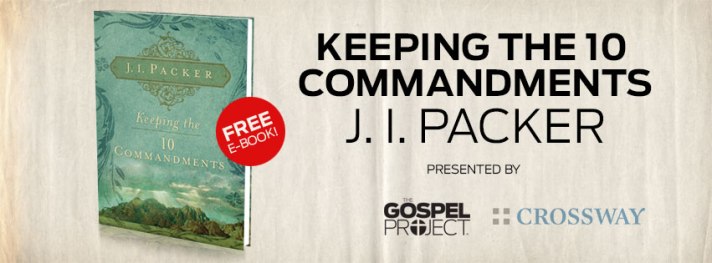
We are excited about the newest release of The Gospel Project! Our adult/student summer study, titled God’s Way, explores the Ten Commandments from a Christ-centered perspective. The writers for God’s Way include Trevin Wax, Mike Cosper, Rey De Armas, and J.D. Greear. These are 13 sessions that you will not want to miss.
In conjunction with the launch of God’s Way, The Gospel Project and Crossway have teamed up to offer J.I Packer’s book Keeping The Ten Commandments free. Here are a few words about the book.
 “They’re often mistakenly considered God’s “rules”- his outdated list of do’s and don’ts that add up to a guilt-ridden, legalistic way of life. But as beloved author and Bible scholar J. I. Packer probes the purpose and true meaning of the Ten Commandments, you’ll discover that these precepts can aptly be called God’s blueprint for life. They contain the wisdom and priorities everyone needs for relational, spiritual, and societal blessing-and it’s all coming from a loving heavenly Father who wants the best for his children.
Not only does Packer deliver these truths in brief, readable segments, but he includes discussion questions and ideas for further study at the end of each chapter. This book will challenge you to view the commandments with new eyes and help you to understand-perhaps for the first time-the health, hope, and heritage you’re offered there.”
The Gospel Project strives to provide solid additional resources that enrich your study as you move through our material. This free Crossway eBook will only be available for a limited time, so download it now and pass the info on to your friends.
 Matt Capps