The Dynamics of Spiritual Revival


Yesterday I had the privilege of preaching at The Fellowship at Two Rivers and Mt. Juliet, where Laura and I are now members. I am thankful for Philip Nation and the Elders/Pastors/Leaders for giving me the opportunity.

This sermon is on Nehemiah 9-10, continuing in the series “Build Up” through the book of Nehemiah.

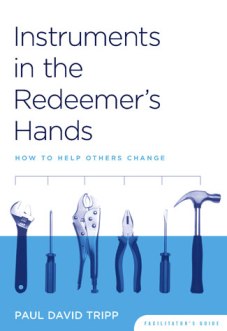
Instruments in the Redeemer’s Hands by Paul Tripp

Here are some quick thoughts on Paul Tripp’s Instruments in the Redeemer’s Hands. I love this book for several reasons. In Instruments in the Redeemer’s Hands, Tripp explores the practical applications of the belief that we must not simply offer people a system of redemption, a set of insights and principles – but offer the redeemer. Tripp argues that counselors are  instruments in the redeemer’s hands, being used to bring about change. In my opinion, the sections that emphasize community as the context for change, and asking the right questions to get at the heart of a matter, are the most compelling portions of the book.

InstRdmsHandsTripp rightly argues that “personal insight is the product of community. I need you in order to really see and know myself…If I am going to see myself clearly, I need you to hold the mirror of God’s Word in front of me.” (54) Again, “God transforms people’s lives as people bring his Word to others . . . . The combination of powerful truth wrapped in self-sacrificing love is what God uses to transform people” (21). God’s purpose is for relationships to be the setting/environment/etc. in which his work of change can thrive.

The sections of the book exploring how the heart relates to particular struggles are an excellent resource for counselors and pastors. From my experience, the guiding questions that outline Tripp’s method have been very helpful in pastoral counseling sessions, teaching, and preaching – especially in exploring the deeper issues of the heart.

  1. Our hearts are always being ruled by something.
  2. The most important question: “what is ruling your heart in this particular situation?”
  3. God changes us not by teaching us different things, but by recapturing our hearts.
  4. The deepest issues of humanity are worship issues. What rules your heart?

I believe that Tripp is most helpful in unearthing heart issues by teaching one to ask the right questions. He argues that “…asking good questions is doing the work of change. Through them, we give sight to blind eyes and understanding to dull minds, we soften hardened hearts, encourage flagging souls, and stir hunger that can only be filled by the truth.” (173).

Why passive-aggressive Christian leadership must go away

Passive-aggressive attitudes manifest themselves in different ways, and in different situations. As with all sinful attitudes and actions, Christians are not immune to passive-aggressive responses to conflict.

My friend Marty Duren just posted a good blog post titled “Why passive-aggressive Christian leadership must go away“. Marty gives five reasons.

  1. Jesus was not passive-aggressive.
  2. It fosters a negative “blame the many instead of the problem” culture.
  3. It is contrary to New Testament fellowship.
  4. It creates distrust in the leader.
  5. It removes the imperative for the person to change his or her ways.

He expounds on these reasons on his blog. Marty begins this post on a personal note:

“When I was a young pastor I had a scattergun approach to preaching. Like many I tended to take a text, depart therefrom and go everywhere preaching the gospel.

Regrettably this approach also led to preaching in which I would “confront” a member of the congregation at the expense of the many. Rather than meeting with people individually about a certain issue, I would use the preaching time to address it. I would scattershot. In my ignorance it never dawned on me that the majority of the congregation had no idea what I was talking about and the intended target probably thought I was talking about someone else.

When I wanted to do it, I could really put the “bully” in bully-pulpit. This was a terrible pattern of preaching and leadership. Over the course of many years God got me mostly beyond preaching and leading that way, and I am grateful.”

I encourage you to read the whole thing here.

Christ-Centered Preaching and Teaching Discussion: Audio

tgpCHRISTwebad960x355

Here is a link to the audio: Christ-Centered Teaching and Preaching

photo (1)In case you missed it…

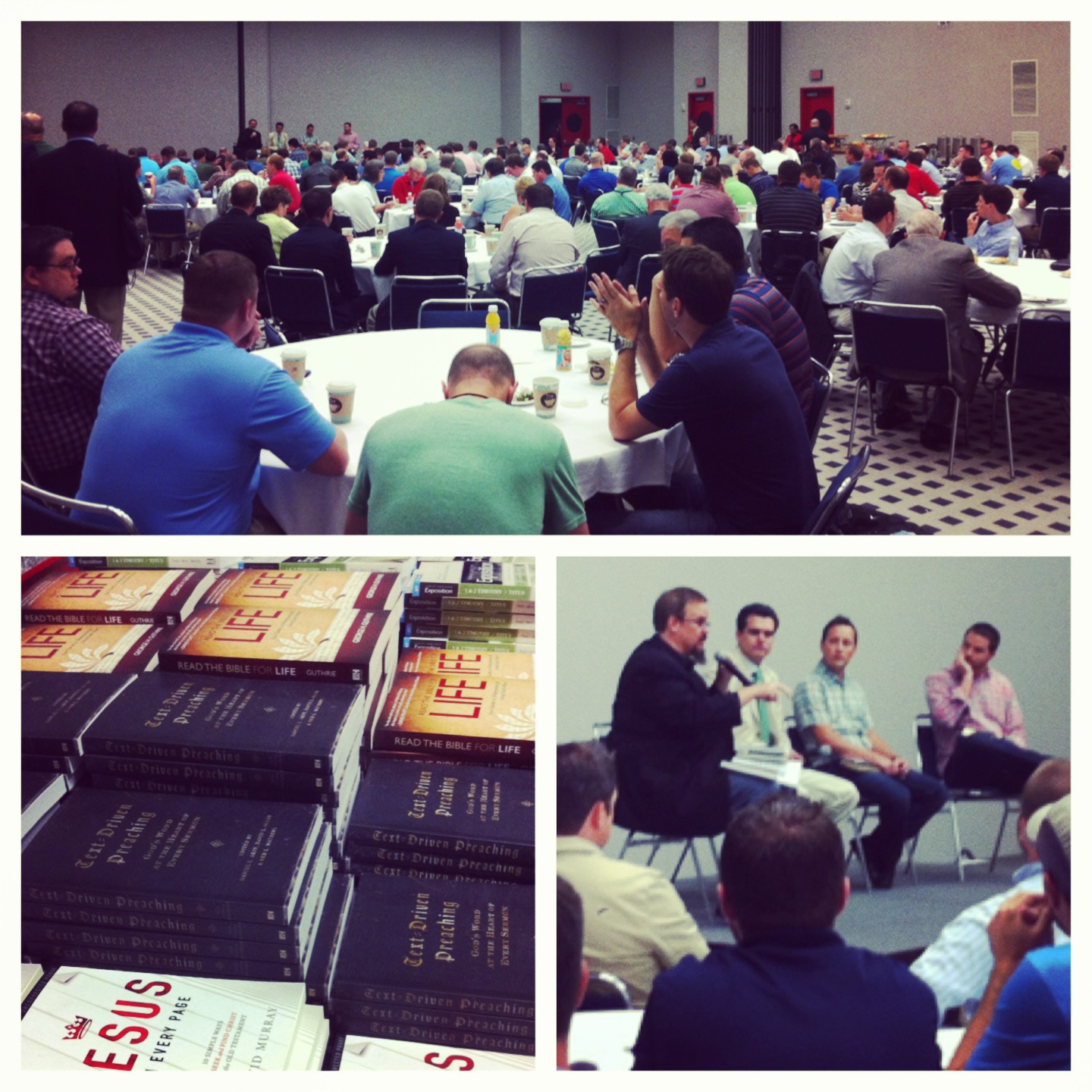
One of the highlights of the 2013 SBC was The Gospel Project‘s panel discussion on Christ-centered teaching and preaching. The room was packed out, which would suggest that people think this is an important topic. The panel featured Ed Stetzer, Eric Hankins, Trevin Wax and Jon Akin.

I Just Received My First Book Contract!

about_main_image

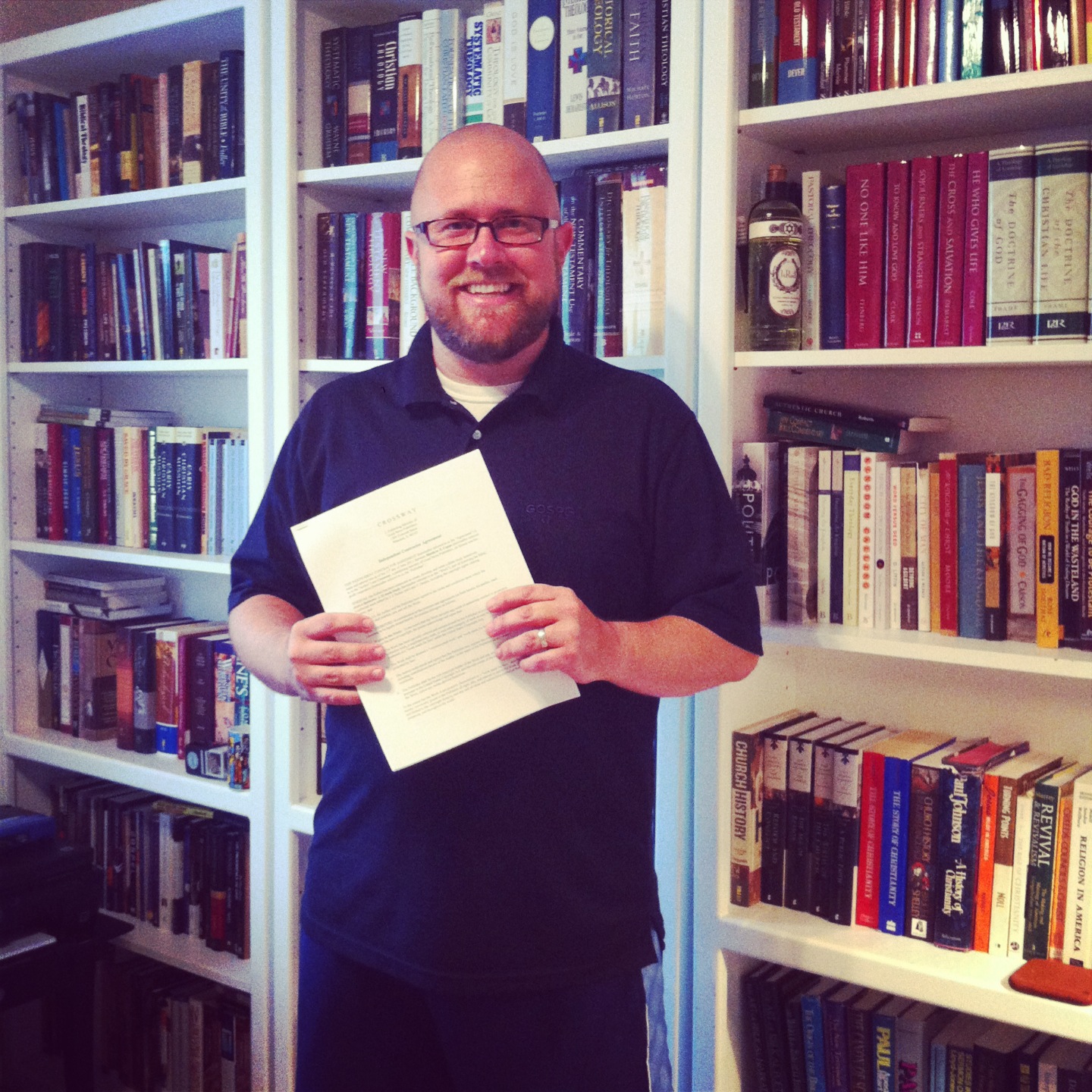
Last night I signed my first book contract. If you cannot tell by my picture below, I am thrilled. I will be writing a 12-week study on the book of Hebrews for Crossway‘s “Knowing The Bible” series. I am not only excited about publishing a Bible study; I am also excited about the series as a whole. Here is the vision for the Knowing the Bible:

The Knowing the Bible series is a new line of Bible studies designed to help Bible readers better understand and apply God’s Word.

Each study covers one book of the Bible over 12 weeks, making practical applications and connections between the passage and the rest of Scripture. The series is edited by theologian J. I. Packer, and includes contributions from an array of influential pastors and church leaders. Perfect for both small groups and individuals, these gospel-centered studies will help you see and cherish the message of God’s grace on each and every page of the Bible. Each study includes:

  • Reflection Questions designed to help you engage the text at a deeper level
  • Gospel Glimpses highlighting the gospel of grace throughout the book
  • Whole-Bible Connections showing how a passage connects to the Bible’s overarching story of redemption culminating in Christ
  • Theological Soundings identifying how historic orthodox doctrines are taught or reinforced throughout Scripture

I am thankful for Dane Ortlund and Crossway, who are granting me this opportunity. Pray for me, that I write well for the glory of God and the good of the church!

photo (2)

Reflections on Fathering an Adopted Son

CBMW

I recently had the privilege of sharing part of our adoption story at The Council on Biblical Manhood and Womanhood website. My post was focused on “Fathering an Adopted Son”. Here is the conclusion:

I count our adoption as a great privilege and stewardship granted by God. When we celebrate birthdays, watch movies as a family, and wrestle like superheroes I am reminded of the beauty of adoption that brought us together as a family. This child who was once an orphan now loves me and calls me daddy. When I look at him I don’t see our differences, I see my son. The first time I held him as a baby in the agency house on a hillside in Africa, I fell in love with him. As we stood in front of the judge in Addis Ababa and she pronounced that we were his parents, I felt the weight of the profound task of fatherhood.  Though I am not a perfect father, here are two things I do know: God providentially arranged for Solomon to be in our family, and I am called to continue the Christian heritage passed unto me by my own father – both in gospel word, and kingdom deed.

Through our adoption I have learned many things about fatherhood, and more importantly, many things about the gospel. My prayer is that our story would encourage all who read it.

Pastor, Don’t Waste Your Summer!

dwysfacebook315x851


I recently posted a blog at The Gospel Project site titled “Pastor, Don’t Waste Your Summer!” In the post I plead with pastors to utilize the summer for gospel growth and mission in two ways.

  1. Have a Strategic Plan for Personal Discipleship
  2. Have a Strategic Plan for Relational Discipleship

Essentially, it’s a call for pastors to be proactive with discipleship strategies. Here is the conclusion:

In 2 Timothy 2:2 we see that the church is to be a learning and teaching fellowship in which the passing on of what we learn is vital to the health and spiritual progress of the body. It’s also clear that pastors are men set aside for equipping saints for the work of the ministry (Ephesians 4:12-16). I believe that a lasting ministry is built in the quiet hours of pastoral reflection and in smaller intimate discipleship groups. Pastors, let me encourage you to not waste the summer. Develop an intentional plan not only for personal discipleship, but also for relational discipleship during the summer months – this is where faithful and fruitful ministry often occurs.

I encourage you to read the whole thing here. I would love to hear your thoughts!

Christ-Centered Hermeneutics in the SBC

tgpCHRISTwebad960x355

One of the things I am looking forward to at the Southern Baptist Convention this year is the discussion panel on Christ-Centered Preaching and Teaching. I agree with Hankins that this is a deeply important discussion, and working out as precisely as possible the nature and practice of Christ-centered preaching is crucial for our churches.

If you are already planning on coming to the discussion panel let me encourage you to read some of these blog posts on Christ-centered hermeneutics. The discussion has already started…

Eric Hankins

Hankins argues that while Christ should always be exalted when preaching, authorial intent alone is the exegetical launch pad for any sermon.

Jon Akin (Responding to Hankins)

In part one Akin argues that Christ-centered interpretation was the method of Jesus and the Apostles.

In part two Akin argues that Christ-centered interpretation takes into account the dual authorship of the Bible and treats it as one book instead of a collection of 66 books.

In part three Akin argues that Christ-centered exposition bases the imperatives to live faithfully in the gospel indicatives of what Christ has already done for us.

Tony Merida

In this first post Tony explains the the “dilemma” of Christ-Centered expository preaching.

In the second post Tony explains the centrality of Christ in the Bible and in expository preaching.

In the third post of this series Tony explores practical application in Christ-centered expository preaching.

Matt Capps

In this post I explain my journey to appreciating Christ-centered hermeneutics, and the benefits of the method.

If you know of any more posts on Christ-centered hermeneutics please feel free to post links to them in the comment section. 

Clear Winter Nights by Trevin Wax

A few weeks ago Trevin Wax walked into my office and handed me an advanced copy of his first fiction book Clear Winter Nights. I have read Trevin’s blog for years. I’ve also read his previous non-fiction works Holy Subversion and Counterfeit Gospels. Trevin is a gifted writer and thoughtful theologian. As he walked out of my office that day I was excited for him, not only because he’s my friend, but also because of what this book means to him. Trevin has been calling for artistic portrayals of truth for a while now. In several of his blog posts he has expressed concern about conservative Christians picking apart works of art without offering something better. This concern seems to be one of the driving forces behind Clear Winter Nights. For someone who has done well in the non-fiction market, writing fiction is a risky move.

Clear-Winter-Nights_1a-716x1024Offering a work of fiction to the public puts an author in new territory beyond a change of literary genre. In non-fiction a writer has the privilege of shoring up his or her arguments with evidence, his or her points with the thoughts of other thinkers. Fiction pushes an author into a much more vulnerable position. Trevin has not only personally crafted this entire story, but also intimately created each character, and shaped their thoughts and actions. A fiction novel is a work of art. And because it is a work of art the writer becomes susceptible to criticism on many levels. In my opinion this makes Clear Winter Nights Trevin’s most personal venture yet.

I am not a literary critic. Nor, do I read fiction on a level that allows me to be conversant with it as an art form in the strictest sense. I tend to read theological, sociological, and philosophical works. On my honeymoon I read C.S. Lewis’ The Abolition of Man while enjoying the breathtaking beaches of the Riviera Maya. On our trip to finalize our adoption in Ethiopia I read Graeme Goldsworthy’s Gospel-Centered Hermeneutics while relaxing in the cool of the night. My library is made up of ninety five percent non-fiction. However, I would like to offer my thoughts on Clear Winter Nights, for whatever it’s worth.

First, I was delighted by Trevin’s ability to render the context of each scene in such a way that it added to the beauty of the narrative without slipping into the melodramatic. In each chapter Trevin was able to paint the surroundings in such a way that I was transported into the ethos of the moment without losing a sense of the narrative trajectory. The reader can not only visualize the setting, but also see the physical posture of each character at almost every turn in the movement of the story. In my opinion, this only strengthens to the emotive force of the story line. For someone like me, who dwells in abstract literature, this is meaningful because it adorns the truth and adds to the beauty of the narrative.

Second, Trevin was able to communicate thoughtful biblical truth using a storyline that was captivating, and did so with memorable characters. Clear Winter Nights includes both fiction elements and non-fiction elements, namely, sustained theological discussion and logical reasoning. However, the story does not get weighed down by the theological elements. Trevin transported theology through story exceptionally well. At the right moments and in the right way, the discussion would lift so that I, as the reader, would remain grounded in the narrative. The beauty of narrative is that truth delivered from specific characters adds contextual force, which leaves a more lasting mark on the reader.

Finally, this book will resonate with many readers because of the content of the discussion between the characters. Many readers will sympathize with, and find themselves reflected in the thoughts and actions of each character. One of the main characters of Clear Winter Nights is a young and intellectually ambitious Christian dealing with disillusionment and doubt. The story centers on this young Christian spending a weekend with an elderly retired pastor, who is not only wise but broken and full of grace. During the course of the weekend these two men discuss some of the most pressing subjects of life and faith, and it is clear that no subject is off limits. As I followed every interaction, every response, and every question in the conversation I was not only entertained but educated. In Clear Winter Nights you are taken on a journey through philosophical and thoughtful discussions on the biggest dilemmas of faith. The characters discuss the equality and inequality of world religions, the nature of Christian discipleship, and the reality of sin, pain, and suffering. Through engaging dialogue Trevin aptly explores the relevance of solid biblical truth in an unstable world.

A few years ago I was encouraged by one of my closest friends Zach Hawkins to take an occasional break from academic reading to enjoy fiction. I am glad I did. I am also thankful for Trevin’s new book. I pray that many more volumes will be published in this line of literature. If you are looking to read a short and reflective fiction work, I commend Clear Winter Nights to you. I read it in a few sittings. And each time, it was hard for me to put it down.
Matt Chandler on being “Faithful and Fruitful”

This is video from Matt Chandler’s workshop at The Gospel Coalition, 2013.