Pastors, Preach Through The Gospel Project This Winter…?

Why is planning your preaching important?

Sunday comes every week, which is 52 times a year. Preaching pastors know that one of the inevitable realities of ministry is that sermon preparation cannot be postponed. For this reason it is particularly important to plan a preaching schedule. While determining a preaching strategy requires thought and energy, it also allows you to organize and use their time more efficiently in weekly sermon preparation. When the schedule is set one doesn’t have to carry the weight of “what’s next?” from week to week. Taking time to plan extended pulpit work can provide the parameters you needs to prepare and preach more effectively. I tend to agree with Spurgeon who argued that habitually entering “… into the pulpit unprepared is unpardonable presumption (Lectures to My Students).”

I’ve heard some contend that planning a preaching schedule in advance could squelch the Holy Spirit. Their argument assumes that the Holy Spirit will only move “in the moment.” Mark Dever rightly opposes this assumption by writing that “… of course He does that sometimes [moves in the moment], but that’s not the only way He does it. The Holy Spirit also moves and directs months in advance when planning a preaching schedule (Preach: Theology Meets Practice).”

What is your plan for the winter?
M00050082There are many ways to approach series preparation. One is that you work through a book of the Bible and move chapter by chapter through that book, like “A Walk through Exodus.” Another is that you work systematically through a section of a book, like a series on “The Sermon on the Mount.” Or you can develop a series of sermons dealing with a particular topic or aspect of the Christian life and living. Let me first state that I am not a proponent of topical expository preaching, however I do think it has its place in preaching. One doesn’t want the felt needs of the congregation to drive the preaching schedule. John Stott once wrote, “… if we become exclusively preoccupied with answering the questions people are asking, we may overlook the fact that many of them often ask the wrong questions and need to be helped to ask the right ones (Between Two Worlds).”

With that said, it is important to address personal and cultural issues head on once and a while. Sermons ought to come from Scriptural texts, and it is important to answer cultural questions directly from a biblical framework. Honestly, developing a series on particular topics can be the most time consuming method of series planning. However, one approach to developing a topical series is to adapt an outline from a book or some other resource.

A Proposal for Preaching “A God-Centered Worldview”

As the brand manager of The Gospel Project I am going to unashamedly encourage you to consider developing a series of sermons to coincide with the adult and student winter study of The Gospel Project: A God-Centered Worldview (Also see Leader Guide).

The first reason I propose this sermon series is that preaching alongside a curriculum sequence not only aligns preaching to small groups, it also allows the preachers to encourage small group participation, and permits for more thoughtful group discussion following the sermon since all of the participants have read about the topic. As for The Gospel Project’s winter study for adults and students, the units are broken up so that one can actually develop three series from the curriculum with four to five sermons in each. Here are some of the topics covered in The Gospel Projectwinter study. I have adapted the lesson titles to be sermon titles as if I were going to preach them myself.

A Biblical Worldview

  1. Does Having a Christian Worldview Matter? (Romans 12:1-2)
  2. What is the Difference Between Man-Centered vs. God-Centered Living? (Exodus 33:19-23, 34:5-9; 2 Corinthians 3:12-18)
  3. How Did We Get the Bible? (2 Timothy 3:16-17)
  4. Can We Trust the Bible? (Matthew 1:1-17; Luke 2:1-3, 3:23-38)
  5. Is Christianity Is Unique Among the Religions? (John 14:1-11)

The Big Questions

  1. Does Life Have Meaning Without God? (Ecclesiastes 3:16-20, 4:1-3; 1 Corinthians 15:12-19)
  2. Is The God of The Bible a Good God? (Deuteronomy 7:1-5; Matthew 15:21-28)
  3. Why Do We Suffer? (Job 1:20-22; 2 Corinthians 1:3-7; James 1:24)
  4. Is Hell Real or Necessary? (Exodus 9:13-17; Luke 16:19-31; Romans 10:11-17)

The Big Debates

  1. What is God’s View of Sex? (Genesis 2:8-9, 15-25; Luke 5:29-32; Romans 1:21-28)
  2. What is God’s View of Marriage? (Matthew 19:1-9; 1 Corinthians 7:1-9; Ephesians 5:22-33)
  3. Is Human Life Sacred? (Genesis 9:5-6; Jeremiah 1:5; Acts 22:1-5)
  4. Should We Care for Others and the World? (Genesis 9:8-17; Matthew 6:19-21, 24; 2 Corinthians 8:1-4)

The Preaching Plan as Evangelism and Discipleship Tool

The second reason I encourage you to consider adopting this preaching plan is that this particular study lends itself well to be used in evangelistic conversations and for directional discipleship. If you commit to this plan it enables you to publish a preaching schedule for your church in advance. A preaching schedule not only allows your people to read in advance, it also allows the Holy Spirit to begin working in their hearts beforehand. Therefore, the people gather with their own questions and insights, allowing for greater listening.

The preaching plan can also be used as a tool allowing your church members the opportunity to begin spiritual conversations on these topics with their family, friends, co-workers, and neighbors. If they have a non-Christian friend who might be interested to hear about a particular topic a natural invitation can be issued. As LifeWay Research has shown us, 67 percent of Americans say a personal invitation from a family member would be very or somewhat effective in getting them to visit a church. Also, 56 percent of Americans say a personal invitation from a friend or neighbor would be very or somewhat effective in getting them to visit a church. With provocative topics such as the ones listed above, I can only imagine that these statistics would be even higher.

Equip Your Church to Thoughtfully Engage the Public Square

The third reason I encourage you to consider adapting The Gospel Project lesson sequence for the winter is to train your church to thoughtfully engage the public square. In the last decade we have seen massive shifts in our culture, and not all Christians are equipped to respond to these changes form a particularly Christian perspective. A Christian worldview, perhaps its more precise to say a theistic worldview, could have been assumed 50 years ago, but that is not the case anymore. What was once culturally accepted is now rejected and even labeled as intolerant.

When asked how he prepared a Sunday sermon Karl Barth once said, “I take the Bible in one hand and the daily newspaper in the other.” Considering the content of today’s news, this quote is more timely than ever before. How would the members of your church engage the big questions and big debates of our time? Our churches need to be full of people who are grounded in the foundational doctrines that shape our identity as Christ followers. As Ed Stetzer argues in his editorial introduction to the winter material, “The big questions and big debates of our day find their answers not in the shifting views of the culture but in the steadfast, unchanging word of God.”

A Message on the Cross of Jesus Christ from Billy Graham

Thankful for Martin Luther King Jr.’s Dream

I Have A Dream

It’s been fifty years since Martin Luther King Jr. shared with a divided nation his “dream” of racial equality. I am thankful for his dream, which is a reality for our family today. This is our son Solomon with his cousin Emma.

Clear Winter Nights by Trevin Wax

A few weeks ago Trevin Wax walked into my office and handed me an advanced copy of his first fiction book Clear Winter Nights. I have read Trevin’s blog for years. I’ve also read his previous non-fiction works Holy Subversion and Counterfeit Gospels. Trevin is a gifted writer and thoughtful theologian. As he walked out of my office that day I was excited for him, not only because he’s my friend, but also because of what this book means to him. Trevin has been calling for artistic portrayals of truth for a while now. In several of his blog posts he has expressed concern about conservative Christians picking apart works of art without offering something better. This concern seems to be one of the driving forces behind Clear Winter Nights. For someone who has done well in the non-fiction market, writing fiction is a risky move.

Clear-Winter-Nights_1a-716x1024Offering a work of fiction to the public puts an author in new territory beyond a change of literary genre. In non-fiction a writer has the privilege of shoring up his or her arguments with evidence, his or her points with the thoughts of other thinkers. Fiction pushes an author into a much more vulnerable position. Trevin has not only personally crafted this entire story, but also intimately created each character, and shaped their thoughts and actions. A fiction novel is a work of art. And because it is a work of art the writer becomes susceptible to criticism on many levels. In my opinion this makes Clear Winter Nights Trevin’s most personal venture yet.

I am not a literary critic. Nor, do I read fiction on a level that allows me to be conversant with it as an art form in the strictest sense. I tend to read theological, sociological, and philosophical works. On my honeymoon I read C.S. Lewis’ The Abolition of Man while enjoying the breathtaking beaches of the Riviera Maya. On our trip to finalize our adoption in Ethiopia I read Graeme Goldsworthy’s Gospel-Centered Hermeneutics while relaxing in the cool of the night. My library is made up of ninety five percent non-fiction. However, I would like to offer my thoughts on Clear Winter Nights, for whatever it’s worth.

First, I was delighted by Trevin’s ability to render the context of each scene in such a way that it added to the beauty of the narrative without slipping into the melodramatic. In each chapter Trevin was able to paint the surroundings in such a way that I was transported into the ethos of the moment without losing a sense of the narrative trajectory. The reader can not only visualize the setting, but also see the physical posture of each character at almost every turn in the movement of the story. In my opinion, this only strengthens to the emotive force of the story line. For someone like me, who dwells in abstract literature, this is meaningful because it adorns the truth and adds to the beauty of the narrative.

Second, Trevin was able to communicate thoughtful biblical truth using a storyline that was captivating, and did so with memorable characters. Clear Winter Nights includes both fiction elements and non-fiction elements, namely, sustained theological discussion and logical reasoning. However, the story does not get weighed down by the theological elements. Trevin transported theology through story exceptionally well. At the right moments and in the right way, the discussion would lift so that I, as the reader, would remain grounded in the narrative. The beauty of narrative is that truth delivered from specific characters adds contextual force, which leaves a more lasting mark on the reader.

Finally, this book will resonate with many readers because of the content of the discussion between the characters. Many readers will sympathize with, and find themselves reflected in the thoughts and actions of each character. One of the main characters of Clear Winter Nights is a young and intellectually ambitious Christian dealing with disillusionment and doubt. The story centers on this young Christian spending a weekend with an elderly retired pastor, who is not only wise but broken and full of grace. During the course of the weekend these two men discuss some of the most pressing subjects of life and faith, and it is clear that no subject is off limits. As I followed every interaction, every response, and every question in the conversation I was not only entertained but educated. In Clear Winter Nights you are taken on a journey through philosophical and thoughtful discussions on the biggest dilemmas of faith. The characters discuss the equality and inequality of world religions, the nature of Christian discipleship, and the reality of sin, pain, and suffering. Through engaging dialogue Trevin aptly explores the relevance of solid biblical truth in an unstable world.

A few years ago I was encouraged by one of my closest friends Zach Hawkins to take an occasional break from academic reading to enjoy fiction. I am glad I did. I am also thankful for Trevin’s new book. I pray that many more volumes will be published in this line of literature. If you are looking to read a short and reflective fiction work, I commend Clear Winter Nights to you. I read it in a few sittings. And each time, it was hard for me to put it down.

Faithful Church Leaders, Not Flashy Ones

Hero worship is a problem in our society. Even worse, hero worship is a problem in evangelical Christianity. The reliable Vaughan Roberts issues a prophetic warning on the phenomenon of personality cults in his book Authentic Church. Drawing from 1 Corinthians 3-4 he writes;

“We copy the world in its obsession with personalities, dividing into parties which gather around different Christian gurus whose teaching is exalted almost to the level of infallibility. Those who attach themselves to other leaders can be seen as enemies, even though they are fellow Christians who believe exactly the same as us on all the fundamentals of the faith and worship the same Heavenly Father. Sadly, membership of the same Christian family can be seen as less important than membership of the same faction.

Sometimes the leader is to blame for promoting such adulation by drawing attention to himself and encouraging and unquestioning loyalty from his followers; but often leaders placed on pedestals are as uneasy as the apostle was when people said, ‘I follow Paul.’ He was horrified a the thought of Christians gathering around him rather than the Lord he served.

To counter their immature, worldly thinking, he outlines a truly spiritual understanding of Christian leadership that never allows mere humans to take center stage. Churches should value not those who are the most flashy, with impressive gifts and personalities, but rather those who are faithful in fulfilling their charge, and point to the master, not themselves. (39-41)”

A Theology of the Beard…?

To beard, or not to beard? This has become a popular question. And it would seem that many men are choosing to let their beards grow. You might notice the style experts reporting on the dominance of beards in popular culture over the clean-shaven perfectly smooth face. Not too long ago a campaign for Gillette starred three cultural icons sporting facial hair – yes, remaining facial hair in a razor commercial. Why? Because the beard is a phenomenon. And the beard phenomenon is not only growing in popular culture but also in Christian culture.

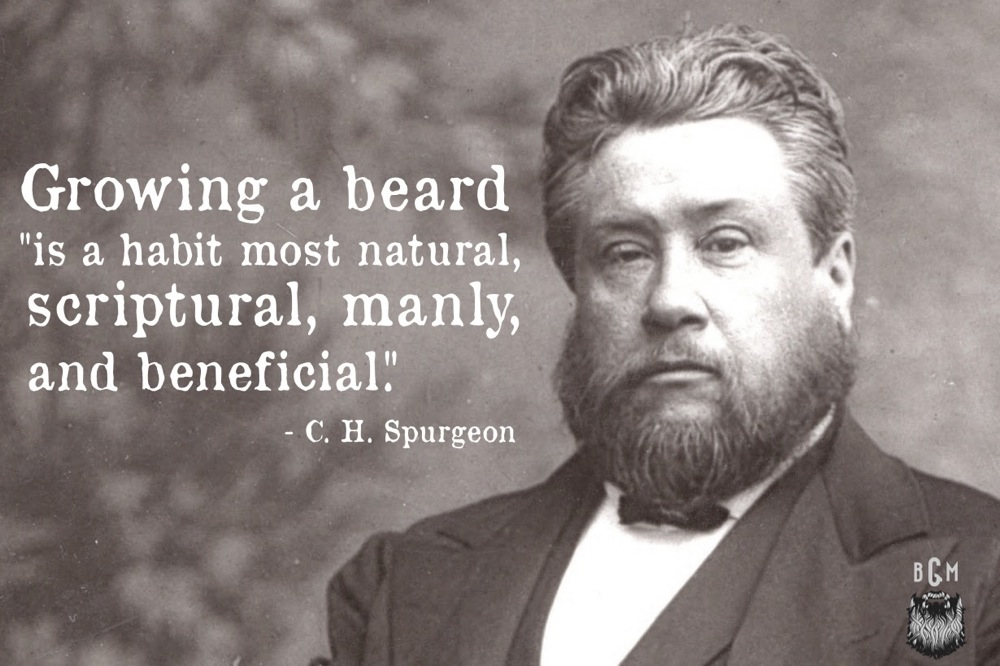
spurgeon-said-bgmOne might argue that the recent popularity of beards in Christian circles is a demonstrative protest against the decline of gender differences in our society. Maybe the growth of beards in Christian circles is cultural or contextual mimesis of hipster trends. Perhaps the popularity of the beard is simply an appreciation for it as a masculine ornament. At least one thing is clear, beards are continuing to grow in Christian circles. Perhaps you’ve seen the website Bearded Gospel Men? In case you missed it, Leadership Journal recently ran an article titled The Beards of Ministry in which they proclaim, “the beard is back in a big way. Along with celebrities, bike messengers, and your local barista, pastors are no exception to the glories of facial hair. The ministry beard has a long and glorious history among preachers, theologians, and everyday men of the cloth.” (Don’t miss their graphic)

The beard does have a long and rich history. For the Ancient Israelites in the Old Testament a full rounded beard was an ornament signifying manhood, a source of pride.[1] The Hebrew men carefully maintained their beards. For the more affluent men beard care was ceremonial. While we don’t find too much in the Bible concerning beards, there are a few descriptive passages to read while twirling your chin hair;

  • For the Israelites in the Old Testament the beard was never to be shaved, only trimmed (Lev. 19:27; 21:5). The only time a beard was to be shaved was in the circumstance of an infectious disease (Lev. 14:9).
  • As a sign of lament, men in mourning would often shave or even pull out their beards (Ezra 9:3; Is. 15:2; Jer. 41:5, 48:37).
  • The prophet Ezekiel was instructed by God to shave his beard as a sign of desecration and shame, pointing to the coming destruction on Jerusalem (Ezek. 5:1).
  • Since the beard was a symbol of masculinity in ancient culture it was a grave insult to damage someone’s beard. Once on a mission, David’s men suffered grave humiliation when their beards were half shaved by the Ammonites. They didn’t return to Jerusalem until their beards had grown back (2 Sam. 10:4-5).
  • Isaiah depicts the pulling out of a man’s beard as emasculative and shameful (Is. 7:20, 50:6).

There is not much in the Bible concerning beards. Even so, theologians and preachers have taken up the subject of beards. Augustine once argued that “there are some details of the body which are there for simply aesthetic reasons, and for no practical purpose—for instance… the beard on [a man’s] face [which is] clearly for a masculine ornament.”[2] Similarly, Charles Spurgeon contended that growing a beard is “a habit most natural, scriptural, manly, and beneficial.”[3] So, what are we supposed to do with all of this? I am not sure. This post was written for fun and theological novelty. Clearly, God does not command all men everywhere to grow their beards, nor are beards the quintessential mark of  masculinity. But maybe the thought of a beard will grow on you…

Continue reading “A Theology of the Beard…?”

The Boston Marathon Bombs and the Love of God

“It’s utter pandemonium…Everybody’s just in disbelief and sadness.”

These are the words of one witness to the bombings at the Boston marathon on Monday. Runners and spectators scattered in pandemonium as loud explosions went off near the finish line. As the news broke my first thought was…why? Why would anyone do something like this? We’ve seen it before…but it sickens my stomach every time.

Boston Marathon logo 2015We live in a broken world for sure. And we should expect suffering and even death as a result of sin’s entrance into creation order, but gratuitous evil human actions like these leave us not only weeping – but scratching our heads.

When it comes to suffering, death, and evil there will always be questions. Honestly, there are some questions, like “why”, that often have no clear explanation when it comes to the particulars. What happened in Boston was a tragic case of what theologians call moral evil. Moral evil  is that which is the direct result of human volition. Someone did this. Rest assured that the persons who planted those explosives will answer for their actions – hopefully to the law, certainly to God almighty (Matthew 12, Romans 14, Revelation 20).

As a Christian I believe that ultimately the Gospel of Jesus Christ is the only comfort we have in facing these horrible realities. The days are evil. But one day Christ will return. Listen to the words of the Apostle John in Revelation 21:3-5;

And I heard a loud voice from the throne saying, “Behold, the dwelling place of God is with man. He will dwell with them, and they will be his people, and God himself will be with them as their God. He will wipe away every tear from their eyes, and death shall be no more, neither shall there be mourning, nor crying, nor pain anymore, for the former things have passed away.”

And he who was seated on the throne said, “Behold, I am making all things new.” Also he said, “Write this down, for these words are trustworthy and true.”

As we long for that day let us seek justice in all wrongs, peace when all possible, and always point to Christ as the hope that is within us. And what about those who ask – why does God allow things like this to continue? I think Tim Keller deals with this question well from the perspective of an evangelical Christian in his book The Reason for God;

“The death of Jesus was qualitatively different from any other death. The physical pain was nothing compared to the spiritual experience of cosmic abandonment. Christianity alone among the worlds religions claims that God became uniquely and fully human in Jesus Christ and therefore knows firsthand despair, rejection, loneliness, poverty, bereavement, torture, and imprisonment. On the cross he went beyond even the worst human suffering and experienced cosmic rejection and pain that exceeds ours as infinitely as his knowledge and power exceeds ours. In His death, God suffers in love, identifying with the abandoned and godforsaken. Why did he do it? The Bible says that Jesus came on a rescue mission for creation. He had to pay for our sins so that someday he can end evil and suffering without ending us.

If we were to ask the question: “why does God allow evil and suffering to continue” and we look at the cross of Jesus, we still do not know what the answer is. However, we now know what the answer isn’t. It cant be that He doesn’t love us. It cant be that he is indifferent or detached from our condition. God takes our misery and suffering so seriously that he was willing to take it on himself.

So, if we embrace the Christian teaching that Jesus is God and that he went to the cross, then we have deep consolation and strength to face the brutal realities of life on earth. We can know that God is truly Immanuel- God with us- even in our worst sufferings”

Let us continue to turn to Christ as our only hope. In these moments let us pray for the families of those who died. Let us pray for those who are hurt. All the while asking in our hearts, How long, O Lord? with the Psalmist.

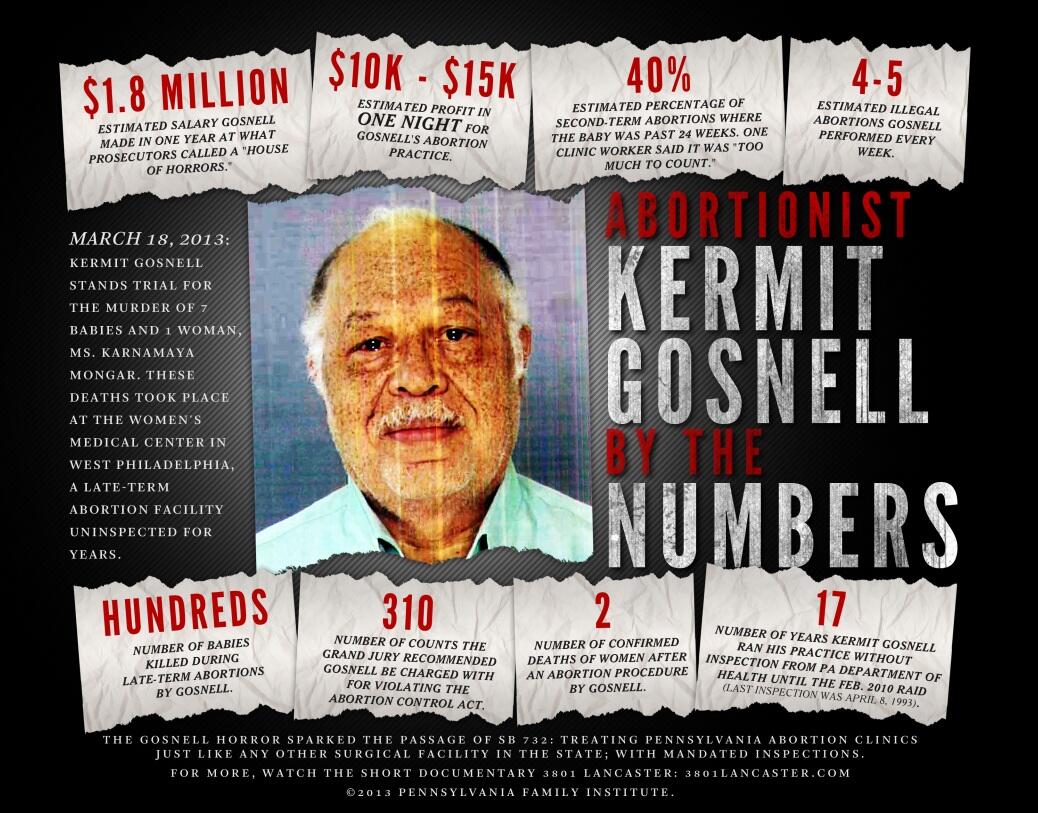
Kermit Gosnell and His Shop of Abortion Horrors

____________

Below is the full text of a post written by my friend Trevin Wax titled 8 Reasons for the Media Blackout on Kermit Gosnell

On Twitter and FaceBook today, #Gosnellis trending. The reason for the social media buzz is the strange silence of the mainstream media regarding one of the most gruesome murder trials in American history.

To put the Kermit Gosnell trial in perspective, consider other famous cases of child-killing. From Susan Smith toAndrea Yates, and most recently the horror of Newtown, we are accustomed to 24/7 news coverage of these types of tragedies.

Not so with Dr. Gosnell.

Here are the reasons why:

1. The Gosnell case involves an abortionist.

Whenever we see news stories about abortion, the abortionist must be portrayed as a victim of hate and intolerance, not a perpetrator of violence. But it is impossible to spin this story in a way that keeps “abortionist” separate from testimony about dead women and children.

2. The Gosnell case involves an unregulated abortion clinic.

Whenever we see news stories about abortion, the clinic must be portrayed as a “refuge” for women in distress, not a “house of horrors” where women are taken advantage of. But it is impossible to spin this story in a way that keeps “abortion clinic” away from negative connotations.

3. The Gosnell case involves protestors who, for years, stood outside 3801 Lancaster and prayed, warning people about what was taking place inside.

Whenever we see news stories about abortion, the protestors must be portrayed as agitators and extremists, not peaceful people who urge mothers to treasure the miracle inside them. But it is impossible to spin this story in a way that keeps the abortion protestors from looking like heroes.

4. The Gosnell case involves gruesome details about living, viable babies having their spinal cords “snipped” outside the womb.

Whenever we see news stories about abortion, the details of an abortion procedure are to be avoided. But it is impossible to spin this story in a way that keeps people from asking why such violent killing is unjust moments after birth, yet acceptable at any other time during the pregnancy.

5. The Gosnell case raises the question of human rights.

Whenever we see news stories about abortion, the discussion must always be framed in terms of a woman’s “reproductive rights,” not a baby’s “human rights.” But it is impossible to spin this story in a way that keeps people from asking why “reproductive rights” should trump “human rights” – or why a doctor devoted to “reproductive rights” would (without any apparent twinge of conscience) violate human rights so egregiously.

6. The Gosnell case involves the regulation of abortion clinics.

Whenever we see news stories about abortion, the clinic must be portrayed as under siege from anti-abortion extremists. But it is impossible to spin this story in a way that will keep people from pushing for policy change and further regulation of Planned Parenthood and other abortion clinics.

7. The Gosnell case exposes the disproportionate number of abortion clinics in inner cities and the disproportionate number of abortions among minority groups.

Whenever we see news stories about abortion, the discussion must be framed in terms of providing “access” for low-income, minority women. But it is impossible to spin this story in a way that keeps people from wondering if perhaps some abortion providers are “targeting” low-income, minority women.

8. The Gosnell case competes with recent stories about states enacting broad laws banning many abortions.

Whenever we see news stories about abortion, the choice of coverage must focus on the threat to a woman’s “right to choose.” But it is impossible to spin this story in a way that will keep Americans from joining together to enact more common-sense regulation of late-term abortions.

Lord, have mercy on us.

The Beauty and Fragility of Human Life

Orthodox, protestant, evangelical, conservative Christians must value human life, from conception until death. Genesis 1:26-31 informs us that God intimately created humans in His likeness, male and female. We see that humanity is set apart and crowned with authority over the earth and its creatures, a position of honor and responsibility.

Theologian John Hammett rightly argues that creation in the image of God is the basis for human dignity and that killing a human or to even curse one is an affront to and an attack upon the living God. The utterly depraved and unimaginably horrible actions of the gunman in Newtown, Conn., are still relatively close as I write this.

embryoWe know that all human beings are, as Psalm 139 describes, knitted together in their mother’s womb. The God of the universe has His loving eyes on every single one of us and always has even when we were “unformed substance,” to use modern language “an embryo.” But we also understand that we live in an entirely broken world.

Almost every night on the news Americans are brought to the precipice of life and forced to look down at our seemingly hopeless plight because of sin. However, as Christians we run to the cross, where the truly innocent God-man gave his life in our place, for our sin, to make all things new.

And while death is a perpetual reminder of our fragile humanity, we have a greater and eternal hope. That one day Christ will return. And in that day He will wipe away every tear from our eyes, and death shall be no more (Revelation 21).

The Beauty, Truth, and Goodness of The Cross

Evangelical Christians prize truth and goodness. It seems like we write and talk about what is true and good often. We should. But, what ever happened to beauty? For the ancient philosophers and theologians beauty was always considered in relation to truth and goodness. If something was true, it was also good and beautiful. For something to be good, it also had to be beautiful and true.

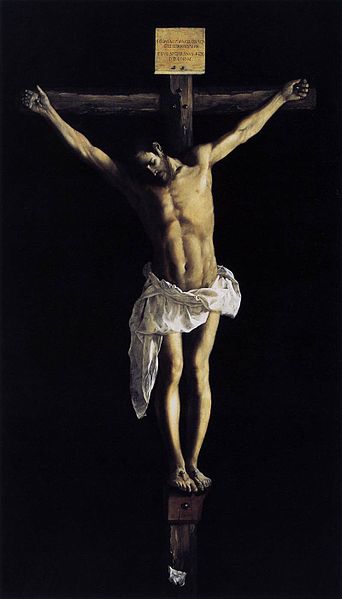
The CrossFor many of our theological forefathers, compartmentalizing these great transcendental realities would deconstruct the majesty of the whole. Yet we rarely talk about beauty anymore. For us, beauty is no longer in concert with truth and goodness. So its always refreshing when I find a theologian who explores all three.

Drawing from the writing of Hans Urs von Balthasar, specifically The Glory of the Lord: A Theological Aesthetic, theologian Dr. Stephen Garrett makes a wonderful observation relating the transcendental realities of beauty, truth, and goodness to the work of Jesus Christ and the cross.

“[Beauty] seen through the One who is beauty, truth, and goodness, reveals an intertwined and interpenetrating triad that should not be compartmentalized.  To separate beauty, truth, and goodness results in distortion and misunderstanding not only of the triad but also of Christ himself. 

  • To see the act of Christ on the cross as merely beautiful is to turn towards sentimentality. 
  • To see the act of Christ on the cross as merely good is to understand Christ as a good moral example incapable of transforming humanity. 
  • To see the act of Christ on the cross as merely true is to reduce Christ to a brute unattractive historical fact that has no relevance for our lives. 

To keep beauty, truth, and goodness together however lifts up Christ’s act of love on the cross in order to draw humanity to himself so that they may live a virtuous life full of meaning.  Beauty understood then in concert with truth and goodness works to glorify and make God known yet when separated from them disparages Christian worship, wisdom, and witness.”

According to Garrett, the reasons for retaining an interconnected relationship between beauty, truth, and goodness are significant. The dangers of separating them are massive.