The Impossible Imperatives – Psalm 37

Note: This is an edited manuscript from the sermon I preached at Calvary Baptist Church on June 6th, 2010.

Fret not yourself because of evildoers;
be not envious of wrongdoers!

For they will soon fade like the grass
and wither like the green herb.

Trust in the Lord, and do good;
dwell in the land and befriend faithfulness.
Delight yourself in the Lord,
and he will give you the desires of your heart.

Commit your way to the Lord;
trust in him, and he will act.
He will bring forth your righteousness as the light,
and your justice as the noonday.

Be still before the Lord and wait patiently for him;
fret not yourself over the one who prospers in his way,
over the man who carries out evil devices!
– Psalm 37:1-7

Opening Thought

While I was in college I worked at an after-school program at my home church. I was one of the counselors over the 5 year-old boys and girls. We had about 20 kids. At about 3:15 everyday there would be a knock on our class room door. And all the kids knew what it was. The excitement was unbearable for some of them. They knew that the snack cart had arrived. On this snack cart was every candy[1] you can imagine. Every day, this was the most anticipated moment – all the kids had their change ready to purchase their hearts desires!

There was always one kid who did not have money when the snack cart arrived. Most of the time it was because this kid’s parents would send him to after-school with a zip lock bag that had a small snack in it. It was always something that no other kid, in the class, possibly in the world, wanted – like ‘wheat oat bran flakes.’ You need to imagine this kid trying to trade his ‘cardboard’ flavored cereal for his favorite flavored skittle. – Not going to happen.

Well, on one of these particular days this poor kid’s emotions were running high. Here he was eating cereal that tasted like cardboard when everyone else was enjoying the sweetest of candies. So, logical response for a 5 year old – he broke out crying – declaring that he ‘hated his snack’, and that ‘it wasn’t fair that everyone else could have candy.’ Me being the wise and compassionate counselor I was, leaned over and looked him in the eyes and as lovingly as I could said – kid, “life is not fair.” Like that was going to make his cardboard taste like skittles. Even though the words “life is not fair” are true – they don’t always taste good. Especially when life is hard and everyone around you seems to be doing wonderful.

Three Hypothetical Situations

I am going to give you three hypothetical situations – three situations that I want you to place yourself in. I think this will help us draw out the emotions we need to deal with this morning, the emotions that King David is dealing with in Psalm 37.

  1. Work: Let’s imagine that you devote your life to work – you sacrifice your time and effort to do the best you can at your job. You’ve done this for years and years. A position opens up in your company that would pay more, and get you higher on the latter of success. It’s a position you feel like you would thrive in. A few weeks go by, and the leadership announces that someone else was offered the position. What makes it worse is that to co-worker that got the job, in your opinion – does not work as hard as you. Is less than honest in their business dealings – and is, in your opinion, extremely arrogant and rude. Would that bother you? Why would that bother you?
  2. Relationships: Let’s imagine that you are single. You have a friend of the opposite sex that you have known for a long time, in fact you two do a lot of things together, You really enjoy the time you have with this person. In fact, you start to wonder if you are falling in love with this friend. Well, your friend meets ‘that special someone’ and eventually gets married. What makes it hard is that the person they are marrying does not like you that much. And to be honest, you don’t think they go that well together anyway. But, that does not matter – it’s done, and here you are, you are still single. Would that bother you? Why would that bother you?
  3. Self Image: Let’s imagine that you feel down abut yourself – Perhaps you are not as pretty or good looking as someone else. Your not as fashionable as someone else. Your not as fit as someone else. You are not as smart as someone else. Your not as achieved as someone else. You always find yourself feeling inadequate or ashamed about who you are when you are around others. What makes it worse is that all the people who seem ‘so beautiful’ on the outside, are so mean and rude. Do these types of things ever bother you? Why, ultimately, do these things bother you?

When things like this happen it stirs up emotions within us. These emotions are often stronger[2] when the people who stir them up within us are people we don’t like. I believe the Psalmist is dealing with in Psalm 37. I believe we can learn a lot about ourselves – what makes us do what we do? What drives us? I would argue that our emotional struggles reflect is our deepest desires. More importantly, they reveal our deepest questions about God.[3]

Intro to Psalm 37

Psalm 37 is a wisdom psalm. So, what we have in this Psalm is instruction, ‘ancient curriculum’[4] for the development of wisdom for everyday living. To help your imagination here, glance at verse 25 where the psalmist King David says, “I have been young, and now am old.”

The picture being painted here is that we are sitting under the teaching of an older, wiser man, much more than that, a King. Wisdom Psalms are simply a series of observations about life[5] – this Psalm is not a tightly outlined argument, but a poem that imparts wisdom. David wrote this Psalm in such a way that the Israelites could learn its contents by heart – in the Hebrew it follows a certain rhythmic pattern that makes it easily remembered.[6] This allows for easy recall when needed in day to day living. In this Psalm David deals with some of the deepest issues wrestled with in the human heart – mortal life and eternity, wisdom and folly, and reward and punishment.[7] The treasure of wisdom found in this Psalm is well worth plunging into the depths of God’s Word and letting it expose our hearts and actions.[8]

Psalm 37:1-7

In verses 1-2 David is saying ‘do not allow yourself to become heated, to boil inside because of others’ – namely others who get what you want, or what you think you deserve.[9] So, the warning in verse 1, not to “fret yourselves”, is in the context of ‘envy.’ Do not burn with envy!

Let’s explore this for a moment. What is envy? What causes it? What does it reveal? Well, envy is somewhat complex. John Piper helped me understand the different layers of envy by unpacking it like this:[10]

  1. Envy has an element of ‘desire’: Envy has an element of desire in it. When you envy someone, they have obtained something or experienced an advantage that you want for yourself. So you envy someone when they have something you desire. This is not always a bad thing, we can envy someone’s faith.
  2. Envy has an element of ‘resentment’: This is what makes envy bad. The envy talked about here in Psalm 37 is envy mixed with resentment. In other words, you are burning with bitterness because something is going so well for someone else, and not for you.

So, the underlying reason we develop resentful envy is desire, desire mixed with resentment towards someone else. Back to my illustration “three situations” – why would you desire that job, a spouse, better looks?

I believe we desire to obtain certain things because we believe they will give us fulfillment or satisfaction, we need them to obtain our idea of ‘the good life.’ We are all on this quest, this quest to obtain satisfaction and fulfillment, ‘the good life’, and we pursue it without ceasing.[11]

Now, here is where we are faced with the terrible reality of human sinfulness. This is where it gets ugly – where our sinful hearts are most revealed. Envy reveals that deep down; ultimately, we are at war against each other to obtain these things. We are in a never-ending competition with one another. See, when we burn with envy we are enraged in battle against others who are keeping us from getting what we want – keeping us from obtaining the ‘good life.’

  1. And what makes the situation even worse is that we live in a world with limited resources. There is only one job opening, there is only a few good men and women, there is such a little chance that we will look better than someone else.
  2. And even more than that – “life is not fair.” Other people will have better jobs, other people will find a spouse before you do, other people will look better and achieve more than you.

With our attention on the ‘three scenarios’, lets explore them on a deeper level: Work, Relationships, and Self Image. When it came to the hypothetical work situation, let me propose to you that ultimately it was not the job you wanted, it is what the job represented, what the job promised. That could be security, recognition, and value. In the same way, when it came to the relationship situation you were envious of the person who married your friend on a deeper level because of what that relationship represented for you, what the idea of a relationship promises. For many of us relationships promise intimacy, love, and belonging. And finally, when it came to self-image you are envious of others good looks and achievements because their lives, to you, represent and promise worth, acceptance, and happiness.

But in the end, these things will not deliver on their promises. There is always more. We are always left empty searching for fulfillment in the things of this world. I have always loved these words of C.S. Lewis, and they ring true here:

“If I find myself a desire which no experience in this world can satisfy, the most probable explanation is that I was made for another world.”[12]

Now, you may be thinking well what now? I feel like a child with a bag full of corn flakes in the middle of a candy store. If all these things ultimately don’t deliver on their promises. And if we are all at war with each other[13] to obtain these empty things. Where is the hope? The picture here is depravity, war against each other, envy. This is the state of the world, the strategy and aim of every human beings life? If that is the case then the human race is one massive tragedy!

The Beauty of the Gospel

But, there is a God and He came into this fallen world amongst warring men. And He surrendered His own life, instead of warring with us, instead of joining the battle for the things that will not satisfy, he surrendered His life in order to freely give us that which will satisfy the deepest desires of our souls.

  • In Christ we find True love
  • In Christ we find Eternal security
  • In Christ we find Ultimate intimacy
  • In Christ we find Overflowing happiness
  • In Christ we find Unbiased belonging

The other things we try to find our fulfillment in fade in light of this glorious truth. Jesus gave his life so that we could have the deepest desires of our hearts satisfied – in Him forever. That is the beauty of the gospel.

If you are not a believer I call you to believe the gospel – the good news of Jesus. Place your faith in Jesus as the only one who can satisfy the deepest desires of your heart. Repent of your sinfulness and turn to delight in Christ and the Savior of your soul! For those of you who are already believers – let’s take off the Sunday morning mask for a second. It is quite possible that there are some of you in here who are:

  1. In Denial – “I don’t have a problem with envy.” If this is you, you are probably blind to your own self-righteousness. Remember the words of the Apostle John, “if we say we have no sin, we deceive ourselves, and the truth is not in us.” While you may be saved from the penalty of sin, while on this earth you have not been delivered from the reality of sin yet. There are going to be times when you see resentful envy boil up in your heart.
  2. In Despair – “I cannot stop envying others.” I am always trying my hardest, but I always fail. I don’t understand? When I fail I don’t know what to do – besides loose hope or just despair. Possibly you look at verse 4, “delight yourself in the Lord, and He will give you the desires of your heart” and realize that every time you envy – it reveals that you really don’t believe that verse. If you did – you would not envy. Again, while you may be saved from the penalty of sin, while on this earth you have not been delivered from the reality of sin yet.

This is why we as Christians need to learn to preach the gospel to ourselves. In other words I am calling you to wage war – not against each other, but against your own deceitful heart. I want to offer you a few strategies for war against unbelief.”

Truths for the Fight to Desire God

1. The things of this world will never satisfy the deepest desires of your heart.

According to verse 2, the things of this world are passing away. So, regardless of how well-off some people seem, they – themselves – are fading.

(2) For they will soon fade like the grass
and wither like the green herb.

This is powerful imagery here. For some in King David’s region of the world this would be a very concrete example – in the Middle East “after the rainy season ends in the late spring, there is a great heat and no precipitation, so that everything green becomes parched and quickly withers.”[14] Therefore, the reasons you might burn with envy against others are fading. Plus, these things they delight in are not lasting, they are superficial and not to be envied, they will one day wither in the blazing heat of God’s glory.

Believe that the eternal delights of God will never end. While the temporary delights of this world will wither like parched plants in the blazing heat of the dessert. So “do not burn inside with envy”, in makes no sense. If we believe this it calls us to continually search our hearts to see which desires rule us – cravings for affection, attention, power, love, security, comfort – and enables us to repent and find God’s grace to change.[15]

2. Only God can satisfy the deepest desires of your heart in the gospel.

(4) Delight yourself in the Lord,
and he will give you the desires of your heart.

One of the most devastating realities about resentful envy, in the case of a believer, is that it reveals that you don’t truly believe this verse. Again, our emotional struggles don’t just reflect our deepest desires – they reveal our deepest questions about God.[16] Is God really good? Can God truly satisfy the deepest desires of my heart?

There are going to be times in your life when it does not seem like God is good – when life in not fair. And this is where resentful envy, if we allow it to become a ‘controlling emotion’[17] will lead us to despair. There is no therapeutic technique that can change hearts. Only God’s Spirit can change hearts. But the Bible tells us that we can describe what rules the heart and speak the truth that convicts and liberates.

Verse 4 tells us that when we “delight ourselves  in the Lord, he will give us the desires of our heart.”

  1. This does not mean he will give us the higher paying job, but security beyond what that job represents in your own mind.
  2. This does not mean he will give us the spouse we desire so much, but love and intimacy that is deeper than any other bring can give.
  3. Delighting in the Lord is not a means to be prettier or more stylish, it is acceptance and belonging deeper than any of these superficial things can give.

I beg you – taste and see that God is good – you will delight in Him. When you delight in Him, He will become the desire of our heart. This is much like conversion. When your eyes are first opened to the beauty of the gospel of Jesus Christ – it’s like tasting pure water from the fountain of delight in a dry and parched land. But this is also our means for Christian growth. Continue to drink from that fountain. Return to that fountain of ‘living water’ over and over, because it is the only source of delight that will fulfill your deepest desires. When we delight in God, God redirects our desires back to Himself as the only one who can fulfill our deepest longings. If you ever doubt this, remember the words of Saint Paul in Romans 8:32:

“He who did not spare his own Son but gave him up for us all, how will he not also with him graciously give us all things..”

With this as your motivation I call you to, as verse 3 says, “trust in the Lord, and do good.” In order to, as verse 5 says, commit your way to the Lord [‘way’ literally means all of your life, every area of it] – you must fight to believe verse 4 – that in God the desire of your heart will be fulfilled. This shows you why you are not to envy, and how to think to fight envy in this fallen world, through the power of the Holy Spirit, as we wait until Christ makes all things new.

3. Because of God’s grace, one day we will fully experience fulfillment.

Why do I say ‘because of God’s grace?’ Well, look at verse 6.

(6) He will bring forth your righteousness as the light,
and your justice as the noonday.

So, David says commit your way to the Lord, trust Him, He will act. He will bring forth your righteousness, your justice as noonday. The image here is, again, that of bright light, a consuming blaze of sun. God will bring forth His glory to be revealed like the blazing sun at noon, which breaks into the darkness. All sin will be exposed, all evil, all the temporary things of this world will wither like grass.

Now, in Romans 3 – Paul says of the every human: “None is righteous, no, not one…no one seeks for God. no one does good..not even one.” So what is David talking about here in verse 6?

I believe this is God speaking through David and talking about Christ! Later on in Romans 4-6 Paul argues that “the one who places their faith in Christ is justified and counted as righteous.” There will be one day when God eradicates evil. When Jesus divides the clouds and the bright radiance of His glory is going to pierce this dark world. In that moment you will rejoice because you will see God bringing forth – Christ your righteousness, Christ and your justice in all His glory. See, justice prevailed when Christ offered himself as a sacrifice to be slaughtered on the cross for you and I, and when you repent and place your faith in Him, Christ becomes your righteousness. In light of this truth, hold fast to verses 3:

(3) Trust in the Lord, and do good;
dwell in the land and befriend faithfulness.

This idea of dwelling in the land was very important for David’s people. Remember that part of their collected experience involved wandering in the dessert – longing for the Promised Land. And once they got their, they were able to dwell – settle – and rest.

Again, there will be times when you feel like a kid with a bag of wheat oat bran in the middle of a world where everyone is enjoying the sweetest of candies. But you need to remember that your Father has provided a feast of salvation that will satisfy your deepest desires – fulfill your deepest longings. We need to continually dwell in the finished work of Jesus Christ, and rest.  

(7) Be still before the Lord and wait patiently for him;
fret not yourself over the one who prospers in his way,
over the man who carries out evil devices!

Continue reading “The Impossible Imperatives – Psalm 37”

Our Adoption Fundraiser

Our family is sponsoring a fundraiser to support us in our adoption of a baby from Ethiopia. We are thankful for all support, especially prayer. We are excited and humbled by the opportunity to welcome a baby into our family. If you would like, follow our adoption journey at http://cappsters.blogspot.com/

If you have any questions about the fundraiser please feel free to contact Laura’s sister at Mollie_towery@hotmail.com

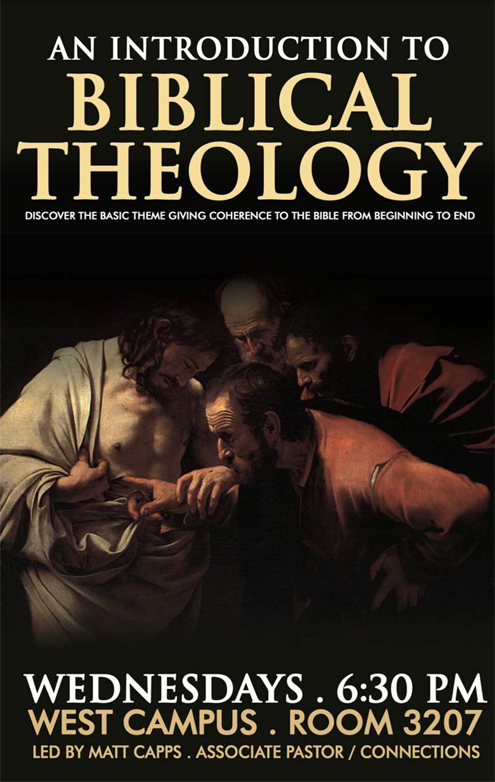
A Course In Biblical Theology

On January 13th I will begin teaching a course on Biblical Theology at Calvary. This is something that I am very excited about.

What is Biblical Theology?

What is Biblical Theology? Well, imagine that you are standing at the edge of a very large and very thick forest. You are adamant about reaching a specific destination on the other side. You have no map. Obviously, once you enter the forest it would be very hard to get your bearings, to see exactly where you are in relation to the destination, and so forth.

In this situation it would be crucial to have a “birds-eye view,” a map to direct you. See, a good map reduces any area that is too vast for us to understand from a limited perspective. Seeing the whole keeps us from “missing the forest for the trees.” This is what Biblical Theology does – gives us the “birds-eye view.”

Why is Biblical Theology Important?

Although the Bible is our source for theology, it does not necessarily present Christian doctrine in a systematic way. In a sense, all true Christian Theology must be “Biblical” theology. But Biblical Theology as a discipline has a specific purpose. Geerhardus Vos helps clarify when he wrote that “Biblical Theology occupies a position between exegesis and Systematic Theology”[1] among the theological disciplines. In fact, D.A. Carson argues that Biblical Theology stands closer to the text than Systematic Theology.[2] Systematic Theology attempts to order biblical material according to subject or theme. Biblical Theology serves a different purpose, as Thomas Schreiner argues;

“Biblical theology focuses on the storyline of scripture—the unfolding of God’s plan in redemptive history, so that in every passage…we consider the place of that text in relationship to the whole storyline of the Bible.”[3]

The Bible is a history of God’s progressive revelation to mankind, and Biblical Theology provides a map to helps us understand the overall unity of the Bible. It examines the several stages of biblical history and their relationship to one another. More specifically, Biblical theology is a means of looking at one particular event in relation to the total picture with an aim for understanding. It helps us see that there is a central message to the Bible rather than a number of unrelated stories and themes.

One of the most important questions we can ask is “by what process has God revealed himself?” The answer to this question will help us properly apply the Scripture. Some parts of the Bible are difficult to understand. Sometimes you can take a group of Christians who all believe that the Bible is the infallible, inerrant, and authoritative word of God, and yet they disagree over certain things like;

  • What does this particular passage actually mean?
  • How does this passage fit into the Bible as a whole?
  • How does the Old Testament apply to you and me?

Christians with very similar convictions about the Bible can disagree over what the Bible teaches on certain subjects. “Truth matters” and you will “defend what you believe to be true.”[4] I am not going to suggest that studying Biblical Theology will solve all of our interpretive problems. But, I agree with Graeme Goldsworthy when he argues that;

“Any Christian who wants to understand the reasons for the differences, and who wants to develop a sound method of approaching the text of the Bible in order to find out what it really says and means, needs an understanding of Biblical theology.”[5]

I invite you to join us a we begin to study Biblical Theology on January 13th. Here is a list of books that I will be using to develop the material. I encourage you to begin reading so that you can help me develop this course.

I also encourage you to visit the website “Beginning With Moses”, this is a great resource for Biblical Theology.


  1. Geerhardus Vos, Biblical Theology, V.
  2. D. A. Carson, “Systematic and Biblical Theology,” in New Dictionary of Biblical Theology, 94.
  3. Thomas Schreiner, “Preaching and Biblical Theology”, The Southern Baptist Journal of Theology 10 (2006), 20-29.
  4. Graeme Goldsworthy, According to Plan, 19.
  5. Graeme Goldsworthy, According to Plan, 19.

Thoughts on the Local Church and Evangelism

“Love one another: just as I have loved you, you also are to love one another. By this all people will know that you are my disciples, if you have love for one another.” – Jesus

Ed Stetzer recently wrote that “the church does not have a mission– it joins Jesus on His mission. It is better to say that the mission has a church!” I agree, and would argue that the mission is simple, ‘to glorify God by proclaiming the gospel and reflecting the kingdom of Jesus Christ through the power of the Holy Spirit.’ This is why the church exists. Alvin Reid writes that “both as an institution and a movement, the local church has been and will continue to be God’s primary plan of ministry.” I think both of these quotes highlight the importance of evangelism in the context of the local church.

Lesslie Newbigin once described the local church as the “hermeneutic of the gospel.” He meant that the local church, in many ways, “examples” the gospel to those around them. The local church is the fountainhead of gospel proclamation. I think the authors of Total Church are right when they argue that “evangelism is best done out of the context of gospel community whose corporate life demonstrates the reality of the word that gave her life.”

‘The gospel word’ and ‘the gospel community’ (local church) are closely connected. It is through the ‘gospel word’ that the local church is created and nourished. But in the local church the gospel should also be embodied and proclaimed. In many ways, a gospel centered community authenticates the gospel word to the skeptics. In his classic book Evangelism in the Early Church, Michael Green describes the lure of the early church as follows;

“They made the grace of God credible by a society of love and mutual care which astonished the pagans and was recognized as something entirely new. It lent persuasiveness to their claim that the new age had dawned in Christ.”


I think we can develop some helpful teaching implications based off of these thoughts.

First, I think we need to train our people to see the church as a ‘network of relationships’ rather than ‘an event one attends’ or ‘building one enters.’ It seems to me that many missiologists are arguing that ‘skeptical people are often attracted to the Christian community before they are attracted to the Christian message.” This seems obvious and inevitable when the gospel message is enshrined in the life of the church, and is it’s source of power for growth. This is where the gospel becomes fascinating for the non-believer. What do I mean?

I think this dynamic is explained well in the book Total Church, “our commitment to one another despite our differences and our grace toward one another’s failures are more eloquent testimony to the gospel than any pretense at perfection.” Simply put, true gospel fellowship within the local body transcends the barriers of race, sex, class, and education, creating a community bound by the gospel alone. With this in mind, ‘introducing people into the community’ becomes an important facet of our evangelism strategy.

Secondly, we need to teach our people that evangelism is more of a lifestyle rather than a ‘specific activity’. We need our churches to be Christian communities who scatter and saturate ‘all of life’ with the gospel. I think we can learn from Green’s study of evangelism in the early church on this point also. When it came to evangelism;

“They went everywhere gossiping the gospel; they did it naturally, enthusiastically, and with the conviction of those who are not paid to say that sort of thing. Consequently, they were taken seriously, and the movement spread, notably among the lower classes…“There was no distinction in the early church between full time ministers and laymen in this responsibility to spread the gospel by every means possible, there was equally no distinction between the sexes in the matter. It was axiomatic that every Christian was called to be a witness to Christ, not only by life but lip.”

We need to instill in our people that evangelism is the prerogative and duty of every church member. Evangelism invades every area of life. Evangelism demands every resource of the church, namely, each member. Lewis Drummond rightly recognizes that “because church members are in the marketplaces of the secular world in their everyday pursuits, they are exactly where they need to be to evangelize effectively.” We need to organize and utilize our people for that very end, to faithfully proclaim the gospel in all contexts of life.

Uncovering Idols (Part 1): Meteorology and the Idol of Future Control

Note: Over the next few weeks I will be posting the manuscripts from a series I am preaching titled “Uncovering Idols.”

Introduction

Last week Laura and left for Nashville, Tennessee late afternoon for a conference that was beginning the next day. It was about dinner time so we stopped in a small town in Western North Carolina named Canton. We began to notice a strange stench; to us it was a horrible smell- a smell we could not get away from (in other words it wasn’t inside coming from insider the car)

For those of you who know the area, Canton is the home of Blue Ridge Paper Products- a paper mill, and paper mills smell. Anyway, we ate and as we got back on the highway I began thinking to myself. “I wonder of the people of Canton are even aware of that smell? They live and breathe that air. I tell you this story becuase in many ways this is the way idolatry functions in our culture. It’s the air we breath.

An Important Distinction in Idols: The Overt and Covert[1]

For most people, the subject of idolatry conjures up pictures of a “primitive people bowing down before statures.”[2] We would be pretty safe to say that when most people think of “idols” they picture literal statues- which is what we might call “overt idolatry.” An example of overt idols would be “the golden calf” that the people of Israel worshiped in Exodus 32. It was a literal statue, an “overt idol.” Even today, there are people across our world who worship “overt” idols- consider Hinduisms many god’s.

Tonight we are going to focus on a different type of idolatry, one that runs rampant in our culture, a type of idolatry that may be the most dangerous because it is so elusive, so obscure, so concealed, so “covert.” See, our idols are not the “overt” idols seen in Hindu temples, but the covert idolatry of the human heart. Actually, I would argue that it’s better to understand idolatry as a posture of the heart, rather than a religious practice. Therefore idolatry is not constrained to false religions; an idol can be anything, literally.

The human heart has a powerful way of taking anything and turning it into the ultimate thing. We have this uncanny ability to take anything that gives us significance, security, comfort, safety, and fulfillment, and place it as the center of our lives. “An idol is anything that absorbs your heart and imagination more than God, anything you seek to give you what only God can give.”[3]

How Does Meteorology reveal idolatry?

Some of you are still trying to figure out the point of my title for this post. What does meteorology have to do with idolatry? Nothing in and of itself; but meteorology (weather reports and forecasts) reveal something that we as a people value, something we are concerned about. See, the weather report and forecast are permanent fixtures in the news. They are very practical and convenient as a reference point for “future planning.”

Let me clarify something, we are not exploring the scientific discipline of meteorology, we are examining meteorology as “cultural phenomenon.” In other words, “what does our cultures [reliance, maybe even] fascination with weather reports [and forecasts] say about who we are and what concerns us?”[4]

I thought it would be interesting to test this concept with an actual meteorologist. I had the privilege of interviewing WXII’s meteorologist Austin Caviness this past week, we talked a few minutes about “weather reports” and “forecasts.”

See, forecasting is simply, the process of estimation in unknown situations. Austin’s job is really to “prepare people for what lies ahead.” This is not wrong in and of itself. But, he quickly pointed out that “people want to it to be right, they get upset when its not.” That’s the key- how we respond when things don’t go as expected.- What does this reveal about us? I think Austin nailed it when he said; “we want to fill like we can control the things we can’t. It takes us out of our comfort zone when we can’t control our expectations for a situation. It’s a way we protect ourselves.” When our future expectations are not met, how we respond reveals what’s truly in our hearts.

See, on a much deeper level I believe that our concern with the weather reveals a deeper anxiety over the future – here is the reality of our situation;

  1. Because we cannot fully see the immediate future. We don’t know exactly what will happen in the years, months, weeks, even moments to come. We can estimate.
  2. But, without being able to fully see all the things ahead, we cannot control certain situations our specific outcomes in our future.

‘Meteorology’ is just one (maybe even trivial) cultural expression of an attempt to find security in the unknowns of the future. Think about insurance (being covered for the future), financial planning (making sure you have your assets alighted for the future), there are 10,000 examples of good things that we do to prepare for the unknown.

When facing the unknown – we can feel somewhat helpless. So we forecast, because the illusion of control helps us “deal with that uncertainty”. Remember, and idol is anything that we find our security, comfort, safety, and fulfillment in other than God, “anything that absorbs your heart and imagination more than God, anything you seek to give you what only God can give.”[5]

For many people, the illusion of “future control” can be a very covert idolatrous posture of the heart. If we are not careful our concern over the future can absorb our lives. In fact, we can begin to act as if “control” over the future gives us only what God can- security, comfort, and safety.

“Hold your future with open hands.”

The Attitude and Action of Unbelief revealing the “Idol of Future Control.”

Idolatry deeply affects the way one thinks, behaves, and lives. Idolatry always produces attitudes and actions that reveal what the heart reveres.

A.) Attitude of Unbelief: “The Idol of Future Control” is rooted in Anxious Fearfulness- Matthew 6:34

“Therefore do not be anxious about tomorrow, for tomorrow will be anxious for itself. Sufficient for the day is its own trouble.”

In this passage Jesus is addressing the disciples. He is basically saying, worrying about tomorrow is nonsensical, because today has enough to occupy our attention and it does no good to dwell on the situations of tomorrow (the inevitable, possible, or hypothetical) Honestly, we all worry about many things, but we often get obsessed with the wrong things. Almost any of your worry’s can hijack the controls of your mind. So we need to start by asking “what do I worry about”, but that will get you nothing but a big list.

  1. I am worried that I won’t get that job, or job promotion.
  2. I am worried because I won’t have enough saved for retirement.
  3. I am worried because I have a family history of cancer.
  4. I am worried because my older child has strayed away from the faith.
  5. I am worried because I am getting older and don’t know if I’ll ever get married.
  6. I am worried because we have been trying to have children for 3 years, and it’s not working.[6]

The list goes on and on. While these things are good to identify, we need to learn to pull the roots up on these problems. The deeper and more important question is “why do I worry about these things?” What is it in these things that you are trying to obtain? Worry assumes the possibility of control over the un-controllable. So the attitude of unbelief often leads to actions aimed at “controlling the future.” So the attitude or root of the “Idol of Future Control” is usually anxious fearfulness.

B.) Acting on Unbelief: “The Idol of Future Control” is often revealed in Arrogant Confidence- James 4:13-14

What do I mean by arrogant confidence? I mean the illusion that we know how the future ought to be, therefore we are going to bring it about ourselves. To this mindset we should be reminded of the words of James; (James 4:13-14)

“Come now, you who say, “Today or tomorrow we will go into such and such a town and spend a year there and trade and make a profit”—  yet you do not know what tomorrow will bring. What is your life? For you are a mist that appears for a little time and then vanishes.”

In this particular passage James is writing to combat boastful arrogance in his readers. James is not forbidding any type of planning here, or even forbidding concern for the future altogether. But, James is warning from “any type of planning for the future that stems from human arrogance in our ability to determine the course of future events.”[7] Worriers act as if they might be able to control the un-controllable. Central to worry is the illusion that we can control things. “I am going to this town or that”, I am “going to spend a year there” and make much profit.

  1. If only I could get that job, or job promotion everything would be secure.
  2. If only I had enough saved for retirement we could be comfortable.
  3. If only I get my diet and exercise right I can overcome our family history of cancer.
  4. If only I can get my child rearing techniques right, my other kids wont turn out like my prodigal son.
  5. If only I can find someone to marry I will be complete.
  6. If God would give us children, we would be happy.

See, worry assumes the possibility of control over the uncontrollable. Sure you can take preventative measures to set yourself in a better place, but you cannot completely control the future. This is essentially what James is asking here, “how do you finite creatures presume to dictate the course of future events” as if you know better than God almighty. The obvious sin in this approach to this approach is having no regard for God as you plan for the future. And it’s not just that forgetting God is evil (of course it is), it’s not just that this attitude boastful, arrogant, and proud. The greater evil is that when your forget God, you assume God’s place. We were created in the image of God, in other words God built us to reflect him.

But, our sin has distorted us and how we reflect God. In other words, in our sin we even seek to reflect God in sinful ways.- What do I mean?- Let’s work this out a second. When talking about God we describe Him according to his attributes. His attributes being the characteristics or qualities that express His nature. Typically we classify God’s attributes into his moral and non-moral attributes. This is important;

  1. Moral attributes: The attributes that humans share with God. (Patient, holy, truth, love, etc.)
  2. Non-moral attributes: The attributes that humans do not share with God. (Self-existent, all-powerful, all-knowing, and sovereign, etc.)

Here is the point: Under the influence of sin, we tend to care less about reflecting God moral attributes (love, patience, holiness), but what we want more than anything else is to reflect him in his non-moral attributes (self-existence, all-knowing, all-powerful) When facing our uncertain, and often scary future; (think about this)

  1. We would rather be All-knowing, than patient.
  2. We would rather be All-powerful, than loving…

Sinfully we desire God’s non-moral attributes, because we think “control = comfort and security.[8] (This is an illusion)

Why is this devastating?

“We are but images of God, not the real thing. We are shadows and echoes. So there will always be an emptiness of in the soul that struggles to be satisfied with the resources of self.”[9] Sure, you can take preventative measures to prepare for the future, but ultimately you cannot control the future. This is always revealed when our expectations or desires for future circumstances or outcomes are not obtained. We become angry and confused, because things are not the way we wanted them. You assumed the place of God without considering that God may have other plans. Ultimately you bow down to the idol of future control rather than the only God of the universe who knows eternity in its entirety.

Let me propose to you that “the root of worry/anxiety is unbelief.”[10] Even more so, unbelief is the reason we act in arrogant confidence.

  1. The Root of Unbelief: Anxious Fearfulness
  2. The Fruit of Unbelief: Arrogant Confidence

Idolatry is always connected to unbelief. It is turning to anything other than God for a sense of security and comfort because we don’t trust God. Now, since the Idol of Future control is rooted in unbelief, we need to learn to fight for faith. Let’s apply some biblical doctrine as armor for the fight of faith.

Truth to Destroy the “Idol of Future Control”

1. God is in control of all things, therefore we don’t need to control the future.

Often times, “We don’t just want His word that he will be with us; we want Him to show us the end from the beginning, and prove to us that He can be trusted. We want to know what tomorrow will bring instead of being content with simple obedience on the journey.”[11] Let me be clear here. You don’t need to know the future, and most likely God is not going to show you the future. When we obsess about the future we get anxious. Anxiety is simple “living out the future before it get’s here.” This is why James says in 4:

“you do not know what tomorrow will bring. What is your life? For you are a mist that appears for a little time and then vanishes. Instead you ought to say, “If the Lord wills, we will live and do this or that.”

“If the Lord wills.” This is one of the clearest texts on God sovereignty in the Bible. James is confronting his readers and arguing that we must live our lives believing that all of our plans are subject to the sovereign will of God. God is all-knowing, God is all-powerful and what God wills will be. Period. Trust that, and trust him. We are humbled when looking to the future because we don’t control it; God does. God is our hope, the future is not our hope- therefore we don’t need to control the future, we need to be content with knowing that God is in control. We must repent of our sinful desire to control the future, and walk into the future with our confidence in God, “not because the future is known to us, but because it is known to God.” We trust Him fully.

2. God will supply all of our needs, therefore we should not obsessively worry about the future.

Matthew 6:25-26 “Therefore I tell you, do not be anxious about your life, what you will eat or what you will drink, nor about your body, what you will put on. Is not life more than food, and the body more than clothing? Look at the birds of the air: they neither sow nor reap nor gather into barns, and yet your heavenly Father feeds them. Are you not of more value than they?

God provides you with life itself, we He not sustain you, provide for you? Look at the birds, they are more helpless than you…they cannot grow their own food, they cant even make a sandwich, and God provides for them. God knows what we need for life. God knows when we will die, we will die. As long as He wants us to live- will he not provide us with the necessities of life? Plus, worrying and fretting about the future will not “add one single hour to our lives, “and it will certainly not add any happiness or holiness either.”[12]

Listen to Jesus question, “and which of you by being anxious can add a single hour to his span of life?(Matthew 6:27)

This is almost funny when you process what he is saying. You worry and fret about “how you will continue living”, and it will not add anymore time to your lifespan. Worry is a spiritual issue that must be fought with faith. We must believe that God has mercy for today’s troubles, and no matter what comes tomorrow we will have fresh mercy every morning. I think there is much wisdom in the words of C.S. Lewis on this point. He argues that we should be “living each day as though it were our last, but planning as though our world might last a hundred years.”[13] We need to learn how to hold our future with open hands. If we don’t we will continually act like the school girl who got angry at the weather man because he got the forecast wrong.

– “Hold your future with open hands.” –


Reflections on ‘Together for Adoption 09’

This past weekend Laura and I traveled to the “Together for Adoption” conference at Christ Community Church in Tennessee. We joined 600 others in a weekend of reflecting on the gospel of Jesus Christ and how it empowers the church for orphan care.

Looking back over the weekend I am thoroughly refreshed and encouraged that the central theme of the weekend was the gospel of Jesus Christ- not that I expected anything less, but often times the gospel message is assumed at Christian conferences. The gospel was proclaimed and applied to orphan care in a way that glorified God.

Laura and I are in the process of adopting a baby from Ethiopia. (You can read about it here or here.) While listening to the speakers I wrote down some key thoughts, things to process and develop. Below I will try to summarize the truths that impacted me most. Obviously I cannot cover everything that was helpful…

1. Theological Foundation: Adoption brings to light the reality of a fallen world, and proclaims our hope in Christ.

Scotty Smith spoke about “The Freedom of Adoption” where he reflected on the doctrine of adoption and its implications on the Christian life.  His main points were very helpful, 1.) The Freedom of Legal Rights: Adoption secures us in a state of objective blessings, 2.) The Freedom of Personal Delights: Adoption calls us into the realm of subjective wonder, 3.) The Freedom of a Missional Life: Adoption propels into the world with sacrificial hope.

At one point Smith developed the idea that ‘the very existence of orphans shows us that something has truly gone wrong in creation order.’ Exploring that thought he gave a powerful quote that is enough to drive one to worship;

“There is a day coming when the very word orphan will be eliminated from the human vocabulary.”

Is this not the point of Romans 8:18-25? That creation groans with the pains of childbirth. All of creation is, as Smith said, “pregnant with glory, and there is no possibility of miscarriage.”

2. Individual Implication: As a Christian, be careful not to find your identity or assurance in the ‘good work’ of orphan care, but in Christ alone.

Dan Cruver spoke from James 1:26-27 on the “3 Aspects of True Religion.” Those things being- 1.) Controlling the Tongue, 2.) Visiting Orphans and Widows, 3.) Being Unstained from the World. Dan did a great job of uncovering the heart issues of these three aspects, rather than focusing on the behavior that exposes them. He argued; “If the church is to be truly mobilized to care for orphans, the other two aspects cannot be neglected.”

Cruver’s message was very timely, and on point. I will not regurgitate the whole thing, but I did want to point out a very helpful warning that he gave to those of us who are adopting. From James 1 Dan argued that ‘worldliness’ is “performance based living.” This is key to understanding true religion. Because the religions of the world are based off performance. It is very easy for those who are adopting to find their identity in the great social cause of orphan care, which is very dangerous. So here is the question “where does your primary sense of identity come from?”

In many ways Kevin Twit’s (from Indelible Grace) breakout session on “Adoption and Assurance” built upon the main idea of Cruvers message. Too often Christians find their worth in what “they do.” He said, “the biggest problem Christians have with assurance comes from looking at your faith rather than looking at Jesus.” If you are always assessing what you “should do”, then you are condemned by your very definition of Christianity. Don’t get it twisted. God does not love you because you do ‘X’, you do ‘X’ because God loves you. This is something we must always fight as Christians.

3. Corporate Implication: As the body of Christ, the gospel calls us to be involved in social issues like adoption.

Scott Roley said “we holler loud against abortion,” so why aren’t we “standing up for orphan care.” In other words, how does the gospel inform our involvement in issues of social justice? Ed Stetzer pointed out that “even the un-churched know that Jesus was involved in social justice, and they often wonder why the church is not.” We cannot separate the great commission from the great commandment, these two help define the mission of the church- to proclaim Christ for salvation and to serve.

We must be careful not to separate the two. Many churches become renowned for their service, but never proclaim the message of salvation. Stetzer said, “if we loose the gospel we loose our mission.” We need to be careful because the outside world will resist one (gospel) and praise the other (social causes).

This will not be easy, as Russell Moore reminded us in the last session. “We can love the idea, but when it comes down to it” we need to follow through. He made an interesting point in closing, “we could learn much in the laboratory of orphan care how we ought to operate as the body of Christ.” There is a strong element of dying to self involved. Which will be hard for the American church because it means we must “love people more than we love stuff.”

Again, these are just some brief overarching thoughts, I would encourage you to go back and listen to these talks. The main sessions are now available from Together for Adoption;

Thank you Dan Cruver and Jason Kovacs for putting this conference together. To God be the glory.

Calvary Baptist Church, Winston-Salem N.C.- 90th Anniversary

Edmund Clowney and Tim Keller on Gospel Centered Preaching and Teaching

One of the things I try to use my blog for is pointing teachers and preachers to good gospel-centered resources. Resources that help one grasp and teach the Bible with a Christ-centered focus. It’s been said that ‘preaching and teaching- instruct the listener on how to read, study, and understand the Bible.’ Therefore it is important that we as teachers help our listeners grasp the gospel of Jesus Christ with all its implications. (2 Timothy 1:13-14)

Reformed Theological Seminary has posted a wonderful (and free) lecture series on iTunes University that helps one understand how to teach and preach with a Christ-centered focus. These lectures were recorded in a seminary classroom taught by Dr. Edmund P. Clowney and Dr. Timothy J. Keller. Here are the titles of the lectures;

1. Introduction to the Christ-Centered Model and an Introduction to the Christ-Centered Exposition.

2. Expounding Christ: Structure of Redemptive History (1)

3. Expounding Christ: Structure of Redemptive History (2)

4. Applying Christ: Introduction Into Christ-Centered Application

5. Applying Christ: Getting to Christ

6. Expounding Christ: Structure of Redemptive History (3)

7. Expounding Christ: Telling God’s Story, Narrative Analysis

8. Applying Christ: Getting Down to Earth (1)

9. Applying Christ: Getting Down to Earth (2)

10. Expounding Christ: The Parable of the Prodigal Son

11. Expounding Christ: Christ and the Law

12. Applying Christ: Getting Inside Their World (1)

13. Applying Christ: Getting Inside Their World (2)

14. Expounding Christ: Christ in the Psalms

15. Expounding Christ: Christ in Wisdom Literature

16. Adoring Christ: Spiritual Reality

17. Expounding Christ: Asking Questions, Discourse Analysis

18. Adoring Christ: Communion With God

The “unofficial” notes for this class can be found here.

I would recommend that every pastor and teacher listen to these lectures (in the car, while walking, while mowing the grass…). I don’t care if you have been teaching or preaching for 30 years, don’t ever think that you are beyond learning.

One of the biggest hindrances to the gospel is non-Christian preaching- moralism, legalism, self-help, and vague religious talk. This tragedy of non-Christian preaching and teaching happens in pulpits and classrooms all across American Christian churches and seminaries, and is often done in ignorance.

Here is a good resource for sharpening your gospel focus in teaching. Use it.

Luke 15:11-32 and “A Father with Two Lost Sons”: What it means to be a child of God, in the family of God.

In almost every Bible Luke 15:11-32 has the heading “The Parable of the Prodigal Son”, which indirectly causes many readers to focus on the younger rebellious son, which misses the point of the whole story. This is really a parable about “A Father with Two Lost Sons”, both of which are prodigals. The father is compassionate and merciful. Both sons are lost, but in different ways. These are two seemingly different sons who, beneath the surface, are essentially the same. My point, this parable focuses on the entire family, the relationships among family members. If we read the parable through these lenses I believe it has implications it has for us as “Children of God” (individually) and implications on what it means to be in “the family of God” (corporately).

You see, Jesus was a masterful story teller. There are very powerful reasons why he chose to tell this parable in the setting of a family. There were cultural distinctives that his hearers would have picked up on. The context of biblical material is always important in helping one understand the story.

A Few Cultural Distinctives

During this time period the basic idea of family was much different than it is today. In modern Western culture we think in terms of a “nuclear family” of individual people (Father, Mother, Children), for Jesus original hearers the family was a larger extended unit of people. Unlike our culture, their idea of intimate family members would consist of grandparents, the married children’s families (the in-laws), their unmarried son’s and daughters, the male and female hired servants, and the family slaves. There was a reason for this. In those times you did not survive unless you had a strong intact, cohesive family group. The family was a means of survival. In many ways the family functioned on a corporate (by this I mean, a body of people who act as a unit) level- as a means of livelihood. There was security in being a part of a family. This is hard for us to understand in our day when so many of us are independent. In that day wealth and livelihood was measured by land, cattle, and means of production. It was crucial that the family fortune stay in tact.

Beyond that, there was a cultural understanding of sonship that is important to understanding the parable. The son’s of the patriarch were held in special honor. The son’s were heirs. As an heir you guarded the Family Heritage. As a son you carried the family name, and your name was an important part of your identity. Your name stood for your values and beliefs. The sons also guarded the Family livelihood, tightly connected to the “family business.” This is particularly interesting in the case of the “elder son.” The elder son was to carry on the family business once the father was no longer able to run the household. This was one of the reasons that the elder son got the majority of the inheritance. Being an elder son was more of an “office” than anything else. But more importantly, for the purposes of the parable, the elder son was also expected to serve as a family mediator. He was to protect the family and their assets to prevent the breakup of the family.

Commentary on Luke 15:11-32

And he said, “There was a man who had two sons. And the younger of them said to his father, ‘Father, give me the share of property that is coming to me.’

This is unimaginably disrespectful and hateful. By saying “give me my inheritance”, the younger son was saying (to his father) you are more valuable dead. Give me what your life is worth. I do not care about the livelihood of our family. I want no part in our heritage. I don’t care about the family name. Most importantly, I want to cut off my relationship with you. This is a death wish.

And he divided his property between them. Not many days later, the younger son gathered all he had and took a journey into a far country, and there he squandered his property in reckless living. And when he had spent everything, a severe famine arose in that country, and he began to be in need. So he went and hired himself out to one of the citizens of that country, who sent him into his fields to feed pigs. And he was longing to be fed with the pods that the pigs ate, and no one gave him anything.

No one would give the younger son anything. He had exhausted all of his resources. He was poor, hungry, and needy. Not to mention that there was a famine, so no one has anything to give him. No one has anything to sustain his life. So much so that he longed pig feed.

Is this not the story of humanity? We were created to live in fellowship with God. That was our original home. But, our first parents, Adam and Eve cut off their relationship with our Heavenly Father and were exiled. We (as the human family) have been in spiritual exile ever since. Like the younger brother many people around us live in famine, and nothing in this world can sustain life. So many people try and fill their emptiness with pig feed.

“But when he came to himself (came to his senses), he said, ‘How many of my father’s hired servants have more than enough bread, but I perish here with hunger! (He was going to die) I will arise and go to my father, and I will say to him, “Father, I have sinned against heaven and before you. (He acknowledge his folly towards God and his Father)

Here is an extremely important acknowledgment of the younger son;

I am no longer worthy to be called your son. Treat me as one of your hired servants.

This is huge! He knows that intentionally broke off his relationship with his father, with his whole family. He had no care for their well being. He had no respect for the family name. He had even wasted his whole inheritance, the family wealth. He had basically said to his father- you are more valuable dead to me.

As he comes back he knows, “I am not longer worthy to be called you son.” And he’s not. He has given up all rights to be a part of the family. He has given up all rights to ever have his fellowship restored. They owe him nothing. Yet, he plans to do the only thing he can do, plead with his father, have mercy on me, at least treat me as a servant. “Treat me as one of your hired servants.”

This “servant” language is key to understanding what is going on. He is basically planning on saying “let me attempt, at least make an effort repay you for everything I have done. Let my work, not only move me towards repaying you, but also let it be a sign of my repentance.”

And he arose and came to his father. But while he was still a long way off, his father saw him and felt compassion, and ran and embraced him and kissed him. And the son said to him, ‘Father, I have sinned against heaven and before you. I am no longer worthy to be called your son.’ But the father said to his servants, ‘Bring quickly the best robe, (the father’s robe, as head of the household) and put it on him, and put a ring on his hand (place the family seal on back on his hand), and shoes on his feet. And bring the fattened calf and kill it (they rarely ate meat- livestock = wealth), and let us eat and celebrate (lets have the biggest party this family has ever seen).

For this my son was dead, and is alive again; he was lost, and is found.’

That’s the good news. That’s a picture of the Gospel. I am not worthy to be called a son! But the father has mercy when he repents and makes the declaration, “You are now my son. You are now part of the family.”

And they began to celebrate.

Now his older son was in the field, and as he came and drew near to the house, he heard music and dancing. And he called one of the servants and asked what these things meant. And he said to him, ‘Your brother has come, and your father has killed the fattened calf, because he has received him back safe and sound.’

Remember, the oldest son in the family had a special occupation to secure the families wealth and unity. He was to act as a mediator in these situations. But he refuses, and walks out of the family home. Think about it. The younger son has wasted his inheritance. So allowing the younger son back into the family came at the expense of the elder brother. He would have to sacrifice his riches.

But he was angry and refused to go in. His father came out (the father came out to bring the young rebellious son home, and now goes out to bring the older self righteous son home) and entreated him, but he answered his father, ‘Look, these many years I have served you,

There is that “serve” word again. Don’t miss this. When the younger son returned home, he asks that his father would make him a servant (to pay his way back into the family), now the older son is basically saying the opposite, that he has earned his place in the family in a life of service. He declares, “I have been your servant.”

And I never disobeyed your command, yet you never gave me a young goat, that I might celebrate with my friends. But when this son of yours came (notice, he does not say “my brother”), who has devoured your property with prostitutes, you killed the fattened calf for him!’ And he (the father) said to him, (being rich in mercy and compassion) ‘Son, you are always with me, and all that is mine is yours. It was fitting to celebrate and be glad, for this your brother was dead, and is alive; he was lost, and is found.’”

Now, the elder brother represented the religious leaders that were in Jesus audience; he “never” disobeys any of the father’s laws. In the end, he is the one who misses the feast of salvation rather than his rebellious brother. See, the younger brother knew he was lost. The greatest danger to the elder brothers is that they do not know that they are lost.

Jesus ends the parable there. The elder brother is left outside the celebration. Jesus was using this story to teach us that all of humanity is lost- Either in rebellion or self-righteous religion. The whole human family is lost in sin. Jesus was also saying that the heavenly father is compassionate and merciful. Lastly, Christ was saying that he would be the true and greater elder brother. His audience might or might not of picked up on this at the time, but think about it.

Jesus the True and Greater Elder Brother

As Jesus proclaimed- “No one comes to the father but through me.” I mentioned earlier about the importance of sonship in that culture. In their family the elder son got the majority of the inheritance. Like the younger son, we as humanity have thrown away our inheritance, which is our relationship with the father. Colossians 1:15 tells us that Jesus “is the first born of all creation.” He is humanities true and greater elder brother. Unlike the elder son in the parable, Jesus comes and searches for us while we are prodigals. While are dead in our trespasses and sins, wandering in a famined land. That’s why Jesus came. Jesus brings us home. He brings the lost to their senses.

In the same way that the elder son was to serve as the family mediator, Jesus serves as our mediator. He mends the broken relationship back to the Father through his perfect life and sacrifice. As the elder son’s job was to continue and protect the family business. God is in the business of redemption, of brining the lost prodigals and the proud self-righteous back into the family feast. And Jesus is always (As we read in Luke) “about his Fathers business.” Unlike the elder brother in the parable, Jesus celebrates when we come home. Jesus gave his life to give you and I the riches we do not deserve. Unlike the elder brother of the parable, Jesus gladly shares with us the riches of His father. He was slaughtered so that you and I could be reconciled and brought into the family of God. That’s the good news of our Elder Brother Jesus Christ. This has massive implications on our lives as “Children of God” in the “Family of God.”

As Children of God we are given the status of sons

“Sonship” is not an automatic universal given. Not everyone is a “child of God.” Now, there is a sense in which all human beings are God’s “offspring” by virtue of being created by Him, in His image (Acts 17:29). But we as Christians, we actually have a relationship with God as Father, and only we have the status of children of God.  As Galatians 3:26 says “For in Christ Jesus you are all sons of God, through faith.” This is a gift. Not something you earn, or loose. It is a gift, for those who are “in Christ.” In other words, it is only through faith in Christ that God adopts us into his family. Our status as children of God is secure in Christ.

As sons we have a deep security because we are part of the family through Christ. Like the younger son who said,  “I don’t deserve the status of sonship.” We also do not deserve sonship in the family of God because of sin. But like the father in the parable, the heavenly Father is compassionate and merciful when we come to him in realization that we are lost. Some of us rarely apply this security to your daily walk. Like the younger son we often get in the attitude of “I want to pay you back, God.” when we sin. Or some of us are like the older brother who try and use our obedience to get out of God what we want (“God, I have done all these things- I deserve so and so.” Or- on the negative end, “God I cannot believe this is happening to me, after all I have done for you?”). In other words, we attempt to justify ourselves before God by our morality. But there is no security in that mindset, in that mindset you are basing your security on your performance, and you will fail.

Thank God for our true and greater elder brother, Jesus Christ. As a true believer, as a son and daughter you are secure! You are not a servant who earns favor before God. You have been given a secure legal sonship in Christ. This is a legal relationship that you can rest on. Does this mean that we don’t need to be obedient? Certainly not! But it does change our motivation for obedience. The point of being obedient is not to make yourself feel secure in your relationship with God. Once you realize that you have been given the status of sonship, something you do not deserve, it will promote obedience. So obedience is a response to God’s grace.

As Children of God we experience the relationship of sons

Being brought into the family of God, through Christ, gives us complete access to our loving Father. As we read in Galatians 4:4-7; “But when the fullness of time had come, God sent forth his Son, born of woman, born under the law, to redeem those who were under the law, so that we might receive adoption as sons. And because you are sons, God has sent the Spirit of his Son into our hearts, crying, “Abba! Father!”

“Abba Father” is an intimate name for God. As sons we have unconditional intimate access just as a child has access to a father like no one else in this world has. Like the father in the parable, our God is compassionate and merciful. As true believers you will always be his children, and therefore never have to worry about your access to him. The fathers love for you is not based on your performance, but on Christ’s perfect obedience. When you are in Christ, God sees you in Christ. In other words, God now treats you as if we are “only sons”, like Jesus. Jesus says in John 17:20-24, “The glory that you have given me I have given to them, that they may be one even as we are one, I in them and you in me, that they may become perfectly one.” In other words, we can approach God with the same boldness as Christ, because we have the status of sons.

As Children of God we gain the full inheritance of sons

Our inheritance is life- it is relationship with God. When Christ removed the curse we deserved, he gave us the riches and authority that he alone deserved. As sons we have authority over sin. Unless we remember the riches set before us we will be anxious and even despairing in this life. We need to remember that our inheritance of life is guaranteed. It’s not something to be earned (like the elder brother in the parable thought), it is ours as sons.

As you grow in your Christian life more and more sin will be revealed in your life. But here’s the thing, you realize that all sin looks about as good as pig feed in light of the feast promised to us in Christ. This should give us boldness to conquer sin. Romans 8 reminds us that; “There is therefore now no condemnation for those who are in Christ Jesus. For the law of the Spirit of life has set you free in Christ Jesus from the law of sin and death…For all who are led by the Spirit of God are sons of God. For you did not receive the spirit of slavery to fall back into fear, but you have received the Spirit of adoption as sons, by whom we cry, “Abba! Father!” The Spirit himself bears witness with our spirit that we are children of God, and if children, then heirs—heirs of God and fellow heirs with Christ.”

That should give you boldness over sin. You are a child of God. This not only has massive implications on your personal walk, but also ties in to how we function as a church family. We are not just members of some organizational group. We are a family. In a family there is not just one point of contact, like there is in a “quilting club” or “car club.” The gospel touches every area of our lives. As believers we are brought into the family of God together. This is a family, and like a family we share life, we are a unit. Our fellowship with one another is a gift of grace, because, like a family, these relationships go deeper than any other human relationships.

In the family of God there Should be Commitment to the Family Livelihood

We belong to each other in Jesus Christ. Period. There are going to be times when all of us act like younger brothers, there are going to be times when all of us act like elder brothers. In the same way that you did not choose your siblings, you do not choose your brothers and sisters in Christ. They come with the family. There is a bond. We would all acknowledge that there are people in God’s family that you would never choose as friends, but you are family. Remember that we have a compassionate father, and a sacrificial elder brother- therefore, what God did for us, we owe to each other. The more we realize we have received, the more we can give.

In the Family of God there Should be Transparency among Family Members

You can’t fool your brothers and sisters. They know what you are really like! Like I said, all of us have “younger brother” and “elder brother” tendencies in our lives. So I encourage everyone to be honest with each other, hold each other accountable, gently call each other out. We need to realize that God has created this church family reality through Christ, and it is for your good when you participate. Plus, this is only possible in Christ. Why? Well, when your security is based on Christ, and not how others perceive you its a lot easier to build meaningful relationships. In Christ we are enabled to be transparent because we don’t fear rejection from our Christian brothers and sisters. There is security in the family of God.

In the Family of God there Should be Transformation of Lives

In many ways, you and I are largely the product of your family. You are largely shaped by the people you spend the most time with. You will only change if you are “re-familyed.” You need to get to know people, not just come to church classes, but really intimately being with each other. This is costly. Being closely involved with other people will be time consuming, complicated, and messy. Close relationships make it more likely to that you will sin against someone or someone will sin against you. Therefore you will need times of confession and forgiveness.

Close relationships push us to die to ourselves. It’s in these close relationships that we begin to see the younger brother or elder brother spirit revealed in our hearts. But that is God’s plan- that we grow together. In many ways, sanctification is a group project. Thank God, for what he has done in Jesus Christ to make s part of this glorious family reality. Our true elder brother is Jesus Christ. He came to earth to sacrifice himself so that we could become sons of God. This is what turns us into a family, and this is what guides us in our relationships with each other.

Bibliography

  1. The Prodigal God- Tim Keller
  2. The Parables- Brad H. Young
  3. Interpreting the Parables- Craig L. Blomberg
  4. The Gospel of Luke- Joel B. Green (NICNT)
  5. The Gospel of Luke, Vol. 2- Darrell L. Bock (BECNT)
  6. God, Marriage, and Family- Andreas J. Kostenberger
  7. Marriage and Family in Ancient Israel- Chapter by Daniel L. Block
  8. Life Together- Dietrich Bonhoeffer
  9. How People Change- Timothy S. Lane, Paul D. Tripp

Together for Adoption: Orphans and James 1:27

As many of you know, we are currently in the process of adoption. You can visit Laura’s blog to keep updated on the process. This morning I saw that Russell Moore posted a new video on his blog. He writes;

“We encourage you to watch this video, produced by our friends at Together for Adoption. Dr. Moore will be speaking at the Together for Adoption conference in October. Registration for the conference is now open.”