What Is Our Problem With Hell?

tgp_blogheader_oct13-Copy

I recently wrote this blog post for The Gospel Project in a series on A God-Centered Worldview. You can see the whole series on A God-Centered Worldview here.

Where Did Hell Go?

We all know that one thing is for certain, all men die (Hebrews 9:27). While death is a certain reality, it is not something we regularly talk about with others. As for the topic of eternal destinies after death, those conversations are even more scarce. More specifically, consider the topic of hell. Who wants to talk about, even ponder, the reality of hell as portrayed in the Bible?

Not too long ago, I was traveling and decided to take a few books with me in preparation for writing this blog post. One of these volumes was a full book-length treatment on the topic of hell. I distinctly remember taking notable pause when reaching down into my bag in order to retrieve this book. The dust jacket not only had images of flames but also had the word “hell” in large embossed letters. In that moment I could imagine the thoughts of the other two passengers in the seats beside me if I began reading a book on eternal punishment as we were being hurled five hundred miles an hour through the air. Nothing says let’s have a delightful chat to those around you, or gives an indication as to where the conversation might go, like holding a book covered in images of hell fire.

Now, let me be clear. I believe in the reality of hell. The Bible is very clear on this issue. The point of my anecdote was simply to illustrate the palpable social stigma that is attached to this biblical doctrine in our post-Christian culture. It is a stigma that I am very aware of, as are many other Christians. It’s just not something we talk about. Notably, the reality of hell has been a fixture in Christian theology for over sixteen centuries, but at some point in the 1960’s hell disappeared. And more recently, the traditional view of the nature of hell has been challenged more than ever before.

What Is Hell According to the Bible?

Historically; Christians have held that after death, believers will either dwell with God in paradise, heaven, and eventually the new heavens and new earth or be cast out of God’s presence forever into a place called hell. Hell has been taught as involving eternal conscious torment of persons who have rejected the forgiveness of God through the atoning sacrifice of Christ Jesus. In the book Hell Under Fire;Christopher Morgan summarizes the three predominant pictures of hell we find in the New Testament.

  • Punishment is the chief description of hell in the New Testament (Matt. 25:31-46; 2 Thess. 1:5-10; Rev. 20:10-15). Summarizing these passages; Morgan concludes that the punishment of hell is just, consists of suffering, is conscious, and is eternal.
  • Destruction is also a central descriptor of hell in the Bible; in fact, this descriptor of hell is used by almost all of the New Testament writers (the exception seems to be Mark). In 2 Thessalonians 1:5-10; we find the most developed section of this theme, where Paul explains the eternal destruction of hell. For Paul, hell as destruction is best understood as utter loss, ruin, or waste.
  • Banishment is the last central picture Morgan explores dealing with the difficult doctrine of hell. The picture of hell as banishment is also found in almost every New Testament book, with the exceptions of James and Hebrews. Banishment carries with it the connotation of separation, exclusion, or being left outside. Mark 9:42-48 provides a clear example as believers are welcomed into the kingdom of God and the wicked are banished outside of it.

In summary, punishment and destruction stress the active side of hell, while banishment stresses the horror of hell by highlighting what a person is excluded from. As we’ve already stated, secular thought and modern sentiment certainly make it hard to talk about the reality of hell. Moreover, while many Christians may hold to the historic convictions of the Christian faith, they find it very hard to align their emotional response to the doctrine of hell with the biblical teaching on it.

What Is Our Problem with Hell?

Perhaps some have trouble with the doctrine of hell emotionally because, deep down, we may find ourselves posing defensive questions in response. The question that hides under most questions regarding hell is “Isn’t hell unfair?”

In one sense this question is probably related to the judicial idea that people are innocent until proven guilty. True, if people are truly good and innocent; then God has no right to judge or punish. However, the apostle Paul said that no one is righteous; all are guilty in sin and without excuse before God (Romans 1:10, 3:10-11, 5:12). Russell Moore notes that hell is an affront to a non-Christians sense of justice, “…since no person except through the conviction of the Spirit deems himself worthy of condemnation.”

Another assumption behind this question is that people are neutral, generally good, or even innocent of God’s judgment. I don’t think it is a far stretch to assume that many non-Christians and ill-informed religious people assume that heaven is the common destination of humanity, except for the worst and most cruel humans: murders, pedophiles, genocidal dictators, etc. The broad assumption is that hell is only for other people, namely, people worse than I am. Again, the Bible is clear that all are guilty in sin (Isaiah 64:6). Simply put, no human stands on neutral ground when it comes to eternity.

Sadly, there is little talk about hell because too many people ignore the reality of sin or estimate they have too little sin. To put it bluntly, it would be just for God not to save one person from the depths of hell. This is where the good news of the cross deals with the “problem” of justice. On the cross of Christ, God makes it possible to justify sinners at the cost of His son and remain a just God. On the cross; Jesus took upon Himself what we deserved (death) and paid the penalty for our sin and through His resurrection; freely offers what we do not deserve (forgiveness and eternal life with God).

For this reason we need to be willing to tell the whole gospel story, even if it is uncomfortable. As Tim Keller has said, “there is an ecological balance to Scriptural truth that must not be disturbed.” To preach the good news, we must warn people of the bad. Keller argues that if we play down difficult doctrines; we will find, to our shock, that we have gutted all of our pleasant beliefs too.

Conclusion

For some people the doctrine of hell is extreme, and they are right. Hell is extreme because sin is extreme. However, Jesus Christ endured the hell of the cross so those who believe in Him might escape it. Michael Rogers rightly states that “Hell alarms us as nothing else can about the awful weight and penalty of sin.” The doctrine of hell should weigh heavy on the Christian heart as the Spirit leads us to plead with those who are without Christ. Hell is a horror to the Christian conscience. We shouldn’t deny the reality of hell, nor should we sheepishly avoid it. If anything, the doctrine of hell calls us to bold yet winsome evangelism. If modern sentiment, social tolerance, and relational indifference held the final votes about the doctrine of hell, the Bible’s view of hell surely would find few defenders.

Free eBook on “Christ-Centered Preaching and Teaching”

This past Wednesday The Gospel Project released a free eBook on Christ-centered preaching and teaching. We have been blown away by the initial response – thousands of people have already downloaded this free eBook. One thing is for certain, Christ-centered hermeneutics is a much debated issue in some theological circles. As Ed Stetzer noticed:

200px_ccpntcoverInterestingly enough, I have found that while many pastors argue for the importance of Christ-centeredness, there is disagreement on what it should look like. For this reason I recently asked several leading pastors and theologians to examine and discuss Christ-Centered preaching at my blog.

The pastors and theologians who discussed this issue in the eBook include:

Read and enjoy!

Teaching a Class on The Doctrine of Humanity

Next week I will begin teaching a class on the doctrine of humanity with Philip Nation at The Fellowship, Two Rivers. The class will last 8 weeks and will roughly follow the outline of The Gospel Project’s Fall study titled “Bearing God’s Image”.

  • August 21st – Created to Reflect: Reflecting the Image of God
  • August 28th – Created to Relate: Relating to God, Others, and the WorldTGP
  • September 4th – Created to Work: Vocation and Labor
  • September 11th – Created to Rest: Resting from Work, Resting in Christ
  • September 18th – Created to Rule: Authority in Representing God
  • September 25th – Living in Redemption: Salvation and Sanctification
  • October 2nd – Learning to Trust: Perseverance and Assurance
  • October 9th – Longing for Restoration: Future Glorification

If you are in the Nashville area, come and join us!

It is an honor to serve on The Gospel Project team! I am excited to join over 400,000 other believers who will dig into this study over the next few months.

In my preparation for the class I have found several resources helpful, and wanted to share them here.

  1. John Hammett’s chapter on “The Doctrine of Humanity” in A Theology for the Church, edited by Daniel Akin. Hammett’s chapter is a great introductory work on this topic.
  2. Also, check out Anthony Hoekema’s book Created in God’s Image. Hoekema’s work is an excellent volume for someone who would like to dig a little deeper into the doctrine of humanity.
  3. Charles Sherlock’s book The Doctrine of Humanity in the Contours of Christian Theology series is also a great resource to have in your library. While Sherlock’s work the most dense of these three, its scope and depth is well worth its weight.

If you are teaching through The Gospel Project this fall, be sure to check out these resources which we have made available at The Gospel Project’s website.

Consider the words of one theologian, “…our wisdom, in so far as it ought to be deemed true and solid wisdom, consists almost entirely of two parts: the knowledge of God and of ourselves.” My prayer is that we would come to know God in this study, and come to know ourselves in the way God has created us and redeemed us to be.

Why Do We Need Physical Rest?

TGPblog315x851final

This was originally posted at The Gospel Project site. To see the entire series click here.

The Need for Physical Rest

As we get older, it is inevitable that we will wear down physically. In turn, our need for rest and recuperation becomes more noticeable. At least, that’s been my experience in the last few years. When I do not get as much rest as I need, I become impatient and irritable towards my family and friends. So, the older I get, the more I cherish rest. Many nights I collapse into the bed exhausted, and sink into the mattress from the weight of the day’s activity.

Physical rest repairs and rebuilds the body and mind. When we exert ourselves physically or mentally, we long for the restoration of our energy. Researchers have shown that both the physical stress of manual labor and even the emotional stress of a desk job require subsequent rest for the body and mind to recuperate.

Many of us need more rest; we live in a culture that forfeits rest to chronically overwork. Studies have shown that the average American doesn’t get nearly enough sleep for what their body requires to function at peak performance. This scientific information is good and all, but research can only offer observations about rest and our need for rest. The Bible, on the other hand, can actually offer the deeper reasons for unrest and lasting motivations for rest.

A Theology of Rest?

What actually drives us to unrest is rooted in our hearts, usually idolatry. For example, the workaholic sacrifices rest to the god of success, power, and productivity. This pattern can be seen in almost all areas of our life. The good news is, God is not silent about our need for rest nor has He left us without good reason or motivation for rest. The Bible is very clear that humans need rest, and interestingly enough, rest teaches us something about God.

Physical Rest is a Gift from God

God building in the need for rest in the lives of His creatures is a gift of grace. In Psalm 127, we read that God “gives to His beloved in his sleep.” The nights that I sleep well lead to mornings when I am most refreshed and days that I am most productive. Let’s face it; the anxieties of everyday life can wear us down to the point of physical and emotional fatigue. I am thankful that the infinite God granted this finite man the need for rest. In fact, it is impossible for a finite being like you and I to live well without rest.

Physical Rest Reminds us that We are not God

Again, the psalmist proclaims that God will “neither slumber nor sleep” (Psalm 121:4). How different from us? We need rest. If we do not rest it has massive implications for our physical, emotional, and mental health. However, God does not need rest. Not only is God all-powerful (not needing rest), He is ever-watchful (watching us while we rest). For some of us it is a scary thing to consider that we lay down all control and consciousness when we sleep. The most powerful people in all of humanity spend a third of their lives asleep, as helpless as an infant, and the world still progresses. Simply put, we are not God.

Physical Rest requires us to Relinquish Control

God handles the world quite well while on His own. God is sovereign over our world while we are awake, even more so when we are at rest.  John Piper once said, “…Sleep is like a broken record that comes around with the same message every day: Man is not sovereign.” We’ve all heard the hard worker wax all self-righteously about his/her early morning and late night working hours, as if they run the world. How silly. It’s better to work well and sleep well, rather than to sacrifice rest in an effort to stay in control.

Lying Down and Laying it Down

God intended sleep to be a gift, a time every day where we remind ourselves that we are not God, and that God is in control. If you are like me, you probably have trouble sleeping when you are worried about something. Well, Jesus is pretty clear on the fact that worrying accomplishes nothing (Matthew 6:27-29).

So, I’ve learned that when I lie down to sleep it helps me to say to myself, “God, I am powering down, even though there is a ton to do, and lots to worry about, You are awake, working, and in perfect control, so I trust You to handle what I can’t.” It helps me rest well knowing that everything is in His hands.

The Gospel Project is now available with ESV Bible text!

ESV TGP Banner. Now Available

The Gospel Project is now available with the ESV Bible text in the curriculum. As part of this exciting news, LifeWay and Crossway are partnering together to give away 15 Group Starter Kits worth $100, each including:

  • ESV Heritage Bible
  • 2 Gospel Project leader guides
  • 10 Gospel Project personal study guides

Win this, and you’ll have all you need to start a new small group, home group, or bible study class. To earn your chance to win simply follow these steps!

  1. Sign up to download free samples of The Gospel Project with ESV text at gospelproject.com/esv
  2. Post about The Gospel Project and ESV combination on your blog including the Gospel Project and ESV graphic, linking back to the download page (gospelproject.com/esv).
  3. For a greater chance to win, include #2 in a blog post related to the importance of studying the Bible with others. These posts can focus on a range of issues from teaching, leading, or being involved in small groups, homes groups, or Sunday school. If you have an earlier post related to these topics, dust if off and add #2.
  4. Feed your blog post through twitter (make sure to tag @gospel_project) and facebook.

On August 19th the 15 winners of the Group Starter Kits will be announced!

Christ-Centered Preaching and Teaching Discussion: Audio

tgpCHRISTwebad960x355

Here is a link to the audio: Christ-Centered Teaching and Preaching

photo (1)In case you missed it…

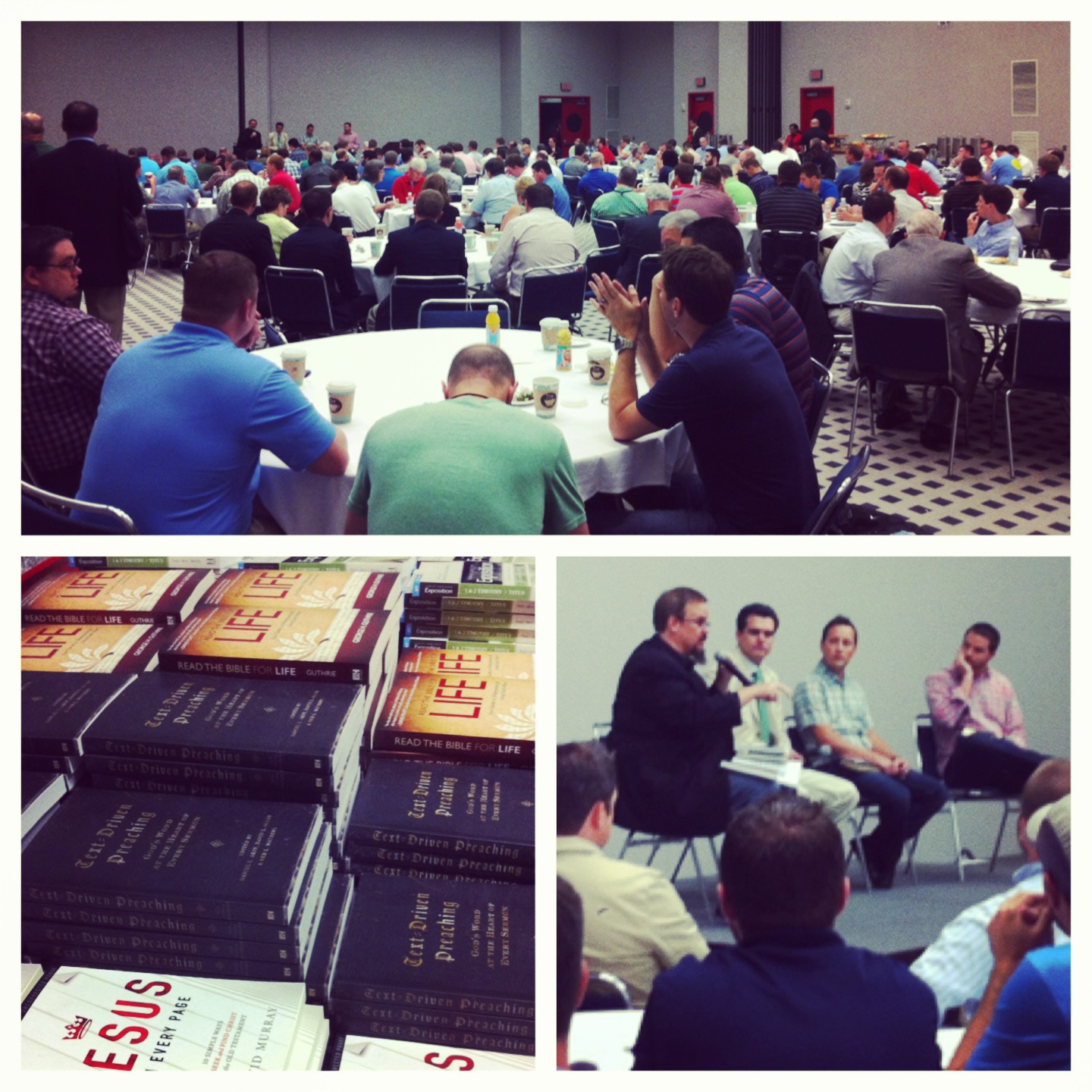
One of the highlights of the 2013 SBC was The Gospel Project‘s panel discussion on Christ-centered teaching and preaching. The room was packed out, which would suggest that people think this is an important topic. The panel featured Ed Stetzer, Eric Hankins, Trevin Wax and Jon Akin.

Pastor, Don’t Waste Your Summer!

dwysfacebook315x851


I recently posted a blog at The Gospel Project site titled “Pastor, Don’t Waste Your Summer!” In the post I plead with pastors to utilize the summer for gospel growth and mission in two ways.

  1. Have a Strategic Plan for Personal Discipleship
  2. Have a Strategic Plan for Relational Discipleship

Essentially, it’s a call for pastors to be proactive with discipleship strategies. Here is the conclusion:

In 2 Timothy 2:2 we see that the church is to be a learning and teaching fellowship in which the passing on of what we learn is vital to the health and spiritual progress of the body. It’s also clear that pastors are men set aside for equipping saints for the work of the ministry (Ephesians 4:12-16). I believe that a lasting ministry is built in the quiet hours of pastoral reflection and in smaller intimate discipleship groups. Pastors, let me encourage you to not waste the summer. Develop an intentional plan not only for personal discipleship, but also for relational discipleship during the summer months – this is where faithful and fruitful ministry often occurs.

I encourage you to read the whole thing here. I would love to hear your thoughts!

Christ-Centered Hermeneutics in the SBC

tgpCHRISTwebad960x355

One of the things I am looking forward to at the Southern Baptist Convention this year is the discussion panel on Christ-Centered Preaching and Teaching. I agree with Hankins that this is a deeply important discussion, and working out as precisely as possible the nature and practice of Christ-centered preaching is crucial for our churches.

If you are already planning on coming to the discussion panel let me encourage you to read some of these blog posts on Christ-centered hermeneutics. The discussion has already started…

Eric Hankins

Hankins argues that while Christ should always be exalted when preaching, authorial intent alone is the exegetical launch pad for any sermon.

Jon Akin (Responding to Hankins)

In part one Akin argues that Christ-centered interpretation was the method of Jesus and the Apostles.

In part two Akin argues that Christ-centered interpretation takes into account the dual authorship of the Bible and treats it as one book instead of a collection of 66 books.

In part three Akin argues that Christ-centered exposition bases the imperatives to live faithfully in the gospel indicatives of what Christ has already done for us.

Tony Merida

In this first post Tony explains the the “dilemma” of Christ-Centered expository preaching.

In the second post Tony explains the centrality of Christ in the Bible and in expository preaching.

In the third post of this series Tony explores practical application in Christ-centered expository preaching.

Matt Capps

In this post I explain my journey to appreciating Christ-centered hermeneutics, and the benefits of the method.

If you know of any more posts on Christ-centered hermeneutics please feel free to post links to them in the comment section. 

Christ-Centered Preaching and Teaching Discussion Panel


tgpCHRISTwebad960x355

At this year’s Southern Baptist Convention in Houston The Gospel Project is hosting a discussion panel on Christ-Centered Preaching and Teaching. Ed Stetzer will moderate the panel with Trevin Wax, Eric Hankins, and Jon Akin. We are working with several publishers to give each attendee free resources on Christ-Centered preaching and teaching. There will also be a free breakfast. We only have room for 350 so sign up soon!

Here are the details;

Christ-Centered Preaching and Teaching: A Discussion Panel
Tuesday June 11, 2013
George R. Brown Convention Center
Room 351A-F on Level 3
6:30 a.m. to 8:00 a.m.

 REGISTER HERE

Free Easter Resources: For Personal Devotion or Lesson Preparation

Here’s one for all you procrastinators. My hope is that this post will serve you, your family, and your church in making much of King Jesus this Easter.

The Gospel Project

The writers of The Gospel Project have provided a lesson on The Resurrection and Exaltation of King Jesus. Below are the PDF versions of this session in both Adult and Student Leader Guide and Personal Study Guide.

Gospel Centered Discipleship

Jonathan Dodson and Brad Watson have written an excellent free e-book titled Raised: Doubting the Resurrection. The authors write: “We wrote this book out of our love for skeptics and respect for the questions they help us ask. We also write as believers who oscillate in real belief in the resurrected Christ. We hope it proves to be an insightful, stirring reflection on the resurrection.” You can download it below.

Desiring God

Desiring God has provided eight biblical devotions to prepare for Easter. 

They have also provided definitions for some words of the season

  1. Holiday: From a combination of two Old English words, halig + daeg—holy day; day set apart for special religious observance.
  2. Lent: From an Old English word related to lengthen. It meant springtime, when the days are lengthening. Now we use it to refer to the days between Ash Wednesday and Easter.
  3. Ash Wednesday: In the Bible, ashes are a sign of mourning, an appropriate symbol as we think of our part in the death of our Lord.
  4. Maundy Thursday: The night when we look back to the Lord’s Last Supper gets its name from the Latin word mandatum—commandment, remembering Jesus’ words to the Apostles during the Last Supper, “A new commandment I give to you, that you love one another: just as I have loved you, you also are to love one another” (John 13:34).
  5. Good Friday: This worst day in history is also good because of the reconciliation that comes through the cross.

Tim Keller

A few years ago Tim Keller wrote an article for Relevant Magazine on the Resurrection. In the article Keller writes:

Jesus had risen, just as He told them He would. After a criminal does his time in jail and fully satisfies the sentence, the law has no more claim on him and he walks out free. Jesus Christ came to pay the penalty for our sins. That was an infinite sentence, but He must have satisfied it fully, because on Easter Sunday He walked out free. The resurrection was God’s way of stamping PAID IN FULL right across history so that nobody could miss it.

Keller also wrote an article titled The Resurrection and Christian Mission, in which he argues:

Christians move out into a violent world as agents of peace, into a broken world as agents of reconciliation, into a needy world as servants of the poor. We do so knowing that it is God’s will to eventually end all war and division, all poverty and injustice. The resurrection of Christ assures us that God will redeem not just souls but bodies, and will bring about a new heavens and new earth. As the risen Christ, he stands not just with us in our present time, but he waits at the end of history to heal and renew everything. That is his promise. Therefore, we will not fear.