Discernment for the Disciple

Discernment for the Disciple: Matthew 7:13-20

Jesus’ Call

1. Disciples of Christ need to believe and stand firm in the truth of the Gospel.

2. Disciples of Christ need to develop the discipline of discernment.

The Two Roads: 7:13-14

The Narrow Gate
a. Difficult
b. Few
c. Life

The Wide Gate
a. Broad
b. Many
c. Destruction

The Two Trees: 7:15-20

1. False Prophet/Teacher = those who lead persons astray from right worship, right belief, and ultimately from the Gospel.

2. Discernment is “The skill of understanding and applying God’s Word with the purpose of separating truth from error.”

Disciplines for Discernment

1. Beware of teaching that encourages Inclusivism over Doctrinal purity. (Promotes wrong Belief)

2. Beware of teaching that exalts Gifts above the Giver. (Promotes wrong Worship)

3. Beware of Teaching that exalts Self-Help Over Salvation through Christ. (Promotes wrong ‘gospel’

Five Who Changed the World

The President of Southeastern Baptist Theological Seminary, Daniel Akin has released a new book titled “Five Who Changed the World”. Here is the thrust of the book;

“Five Who Changed the World is a compelling book by Daniel Akin that walks believers through five key texts of Scripture, illustrating the truths contained therein by sharing the biographies of five missionaries who changed the world through their dedication to the Great Commission. You will meet and learn from the lives of William Carey, Adoniram Judson, Lottie Moon, Bill Wallace, and Jim Elliot.”

Dr. Akin is one of the great Christian leaders of our day. He has the rare combination of brilliant scholar and servant leader. I am excited to see how Dr. Akin combines solid Biblical exposition with moving testimony from some of the most influential missionaries of modern history.

This book is only $5.00 (Hardback).

Morality in Postmodernity

I was thinking about the effects that pluralism have on morality this morning, and I must acknowledge that humanity is in need of universal truth. We live in an age where truth is subjective, where men and women do as they please, where ‘what is true to me, might not be true to you’, therefore there is no standard beyond the mere restraints of the criminal and civil laws which have been established.

But we are heading towards a day where law will become more and more elusive. Maybe to the point of such confusion that justice can no longer maintained.

I think you can read this excerpt from Bruce Little’s essay titled “Vital Cultural Issues and Necessary Virtues” and understand why I am making such a statement.

“It is clear by the discussion that one’s view of morality is bound inextricably to one’s idea of ultimate reality. If one’s philosophical commitments lead him to deny the actuality of the transcendent, then it follows he cannot affirm the existence of universals or absolutes. Moreover, if universals do not exist, then all there is, are the particulars, but in such a case, there is no objective way to assess the meaning of the particulars. Meaning must be derived from only the relationship of one particular to another. The end is, as Weaver suggests, that man is the measure of all things and, in the case of morality, all that is left is relativism. In this relativistic context, everybody’s moral views must have equal weight.”

How then can we know right from wrong, truth from error?

“God Is Not Dead Yet”

Below is a link to an article written by William Lane Craig which appeared in the July issue of Christianity Today.

Here is the first paragraph;

“You might think from the recent spate of atheist best-sellers that belief in God has become intellectually indefensible for thinking people today. But a look at these books by Richard Dawkins, Sam Harris, and Christopher Hitchens, among others, quickly reveals that the so-called New Atheism lacks intellectual muscle. It is blissfully ignorant of the revolution that has taken place in Anglo-American philosophy. It reflects the scientism of a bygone generation rather than the contemporary intellectual scene.”

This article is a brief overview of the philosophical foundations for Christianity, namely, arguments for God’s existence.

Click Here for the article.

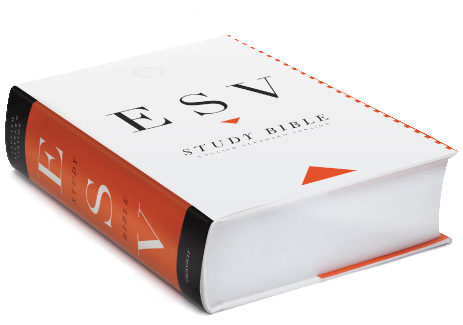
The ESV Study Bible

I am pretty excited about the ESV Study Bible coming out this October. The scholars who contributed to this work are quite impressive (Some of my own professors at Southeastern). Below I have posted some excerpts from the introductions of different books of the Bible.

Introduction to the Psalms

Introduction to Revelation

Introduction to Luke

Introduction to Jonah

Introduction to Ephesians

Introduction to Colossians

C.S. Lewis on Desire

Below I have posted one of the beginning paragraphs of C.S. Lewis‘ collection of essays entitled “The Weight of Glory”.

“If you asked twenty good men today what they thought the highest of the virtues, nineteen of them would reply, Unselfishness. But if you had asked almost any of the great Christians of old, he would have replied, Love. You see what has happened? A negative term has been substituted for a positive, and this is of more than philological importance. The negative idea of Unselfishness carries with it the suggestion not primarily of securing good things for others, but of going without them ourselves, as if our abstinence and not their happiness was the important point. I do not think this is the Christian virtue of Love. The New Testament has lots to say about self-denial, but not about self-denial as an end in itself. We are told to deny ourselves and to take up our crosses in order that we may follow Christ; and nearly every description of what we shall ultimately find if we do so contains an appeal to desire. If there lurks in most modern minds the notion that to desire our own good and earnestly to hope for the enjoyment of it is a bad thing,. Indeed, if we consider the unblushing promises of reward and the staggering nature of the rewards promised in the Gospels, it would seem that Our Lord finds our desires not too strong, but too weak. We are half-hearted creatures, fooling about with drink and sex and ambition when infinite joy is offered us, like an ignorant child who wants to go on making mud pies in a slum because he cannot imagine what is meant by the offer of a holiday at the sea. We are far too easily pleased.”

John Piper on the Prosperity Gospel

The Prosperity Gospel teaching that an authentic religious belief and behaviour in a person will result in their material prosperity. That is, the doctrine holds that material prosperity, particularly financial prosperity and success in business and personal life, is to be expected as external evidence of God’s favor.

Mission Winston-Salem

Today marks the first day of Mission Winston-Salem. I am excited to see how God is going to use his people as we take the whole week to focus in on the needs of our city. While we have ministries year-round in our area, this week is specifically focused on a variety of projects and ministry opportunities. 

Mission Winston-Salem is a movement among local Believers to impact our city for the cause of Christ. Knowing that we are not in Winston-Salem by accident, it is our desire to represent Christ well. We want to be aware of the realities of our city and actively engaged in bringing hope to our community through Jesus Christ. We, as the local Church, desire to see God’s Kingdom displayed in Winston-Salem.

Click Here for more details. If you live in Winston-Salem come join us, if not join us in prayer!

The Future of Preachers (as holograms)?

I recently received the newest issue of Collide Magazine (self-plug: In which I have an article), and read a blurb about Cisco/Musion’s new ‘TelePresence Experience’ On-Stage technology. I remember joking with someone once about this, “we are so obsessed with teaching personalities, I can imagine a day when we will have their hologram transported to any venue”. Well, it’s now a reality;

“The launch of Cisco’s On-Stage TelePresence Experience, created by integrating Musion 3D Holographic Projection technology with Cisco TelePresence.”

“Three-dimensional holographic conferencing will first be used at large expositions and conferences, and would later trickle down to enterprises. Over time, it might even be used at home. Your grandmother could virtually walk into a living room and talk to you – her image travelling over seas and countries over the Internet. A teacher could face 50 students and give a lecture complete with expressions and body language. The possibilities of this decidedly realistic application are numerous.”

Click Here to see the demonstration!

Observations on the Use of Time

Have you ever considered the importance of how you use your time? I think we should set a high value on time, and be exceedingly careful that it be not lost. In this post I will exhort you to exercise wisdom in what you do with your time, because it appears that time is exceedingly precious. I was reading Jonathan Edwards on this subject, and here are some notes and thoughts as I reflected on what he said;

  1. If things are precious in proportion to their importance, then our time here on earth is precious because our eternal welfare depends on how we have used it.
  2. Time is precious because we are given one life. The scarcity of any commodity occasions men to set a higher value on it, especially if it is necessary and they cannot do without it.
  3. Time is precious because we are uncertain of its continuance. We know it’s short, but not how short. What would you do if you had a few months to live, a few days rather?
  4. Time is precious, because when it is past, it cannot be recovered. There are many things which we can possess, that if we part with it, we can regain, it is not so with time.
  5. There is no other space with which we can prepare for eternity. Therefore, time is a gift, used for the preparation of eternity.

How do you use your time? I think we can conclude with a few things;

  1. Time is precious.
  2. Time is short and uncertain.
  3. Time is irrecoverable.

I believe that we all will be held accountable to God for the use of our time, so be diligent and intentional in how you use it.

  1. Improve the present time without delay.
  2. Be especially careful to improve those parts of time which are most precious.
  3. Improve your leisure time.