Christ-Centered Hermeneutics in the SBC

tgpCHRISTwebad960x355

One of the things I am looking forward to at the Southern Baptist Convention this year is the discussion panel on Christ-Centered Preaching and Teaching. I agree with Hankins that this is a deeply important discussion, and working out as precisely as possible the nature and practice of Christ-centered preaching is crucial for our churches.

If you are already planning on coming to the discussion panel let me encourage you to read some of these blog posts on Christ-centered hermeneutics. The discussion has already started…

Eric Hankins

Hankins argues that while Christ should always be exalted when preaching, authorial intent alone is the exegetical launch pad for any sermon.

Jon Akin (Responding to Hankins)

In part one Akin argues that Christ-centered interpretation was the method of Jesus and the Apostles.

In part two Akin argues that Christ-centered interpretation takes into account the dual authorship of the Bible and treats it as one book instead of a collection of 66 books.

In part three Akin argues that Christ-centered exposition bases the imperatives to live faithfully in the gospel indicatives of what Christ has already done for us.

Tony Merida

In this first post Tony explains the the “dilemma” of Christ-Centered expository preaching.

In the second post Tony explains the centrality of Christ in the Bible and in expository preaching.

In the third post of this series Tony explores practical application in Christ-centered expository preaching.

Matt Capps

In this post I explain my journey to appreciating Christ-centered hermeneutics, and the benefits of the method.

If you know of any more posts on Christ-centered hermeneutics please feel free to post links to them in the comment section. 

Clear Winter Nights by Trevin Wax

A few weeks ago Trevin Wax walked into my office and handed me an advanced copy of his first fiction book Clear Winter Nights. I have read Trevin’s blog for years. I’ve also read his previous non-fiction works Holy Subversion and Counterfeit Gospels. Trevin is a gifted writer and thoughtful theologian. As he walked out of my office that day I was excited for him, not only because he’s my friend, but also because of what this book means to him. Trevin has been calling for artistic portrayals of truth for a while now. In several of his blog posts he has expressed concern about conservative Christians picking apart works of art without offering something better. This concern seems to be one of the driving forces behind Clear Winter Nights. For someone who has done well in the non-fiction market, writing fiction is a risky move.

Clear-Winter-Nights_1a-716x1024Offering a work of fiction to the public puts an author in new territory beyond a change of literary genre. In non-fiction a writer has the privilege of shoring up his or her arguments with evidence, his or her points with the thoughts of other thinkers. Fiction pushes an author into a much more vulnerable position. Trevin has not only personally crafted this entire story, but also intimately created each character, and shaped their thoughts and actions. A fiction novel is a work of art. And because it is a work of art the writer becomes susceptible to criticism on many levels. In my opinion this makes Clear Winter Nights Trevin’s most personal venture yet.

I am not a literary critic. Nor, do I read fiction on a level that allows me to be conversant with it as an art form in the strictest sense. I tend to read theological, sociological, and philosophical works. On my honeymoon I read C.S. Lewis’ The Abolition of Man while enjoying the breathtaking beaches of the Riviera Maya. On our trip to finalize our adoption in Ethiopia I read Graeme Goldsworthy’s Gospel-Centered Hermeneutics while relaxing in the cool of the night. My library is made up of ninety five percent non-fiction. However, I would like to offer my thoughts on Clear Winter Nights, for whatever it’s worth.

First, I was delighted by Trevin’s ability to render the context of each scene in such a way that it added to the beauty of the narrative without slipping into the melodramatic. In each chapter Trevin was able to paint the surroundings in such a way that I was transported into the ethos of the moment without losing a sense of the narrative trajectory. The reader can not only visualize the setting, but also see the physical posture of each character at almost every turn in the movement of the story. In my opinion, this only strengthens to the emotive force of the story line. For someone like me, who dwells in abstract literature, this is meaningful because it adorns the truth and adds to the beauty of the narrative.

Second, Trevin was able to communicate thoughtful biblical truth using a storyline that was captivating, and did so with memorable characters. Clear Winter Nights includes both fiction elements and non-fiction elements, namely, sustained theological discussion and logical reasoning. However, the story does not get weighed down by the theological elements. Trevin transported theology through story exceptionally well. At the right moments and in the right way, the discussion would lift so that I, as the reader, would remain grounded in the narrative. The beauty of narrative is that truth delivered from specific characters adds contextual force, which leaves a more lasting mark on the reader.

Finally, this book will resonate with many readers because of the content of the discussion between the characters. Many readers will sympathize with, and find themselves reflected in the thoughts and actions of each character. One of the main characters of Clear Winter Nights is a young and intellectually ambitious Christian dealing with disillusionment and doubt. The story centers on this young Christian spending a weekend with an elderly retired pastor, who is not only wise but broken and full of grace. During the course of the weekend these two men discuss some of the most pressing subjects of life and faith, and it is clear that no subject is off limits. As I followed every interaction, every response, and every question in the conversation I was not only entertained but educated. In Clear Winter Nights you are taken on a journey through philosophical and thoughtful discussions on the biggest dilemmas of faith. The characters discuss the equality and inequality of world religions, the nature of Christian discipleship, and the reality of sin, pain, and suffering. Through engaging dialogue Trevin aptly explores the relevance of solid biblical truth in an unstable world.

A few years ago I was encouraged by one of my closest friends Zach Hawkins to take an occasional break from academic reading to enjoy fiction. I am glad I did. I am also thankful for Trevin’s new book. I pray that many more volumes will be published in this line of literature. If you are looking to read a short and reflective fiction work, I commend Clear Winter Nights to you. I read it in a few sittings. And each time, it was hard for me to put it down.

Matt Chandler on being “Faithful and Fruitful”

This is video from Matt Chandler’s workshop at The Gospel Coalition, 2013.

“Immodesty and Lust: A Man’s Perspective” by Ike Miller

This morning I read a post on Sharon Hodde Miller’s blog written by her husband Ike titled Immodesty and Lust: A Man’s Perspective. Both Ike and Sharon are pursuing PhD’s at Trinity Evangelical Divinity School. Ike has some really good things to say about immodesty and lust. Here are a few excerpts.

As our friend pointed out, there is a glaring inconsistency in the church, one that allows men to make judgments about the modesty of women without confessing and repenting of their own complicit lust in the process.  Instead, a woman is accused of immodesty and shamed, all by virtue of the fact that a man has lusted after her; however, the man who engaged in lust does not experience the same public shame. In fact, he is sometimes considered praiseworthy for addressing such a “threat” to the community.

Ike then hits on the nature of lust.

No doubt, there is truth to the statement that all men lust, but it is a truth about the condition of the heart, not a women’s clothing.  Rather than portray men as helplessly prone to lust, it would be more accurate to describe lust as an ever-pressing temptation to all men, a temptation that requires great vigilance and discipline of mind.  The failure of men to diligently address this temptation has led to the false conclusion that all men are incapable of resisting the temptation entirely.

I encourage you to read the whole thing here.

Faithful Church Leaders, Not Flashy Ones

Hero worship is a problem in our society. Even worse, hero worship is a problem in evangelical Christianity. The reliable Vaughan Roberts issues a prophetic warning on the phenomenon of personality cults in his book Authentic Church. Drawing from 1 Corinthians 3-4 he writes;

“We copy the world in its obsession with personalities, dividing into parties which gather around different Christian gurus whose teaching is exalted almost to the level of infallibility. Those who attach themselves to other leaders can be seen as enemies, even though they are fellow Christians who believe exactly the same as us on all the fundamentals of the faith and worship the same Heavenly Father. Sadly, membership of the same Christian family can be seen as less important than membership of the same faction.

Sometimes the leader is to blame for promoting such adulation by drawing attention to himself and encouraging and unquestioning loyalty from his followers; but often leaders placed on pedestals are as uneasy as the apostle was when people said, ‘I follow Paul.’ He was horrified a the thought of Christians gathering around him rather than the Lord he served.

To counter their immature, worldly thinking, he outlines a truly spiritual understanding of Christian leadership that never allows mere humans to take center stage. Churches should value not those who are the most flashy, with impressive gifts and personalities, but rather those who are faithful in fulfilling their charge, and point to the master, not themselves. (39-41)”

Who Are You Wearing?

I was flipping through the tv channels recently and caught a few seconds of an interview with a cultural icon. The interviewer pulled this star aside as she was headed into an entertainment award show. What held me on that channel was the reporter’s first question.

Who are you wearing?

tuxThe question sounds a bit odd. However, we can discern the intended meaning of the question from the context. Who designed that dress? Who are you representing by wearing that dress? See, the name of an elite designer communicates status, importance, meaning, and worth. Most of us cannot afford custom designer clothing. Most of us are not invited to televised award shows to be displayed before the watching world. Yet we are on display to those around us.

Nakedness and the Search for Meaning

We are all searching for value and meaning in some sense or another. And we are all judged, and judge others, on these grounds. So we clothe ourselves in cultural signifiers that communicate worth and status. Why?

Immediately following the fall of mankind our first ancestors were found naked and ashamed. Adam and Eve rejected their covering under the Lordship of God and grasped for worth and status in and of themselves. Ashamed of their nakedness they grasped for new covering. And we have tried to clothe our shame and find significance in our coverings ever since. There is only one covering that will sufficiently clothe our nakedness and give us true rest.

One of the Apostle Paul’s favorite metaphors describes “putting on” or “clothing oneself” in Christ (Gal. 3:27; Rom.13:12; Eph.4:24; Col.3:12f.). Paul likens Christ to a garment. The idea of “putting on” Christ implies 3 very important gospel truths. (These truths were outlined similarly in Tim Keller’s study on Galatians)

  • Clothing Communicates Our Identity

Our clothing communicates to the world who we are. Clothing shows others that we are identified with a particular gender, social class, or national group.To say that Christ is our clothing is to say that our ultimate identity is found in him and not in any other classification.

  • Clothing Shields Our Nakedness

Clothes are kept closer to you than any other possession. We rely on clothing for shelter every moment of every day. To say Christ is our covering is to call us to continual dependence and awareness of Him. Clothing ourselves in Christ should remind us of his presence.

  • Clothing Adorns Us

Clothing is also worn as adornment. To say that Christ is our clothing is to say that in God’s sight we are loved because of Jesus’ work and salvation. The metaphor of “putting on Christ” is a comprehensive metaphor for the entirety of  life. In Christ we have his Spirit and are imputed his record. This should permeate everything we think, say, and do.

As Christians we are covered by Jesus, “wearing Christ” before God. But if your neighbor or friend were to ask you – who are you wearing? – what would you say? More importantly, who would they say?

David Benner’s Strategic Pastoral Counseling

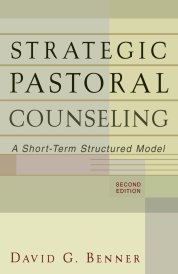
Strategic Pastoral Counseling is a model developed by David Benner described as a brief, structured counseling approach that is explicitly Christian and that appropriates the insights of contemporary counseling theory without sacrificing the resources of pastoral ministry. There is much debate about the uses and differences of secular counseling and biblical counseling. I will not examine those here. My purpose is to give a brief account of Brenner’s work. There are a few characteristics of Strategic Pastoral Counseling (SPC) that I found helpful for pastoral ministry.

SPCSPC is brief and time-limited, working within a suggested maximum of five sessions. Both the pastor and the parishioner are encouraged to work continuously at maintaining focus and direction. One of the benefits of this model is that is presupposes that the counseling relationship is a partnership, which increases the participation and expectation of change in the counselee.

The use of written materials is central to SPC. The Bible as well as a variety of other devotional, inspirational, and practical books and booklets could be assigned to the client. The literature should be integrated within the counseling session, not simply offered as a supplement to them and serve as a support and extension of the counseling. Moreover, it also seems that Benner advocates a holistic approach to pastoral counseling that aims at the behavioral (action), cognitive (thought), and affective (feeling) aspects of the personality – with a focus on spirituality.

Lastly, the SPC process is very structured. Each of the sessions has a clear focus and each builds upon the previous ones in contributing to the accomplishment of the overall goals. SPC  involves three stages:

  1. The encounter stage, where boundaries are set, the central concerns and history are explored, a pastoral diagnosis is conducted, and a mutually agreeable focus is achieved.
  2. The engagement stage, where the problem is explored holistically and resources are identified for coping or change.
  3. The disengagement stage, where progress is evaluated, concerns are accessed, referrals are arranged, and counseling is terminated.

Overall I found this little book helpful and would encourage pastors who are developing their counseling philosophy to read it. Counseling in a Christian context can be highly effective when it maintains narrowly focused goals in a time-limited setting. The details of this model of pastoral counseling are outlined well in this little practical guide.

Christ-Centered Preaching and Teaching Discussion Panel


tgpCHRISTwebad960x355

At this year’s Southern Baptist Convention in Houston The Gospel Project is hosting a discussion panel on Christ-Centered Preaching and Teaching. Ed Stetzer will moderate the panel with Trevin Wax, Eric Hankins, and Jon Akin. We are working with several publishers to give each attendee free resources on Christ-Centered preaching and teaching. There will also be a free breakfast. We only have room for 350 so sign up soon!

Here are the details;

Christ-Centered Preaching and Teaching: A Discussion Panel
Tuesday June 11, 2013
George R. Brown Convention Center
Room 351A-F on Level 3
6:30 a.m. to 8:00 a.m.

 REGISTER HERE

A Theology of the Beard…?

To beard, or not to beard? This has become a popular question. And it would seem that many men are choosing to let their beards grow. You might notice the style experts reporting on the dominance of beards in popular culture over the clean-shaven perfectly smooth face. Not too long ago a campaign for Gillette starred three cultural icons sporting facial hair – yes, remaining facial hair in a razor commercial. Why? Because the beard is a phenomenon. And the beard phenomenon is not only growing in popular culture but also in Christian culture.

spurgeon-said-bgmOne might argue that the recent popularity of beards in Christian circles is a demonstrative protest against the decline of gender differences in our society. Maybe the growth of beards in Christian circles is cultural or contextual mimesis of hipster trends. Perhaps the popularity of the beard is simply an appreciation for it as a masculine ornament. At least one thing is clear, beards are continuing to grow in Christian circles. Perhaps you’ve seen the website Bearded Gospel Men? In case you missed it, Leadership Journal recently ran an article titled The Beards of Ministry in which they proclaim, “the beard is back in a big way. Along with celebrities, bike messengers, and your local barista, pastors are no exception to the glories of facial hair. The ministry beard has a long and glorious history among preachers, theologians, and everyday men of the cloth.” (Don’t miss their graphic)

The beard does have a long and rich history. For the Ancient Israelites in the Old Testament a full rounded beard was an ornament signifying manhood, a source of pride.[1] The Hebrew men carefully maintained their beards. For the more affluent men beard care was ceremonial. While we don’t find too much in the Bible concerning beards, there are a few descriptive passages to read while twirling your chin hair;

  • For the Israelites in the Old Testament the beard was never to be shaved, only trimmed (Lev. 19:27; 21:5). The only time a beard was to be shaved was in the circumstance of an infectious disease (Lev. 14:9).
  • As a sign of lament, men in mourning would often shave or even pull out their beards (Ezra 9:3; Is. 15:2; Jer. 41:5, 48:37).
  • The prophet Ezekiel was instructed by God to shave his beard as a sign of desecration and shame, pointing to the coming destruction on Jerusalem (Ezek. 5:1).
  • Since the beard was a symbol of masculinity in ancient culture it was a grave insult to damage someone’s beard. Once on a mission, David’s men suffered grave humiliation when their beards were half shaved by the Ammonites. They didn’t return to Jerusalem until their beards had grown back (2 Sam. 10:4-5).
  • Isaiah depicts the pulling out of a man’s beard as emasculative and shameful (Is. 7:20, 50:6).

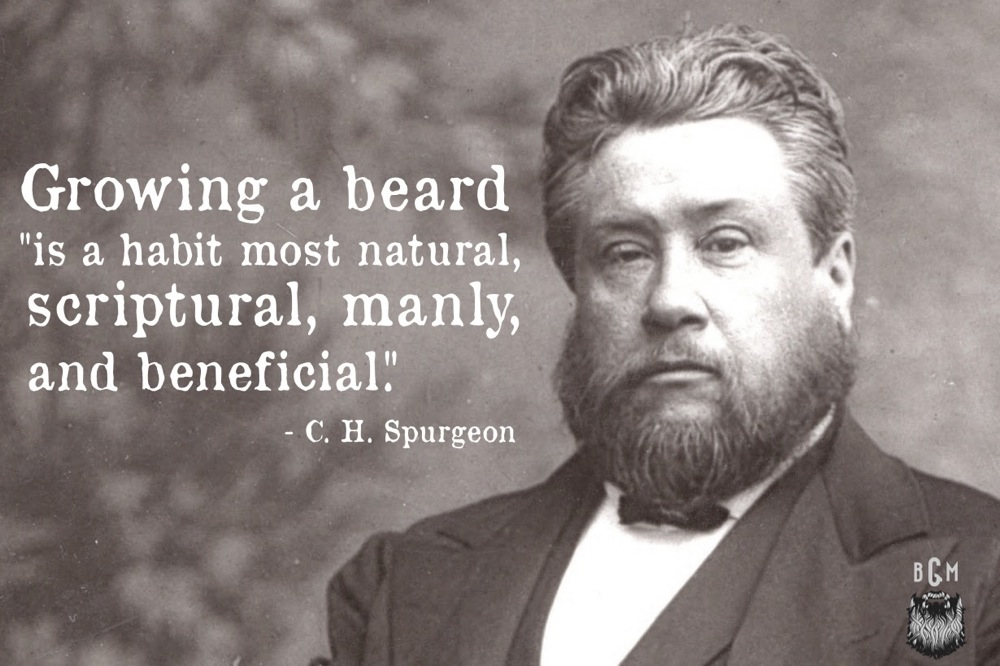
There is not much in the Bible concerning beards. Even so, theologians and preachers have taken up the subject of beards. Augustine once argued that “there are some details of the body which are there for simply aesthetic reasons, and for no practical purpose—for instance… the beard on [a man’s] face [which is] clearly for a masculine ornament.”[2] Similarly, Charles Spurgeon contended that growing a beard is “a habit most natural, scriptural, manly, and beneficial.”[3] So, what are we supposed to do with all of this? I am not sure. This post was written for fun and theological novelty. Clearly, God does not command all men everywhere to grow their beards, nor are beards the quintessential mark of  masculinity. But maybe the thought of a beard will grow on you…

Continue reading “A Theology of the Beard…?”

Kathryn Joyce, Orphan Care, and the Southern Baptist Convention

Introduction

I thought it would be helpful to provide some context to the discussion on adoption and orphan care in light of Kathryn Joyce’s recent comments on NPR related to her new book The Child Catchers. Joyce does raise legitimate concerns about orphan care and adoption systems in her article, though she is a little too inflammatory and cynical in her diagnosis. Joyce rightly observes that we live in a fallen and broken world. However, broken systems do not dismantle our call to care for neglected children. Christians are also broken people saved by the grace of God. We still see through a glass dimly. There are times when we could have addressed these issues with more wisdom. My concern here is that Joyce is a little off the mark in discerning our motivation behind orphan care.

As for Southern Baptists…

In this post I can only offer one opinion from a specific sector of the evangelical world, namely, the Southern Baptist Convention. Also, I am only going to respond to part of her observation about the evangelical world of adoption. I have not read the book. But, in the interview she argues that;

“Evangelicals felt that they had kind of unfairly lost a claim to the good works side of Christianity, the social gospel, the helping the poor,” she tells Fresh Air‘s Dave Davies, “and so they wanted a way to get back into doing something for poor people’s rights, and adoption and orphan care came about as something that, I think, they could really invest themselves into without challenging or changing their stances on the other social issues that they care about.”

To be fair, evangelicals have picked up involvement in adoption and orphan care in recent history. But the reason for doing so is not because adoption and orphan care are simple social causes that we can jump on without challenging or changing our stances on the other social issues. The impetus behind the movement is rooted in the resurgence of conservative theology. In June of 2009 the SBC overwhelmingly passed a resolution proposed by Russell D. Moore promoting adoption and orphan care, which in part reads:

That we encourage local churches to champion the evangelism of and ministry to orphans around the world, and to seek out ways to energize Southern Baptists behind this mission.[1]

Interestingly, orphan care has long been a part of Southern Baptist life. Since our very beginning, Southern Baptists have taken the call to orphan care as a divine mandate. In 1845 the Southern Baptist Convention was formed with two cooperative ministries and one agenda. The two ministries were the Foreign Mission Board (Now the International Mission Board) and the Domestic Mission Board (Now the North American Mission Board). The initial agenda of the Convention was simple; to combine the efforts of autonomous churches for one sacred effort, namely, the proclamation of the gospel and the demonstration of Jesus kingdom. One phrase in the original constitution of the SBC reflects this clearly:

“It shall be the design of this convention to promote Foreign and Domestic Missions, and other important objects connected with the redeemer’s kingdom.”[2]

While orphan care fell under the banner of ‘other important objects’, it was important none the less. The foundation for such social ministries came from the desire to provide gospel signs amid the rubble of a broken world.[3]

Adoption in Early Southern Baptist Theology

“Baptists have long been considered a ‘people of the Book.’ Various Baptist confessions demonstrate the way in which the Bible is viewed as the Word of God and is, therefore, authoritative for the faith and practice of every believer and church”.[4] In the larger framework of evangelical Christianity, Southern Baptists have not always been known for their contributions to theology. As one historian put it, Southern Baptists “have been more active than contemplative; they have produced more doers than thinkers”.[5]

Yet searching the work of early Southern Baptist theologians provides a glimpse into the importance of the biblical doctrine of adoption. Baptist Theologian John L. Dagg opens his discussion on the theology of adoption by explaining it as it is practiced among men: “an individual receiving the son of another into his family, and conferring upon him the same privileges and advantages, as if he were his own son.”[6] Unlike Northern Baptist theologian Augustus Strong, who placed adoption as a sub-category of justification[7], Dagg argued that the theological truth of adoption is a blessing that rises higher than justification because in its relational aspects adoption secures the love of God, the discipline of God, and believers are made heirs of God.

The relational aspect of the doctrine of adoption is further described by Southern Baptist James Petigru Boyce, who wrote that “the sonship ascribed to the believer in Christ, is best understood by considering its gracious origin, its peculiar nature, and the wondrous blessing which it confers.”[8] Boyce noted that one experiences a “closer and more endearing relation to God” because of one’s adoption through Christ. Like today, the stunning reality of one’s adoption in Christ was most likely the theological motivation for the early Southern Baptist’s orphan care endeavors.

Orphan Care in Early Southern Baptist History

If one takes a close look at the denomination’s history they will find that Southern Baptists organized several orphanages across the southern states dating back to the 1860’s, most of which ministered to Civil War orphans. The correspondence of the Domestic Mission Board’s secretary, W.S. Webb, concerning the situation of orphans in Mississippi following the Civil War enables us to see the importance of orphan care in our early history as a convention. Historian Keith Harper notes that Webb “estimated that there were some 5,000 to 10,000 orphans in the state and some 50,000 Baptists whom he chided for neglecting Biblical commands to care for the poor and needy”.[9] Ignoring the call to care for orphans, argued Webb, “would mark [Southern Baptists] with a pusillanimity that would deserve contempt from the world.”[10] While Webb’s challenge went unheeded by some of his specific audience, there were Southern Baptists who took up the call for orphan care. Harper writes:

Southern Baptist orphanages tried to provide the best possible medical care and education for their children. They also tried to provide a homelike atmosphere that gave orphaned children, in addition to mere shelter, a sense of stability in community.[11]

Beyond that, Baptists were influential in developing orphan care systems such as the ‘cottage plan’ orphanage (placing children in self-sustaining cottages with a housemother), the ‘placing out system’ (a forerunner to modern foster care), and even the ‘apprenticeship model’ (placing children in specific homes for training in an industrial trade or framing skills) throughout the American south. Even today state children’s homes continue to be a part of  the Southern Baptist convention’s care for domestic orphans.

What Now?

There is a rich history behind the efforts of orphan care in the Southern Baptist Convention. Though we are currently separated from the founding efforts recalled above by over a century, Southern Baptists still have a divine mandate and a social situation that calls us to care for the orphans. It is interesting to note, as one historian posits, that the controversies of the 1970’s and 1980’s between the conservatives and moderates over the authority of the Bible was more closely tied to the abortion issue, thus the sanctity of human life, than many Southern Baptists realize.[12] However, there seems to be little evidence of an adoption and orphan care movement during this period.

Perhaps this was due to the hesitation among conservatives towards social endeavors as an implication of the moderate’s drift towards a theologically bankrupt social agenda. Even still, there has always been a desire among Southern Baptists to seek the welfare of the city[13] and to love one’s neighbor[14] as a sign accompanying the proclamation of the gospel, even if we haven’t gone about engaging these issues in the wisest way. Nevertheless, the divine mandate is still before us. The specific call pertaining to orphan care is well reflected in our current denominational summary of faith, The Baptist Faith and Message:

We should work to provide for the orphaned, the needy, the abused, the aged, the helpless, and the sick. We should speak on behalf of the unborn and contend for the sanctity of all human life from conception to natural death.[15]

Since its conception, the Southern Baptist Convention has out grown its name. Our gospel efforts reach far beyond the southern states of North America. Moreover, there is still an orphan crisis. Immediate indigenous situations (like the civil war) are no longer the sole source of the orphan crisis. Globalization has flattened our distance from third world poverty, the AIDS epidemic, and unwanted pregnancies.

Conclusion

The Southern Baptist Convention is the largest protestant denomination in the United States, with over 44,000 churches in all fifty states, and is now more than 160 years old. If the Church is truly, as Merida and Morton argue, the most powerful force in the world, then we must not remain silent or still.[16] As for the Southern Baptist Convention specifically, according to historian Nathan Finn, the strength and longevity of the convention is evidence that, “…autonomous churches believe that they can accomplish more when they work together than they can as individual congregations.”[17]

I am thankful for the resurgence in connecting our orthodoxy to orthopraxy. Like our early Southern Baptist theologians, are regaining a sense of God’s heart for the helpless. Moreover, we need to consider the model of early Southern Baptists who saw their mission in terms of both evangelization and social outreach to the less fortunate. May we be faithful and fruitful in advocating for the poor, marginalized, abandoned, and fatherless.[18]

Continue reading “Kathryn Joyce, Orphan Care, and the Southern Baptist Convention”